Release 4.3 has arrived! Learn how to utilize our expanded Brand Impersonation capabilities, and check out useful updates to Web Scanner, Live Scan and the UI!
Start detecting threats BEFORE they’re weaponized. Use our Web Scanner tool for free with Silent Push Community Edition: www.silentpush.com/community.
In this video, Director of Sales Engineering Maulik Limbachiya takes you through how to perform one-click pivots from within the Web Scanner results table, and how to customize your results table to best suit your use case.
Bulletproof hosting (BPH) refers to resilient server infrastructure used by threat actors to operate outside the reach of law enforcement. In response to the sanctions, the U.S. government froze Aeza Group’s U.S.-based assets and prohibited U.S. persons from engaging in transactions with them.
Silent Push Detects ASN Migration in Real Time
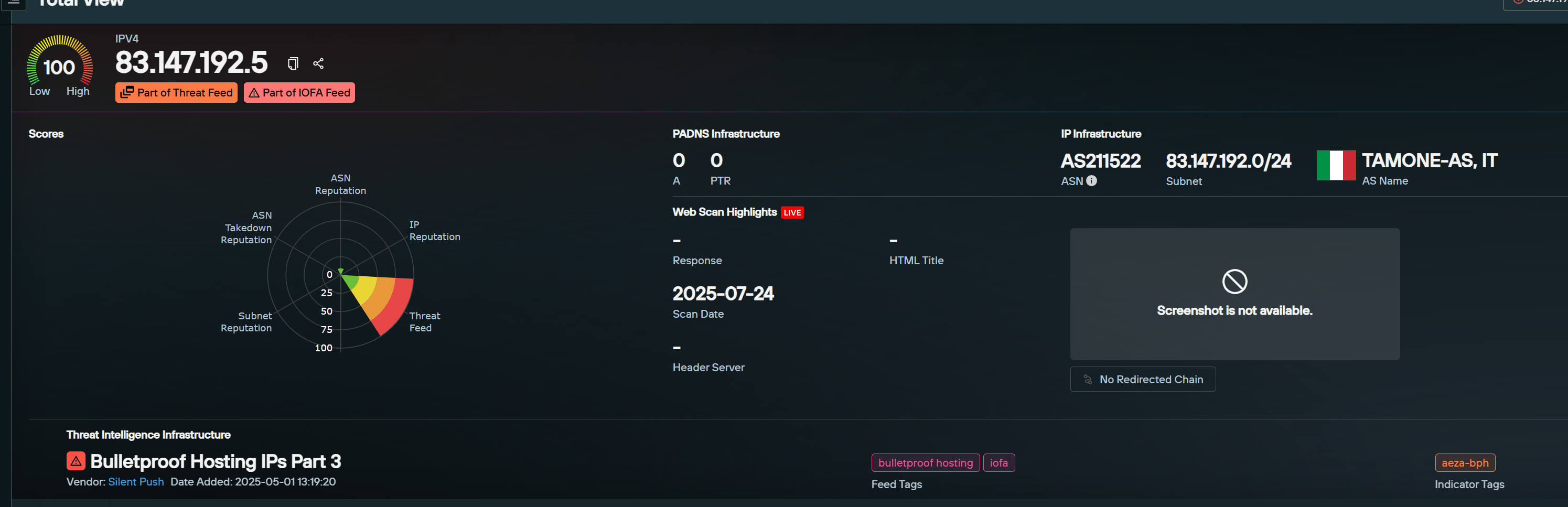
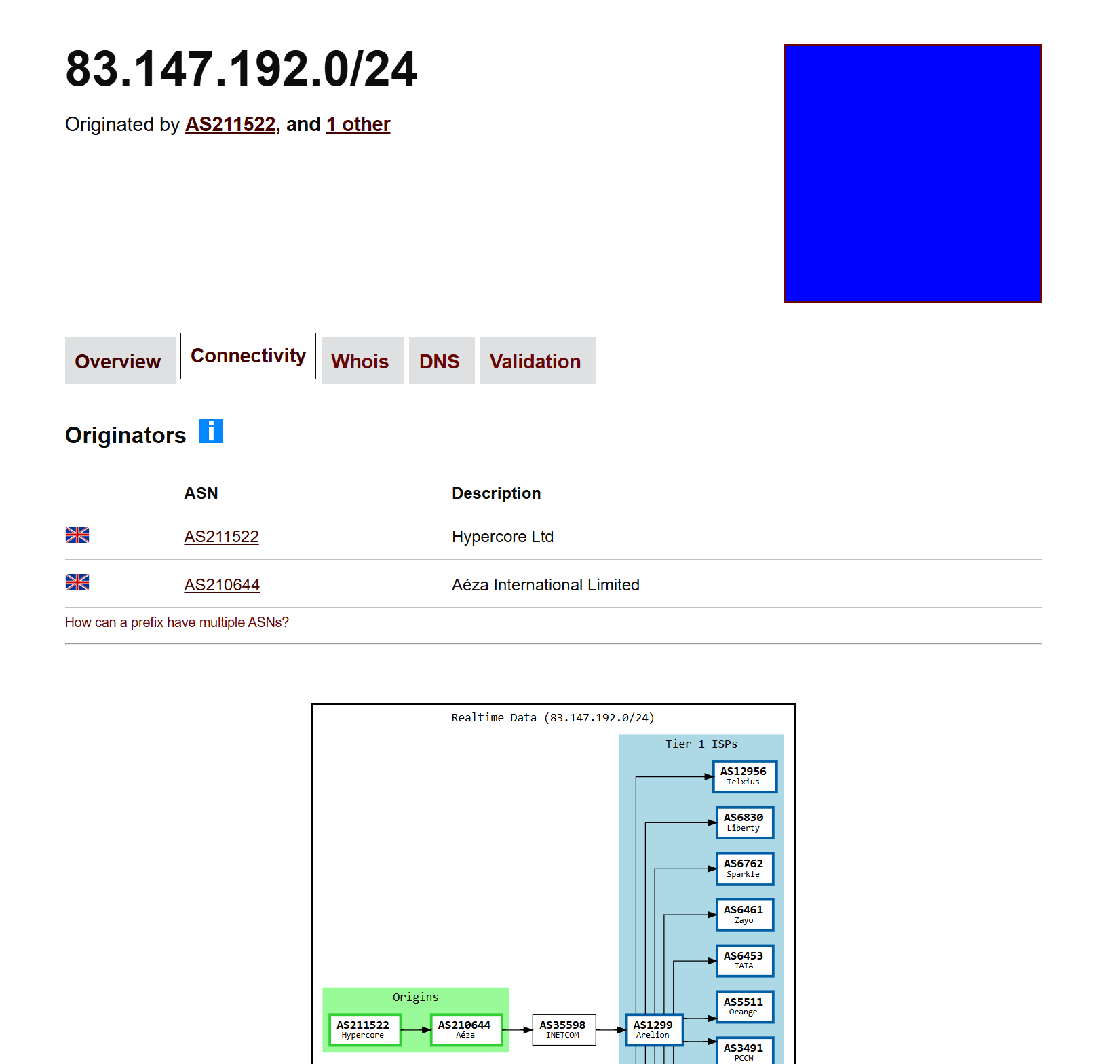
Silent Push Threat Analysts identified Aeza Group (AS216246 and AS210644) as a bulletproof hosting provider in early 2025. On July 20, 2025, Silent Push’s IOFA (Indicators of Future Attack)™ feed automatically detected a significant infrastructure shift: IP ranges from Aeza’s AS210644 began migrating to AS211522, a new autonomous system operated by Hypercore LTD.
This shift suggests an attempt to evade sanctions enforcement and continue malicious operations under new infrastructure.
One such example is IP address 83.147.192[.]5, which was previously associated with AS210644. On July 20, this IP was automatically reclassified in the Bulletproof Hosting IOFA™ feed to reflect its new association with AS211522.
BGP data from bgp.tools confirms that the 83.147.192.0/24 subnet has been announced by both ASNs, supporting the attribution.
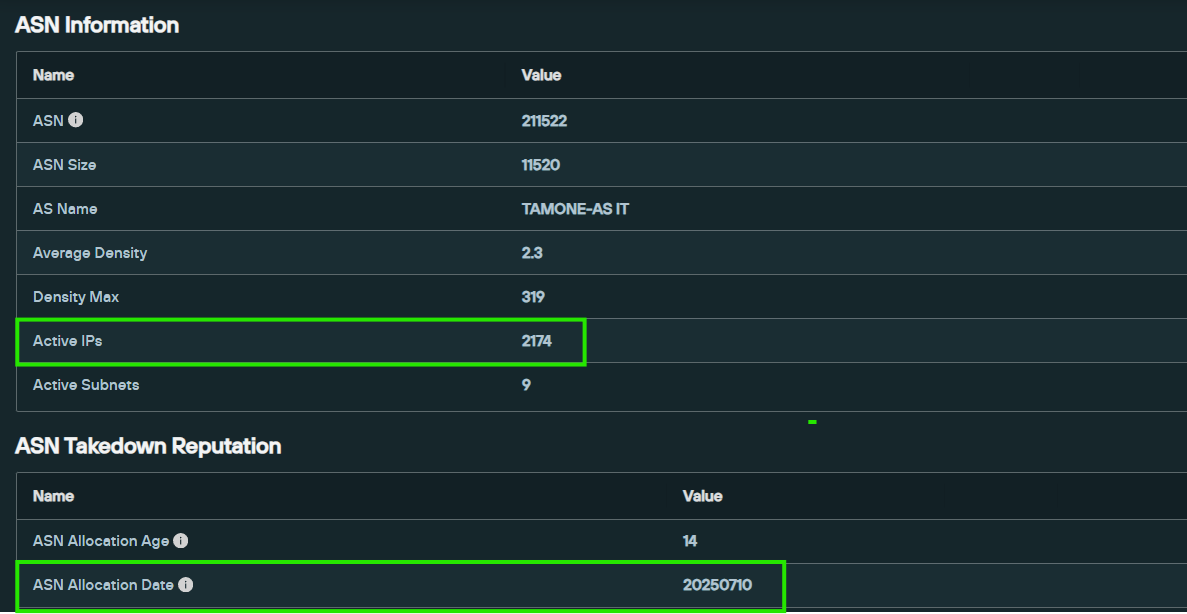
According to Silent Push data, ASN 211522 was allocated on July 10, 2025, as confirmed by a search within the Total View platform. The data also shows that the ASN already contains over 2,100 IP addresses, indicating an unusually rapid ramp-up for a newly allocated ASN — a pattern not typically observed.
Silent Push Threat Analysts will continue to investigate ASN 211522 and welcome any leads related to suspicious bulletproof hosting infrastructure or additional context surrounding the Aeza Group IP migration.
Tracking Infrastructure Before It’s Weaponized
Through continuous infrastructure monitoring, Silent Push is able to detect and track emerging BPH providers before they’re widely used in active campaigns. The migration to AS211522 is likely either a rebrand by Aeza or a handoff to a closely aligned cybercriminal entity.
Silent Push IOFA™ feeds are designed to identify attacker infrastructure — before it’s operationalized. From bulletproof hosting to phishing domains, malware C2s, and more, Silent Push provides security teams with early, actionable visibility into the infrastructure behind tomorrow’s threats.
Black Hat USA 2025 is just around the corner, and the cybersecurity community is gearing up for one of the most important events of the year. While many organizations will be showcasing their latest products and services on the expo floor, our team is taking a different approach — focusing on meaningful, one-on-one conversations about the future of cyber defense.
Preemptive cyber defense is no longer just a buzzword; leading security teams are actively shifting their strategies to stop threats before they happen, rather than reacting after the fact. At Black Hat this year, we’ll be holding short, focused 1:1 sessions designed to help security teams assess their readiness and explore how to build stronger, proactive defenses.
If your team is struggling with alert fatigue, difficulty measuring ROI on detection tools, or relying heavily on post-breach intelligence, these sessions are for you. We’ll guide you through practical steps to move beyond reactive tactics and embrace a proactive, data-driven approach to security.
Why meet with us at Black Hat 2025?
Discuss the latest challenges in threat detection and prevention
Explore how preemptive defense can transform your security posture
Get personalized recommendations tailored to your organization’s needs
Spaces are limited, so we encourage teams attending Black Hat to book their session early. Make Black Hat 2025 the turning point for your proactive cyber defense strategy.
Book your session today and begin shifting from reactive to preemptive defense.
This hands-on session will show you how to use MX, SOA, and TXT records to uncover infrastructure, spot threats, and strengthen investigations using the Silent Push free Community Edition.
We’ll also compare traditional passive DNS (PDNS) data with Silent Push’s unique Passive Aggressive DNS (PADNS) data, which has enabled leading organizations across the world to detect threats earlier than ever before.
Date: 29 July 2025
Time: 10am ET // 4pm CET // 10am SGT // 12pm AEST
Location: Online – Zoom
Requirements: Silent Push free Community Edition | Sign-up here
Not all hosting providers play by the rules — some actively protect the worst cybercriminals. Access our on-demand webinar to get new insights from our latest report, exposing the hidden hosts behind today’s most persistent cyber threats.
Bulletproof Hosting (BPH) providers offer IP infrastructure that ignores abuse complaints, enabling some of the web’s most dangerous malicious traffic. While the community broadly agrees on what makes a host “Bulletproof,” identifying specific ASN ranges or providers requires deep expertise and nuance. This session will equip you with the knowledge to identify and combat these shadowy enablers.
This session will equip you with the knowledge to identify and combat these shadowy enablers.
Ready to dive deeper into the world of preemptive threat intelligence? Begin your journey with the Silent Push free Community Edition today.
In this episode of CyberScoop’s podcast, our CEO Ken Bagnall joins Greg Otto to explore the evolving cybercrime ecosystem. Ken discusses how much of today’s infrastructure is run by affiliate networks leveraging existing technologies — and how this model is shaping threats globally.
Ken also highlights how these operations are increasingly fueled by actors from Africa and other developing regions, offering a unique look at lesser-known aspects of the global cybercrime economy. Also featured in this episode: Greg Otto and Matt Kapko discuss the growing issue of remote IT workers tied to North Korea.
Listen to the original episode on CyberScoop Radio: https://cyberscoop.com/radio/in-this-episode-greg-otto-talks-with-ken-bagnall-ceo-of-silent-push-ken-sheds-light-on-the-dynamics-of-the-current-cybercrime-ecosystem/
Read more: The North Korea worker problem is bigger than you think https://cyberscoop.com/north-korea-technical-workers-full-time-jobs/
Cyber defense data is only as useful as the context that surrounds it.
Threat actors shift tactics daily and infrastructure spins up and vanishes in days or even hours. Isolated Indicators of Compromise (IOCs) aren’t enough. Security teams need connected intelligence – insight that illuminates not just a single alert, but the full shape of the infrastructure behind it.
By linking Silent Push’s unrivalled visibility of global threat infrastructure with OpenCTI’s powerful threat intelligence framework, teams can enrich their existing datasets with high-fidelity context – helping to reveal 100% of an adversary’s digital footprint, including elements that go unnoticed by traditional toolsets.
What Is OpenCTI?
OpenCTI (Open Cyber Threat Intelligence) is an open-source platform built to centralize, visualize, and correlate Cyber Threat Intelligence (CTI).
The platform supports structured intelligence sharing and collaboration using open standards such as STIX 2.1 and TAXII 2.1, and is used globally by SOCs, CERTs, and threat analysts to manage complex threat data in real time.
OpenCTI includes support for TAXII feeds, file-based imports, API integrations, and offers a flexible way for organizations to analyze threat intelligence at enterprise level.
Why Integrate Silent Push with OpenCTI?
Silent Push provides a uniquely preemptive view of attacker infrastructure, including unseen elements in the staging and early deployment phases
Instead of chasing post-breach IOCs, our platform exposes Indicators of Future Attack (IOFA)™ – early warning signals based on attacker behavioral patterns, observed across our proprietary DNS and web content database.
By integrating Silent Push with OpenCTI, organizations gain the ability to:
Ingest Silent Push data via TAXII, ensuring it flows into OpenCTI in a structured format.
Enrich existing indicators in OpenCTI with deeper infrastructural and behavioral context.
Get curated threat reports via RSS feeds, including linked indicators and APT attribution.
Our bi-directional integration enables analysts to move from reactive to proactive defense, and from juggling alerts to proactive action.
STIX and TAXII: Structured, Scalable Threat Data
At the heart of the integration is support for STIX (Structured Threat Information Expression) and TAXII (Trusted Automated Exchange of Indicator Information).
Silent Push exposes TAXII endpoints that allow OpenCTI to pull in curated indicators, fully mapped to STIX 2.1 objects.
This ensures that indicators from Silent Push – domains, IPs, or URLs – arrive in a standardized format, automatically enriched with threat scoring, and metadata such as hosting details, DNS context, and campaign links.
Our integration enables correlation at scale. Indicators brought in through TAXII can be immediately cross-referenced with existing data inside OpenCTI, powering visualizations, alerts, and investigative timelines.
End-to-end Indicator Enrichment
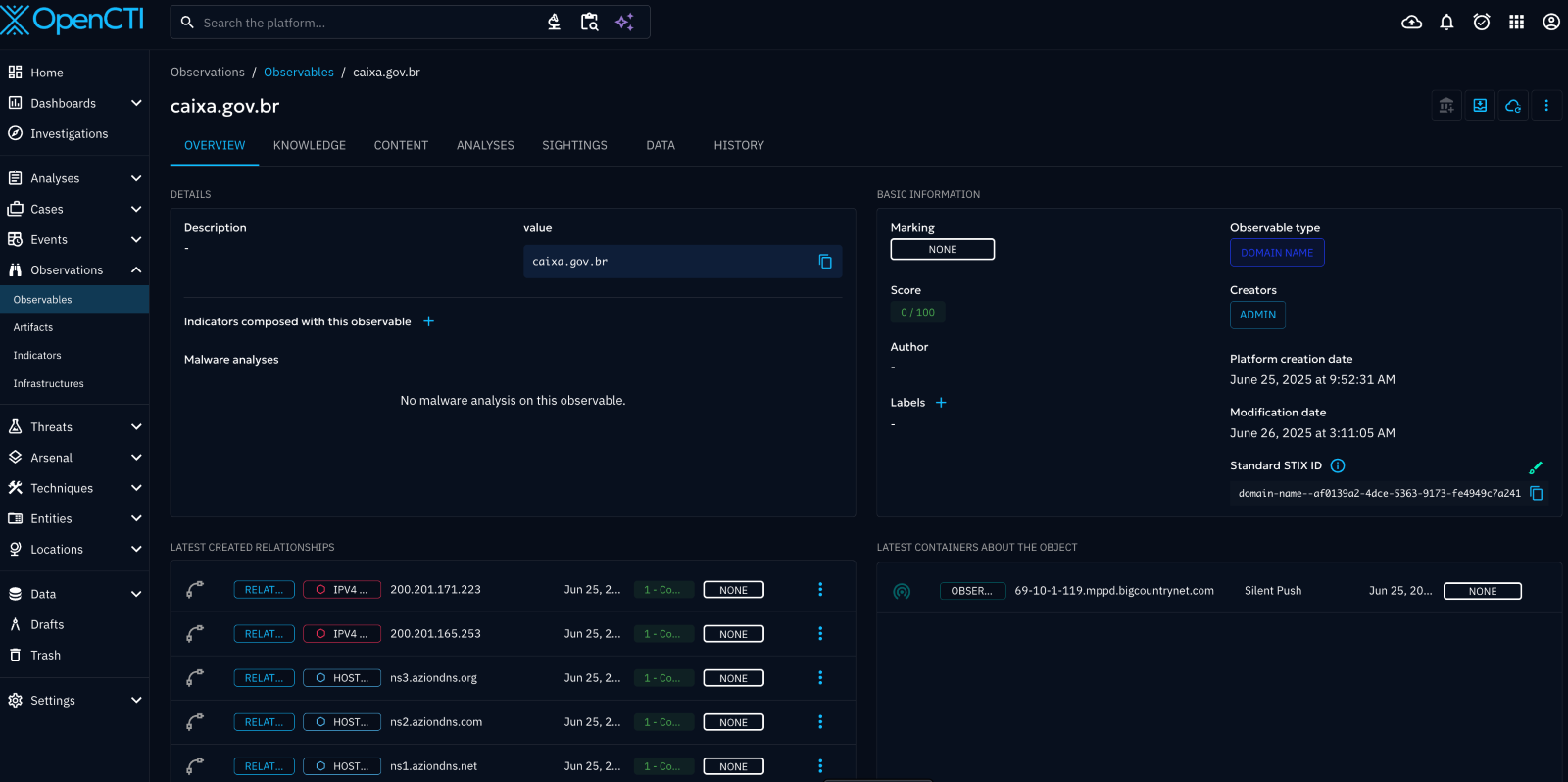
The Silent Push Enrichment Connector, officially part of the OpenCTI ecosystem, is designed to deliver contextual intelligence precisely when analysts need it – during investigations.
Once deployed, the connector monitors domains, IPs and URLs already present in OpenCTI and, on a scheduled or manual basis, retrieves matching enrichment from the Silent Push API.
Enrichment is delivered in the form of STIX 2.1 bundles, integrated into OpenCTI via its internal processes. This means analysts don’t need to leave the platform or perform manual queries – context flows directly into their workflows.
Threat tags and reputation scoring from Silent Push
Discovery of associated infrastructure and campaign patterns
The result is faster triage, better attribution, and higher confidence in decision-making.
Threat Reports via RSS: Human-Readable, Machine-Usable
In addition to structured indicators, Silent Push also supports RSS-based ingestion of threat reports, providing strategic context and narrative intelligence directly within OpenCTI.
These feeds enable organizations to:
Automatically ingest new threat reports as they’re published
Parse and convert data into structured STIX objects
Link any threat entities – such as APT groups, malware, or tools – to active indicators
This allows analysts to see the bigger picture: not just what indicators exist, but why they matter, how they relate to ongoing campaigns, and what tactics they support.
Insight Through Visualization
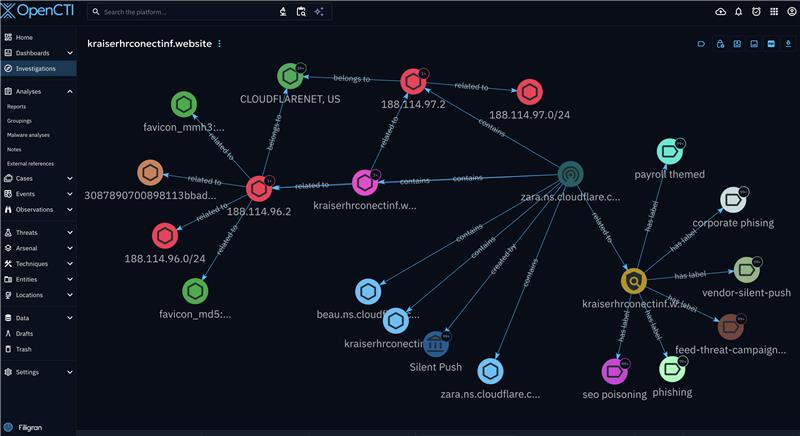
Once ingested, Silent Push data comes to life through OpenCTI’s powerful visualization features, allowing analysts to:
Build dashboards tracking threats by source, type, and confidence
Use timeline views to trace infrastructure changes over time
Filter indicators by tags, campaign, or observable type
Explore heatmaps and geolocation overlays, if location data is available
These views make it easier to spot trends, detect anomalies, prioritize threats, and make it easier to collaborate on threat investigations across internal security teams.
Easy Deployment, Continuous Enrichment
Deploying the Silent Push connector is straightforward, whether via Docker or manual setup. Once installed, the connector:
Enriches observables automatically at scheduled intervals
Can be triggered manually from within OpenCTI
Logs activity for transparency and debugging
Ingested data is transformed into STIX 2.1, ensuring native compatibility from the get-go.
Whether you’re pulling indicators via TAXII or enriching observables in place, Silent Push fits directly into the OpenCTI data standards – no extra parsing, no manual translation.
Book An Integration Demo
Ready to transform your threat intelligence workflows? Get in touch to see how the Silent Push and OpenCTI integration brings attacker infrastructure into full view, before it becomes an incident.
We’ll show you how to enrich your existing threat data with IOFA™ insights, automate observable enrichment via STIX/TAXII, and visualize connected infrastructure inside OpenCTI.
Silent Push Threat Analysts have been mapping the scope of the FUNNULL content delivery network (CDN) and its use of Infrastructure Laundering to hide its infrastructure among major Western cloud providers, such as Amazon and Microsoft, burdening defenders to remain constantly alert to respond and block its accounts. We labeled the threat actor network, “Triad Nexus.”
FUNNULL CDN is a primary source for hosting fraudulent websites used against Americans, and the Treasury Department and FBI issued joint advisories on FUNNULL in May 2025, announcing the network and its administrator, Lizhi Liu, were added to the U.S. sanctions list due to their support of scam investment sites.
We confirmed FUNNULL admin Lizhi Liu (also known as “Steve/Steven” Liu) maintains accounts on many major Western services. We’re providing this public report on potential accounts used by Liu in our support of U.S. organizations that may need to ban these accounts to ensure compliance with U.S. Treasury Sanctions frameworks.
During the persona mapping process, we also discovered anti-American and anti-Japanese content written by Liu and have included a brief analysis from his blog.
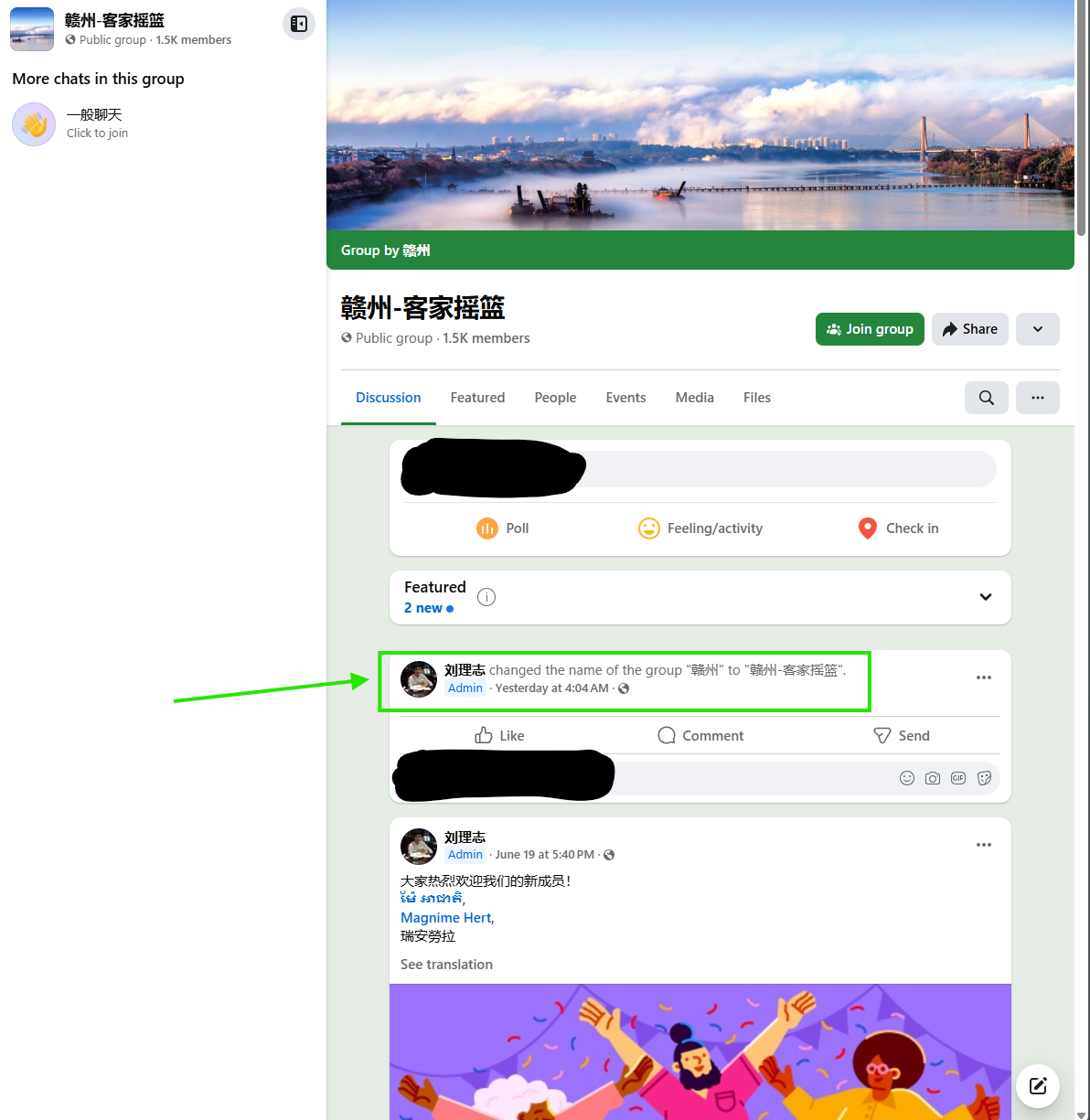
Our team notes that Liu is still actively using his Facebook account to update a group he manages about Ganzhou, China, making posts and content changes through June 2025, weeks after the sanctions were issued.
Brian Krebs (Krebs on Security) published this research in collaboration with Silent Push in his piece “Big Tech’s Mixed Response to U.S. Treasury Sanctions,” confirming that enterprise companies are responding to the U.S. Treasury sanctions in unique ways, with not all companies immediately banning the accounts or taking significant actions.
In May 2025, when the Treasury and FBI announced U.S. sanctions against FUNNULL and its administrator, Lizhi Liu, we were pleased to see renewed attention on this ongoing threat from China.
As our data showed, the FUNNULL CDN was behind a huge portion of investment scam websites, we were unsurprised to see the Treasury Department announce, “Funnull is linked to the majority of virtual currency investment scam websites reported to the FBI.” The same announcement included a disclosure that FUNNULL CDN-hosted websites have caused over $200 million in losses to U.S. victims, with an average loss of $150,000 per individual from the finance schemes hosted on these websites. As a result, the FBI has ongoing efforts to connect with victims who the FUNNULL-hosted campaigns have impacted.
After the May 2025 U.S. Treasury OFAC Sanctions were issued against FUNNULL and its admin Liu, additional details were made public in the Specially Designated Nationals List Sanctions Update about Liu’s other names and usernames he has across the internet.
Silent Push Threat Analysts have taken those usernames and further pivoted into Liu’s older personas, public blogs, and websites (listed throughout this report as identified), to reveal Western services and infrastructure that have yet to ban his accounts.
Google appears to be one of the few companies that have tracked Liu’s accounts and taken action against them. Liu’s YouTube channel (youtube[.]com/@nicelizhi) was recently taken down with no indication that Liu did it himself, based on his other live accounts and websites.
The following list of enterprise software companies, publishers, and social networks were found still hosting accounts owned by Lizhi Liu:
Lizhi Liu, also known as Steve Liu (additional personas explained below), is a 41-year-old male from China who has been an active web developer with a visible presence since at least 2010. Liu is the administrator of the FUNNULL CDN and appears to be both the lead developer and owner. Liu is also a father, has a small family, and has a long-term interest in fashion and photography.
An expert developer, Liu has seemingly been the brains behind this CDN, which profits from “Infrastructure Laundering” techniques that consistently abuse Western cloud providers to illicitly acquire accounts and quickly map IPs into the FUNNULL infrastructure, essentially allowing threat actors to host their websites for free, primarily on Western providers.
Silent Push Threat Analysts believe it to be doubtful that Liu is the actual mastermind behind many of the investment schemes and money laundering networks hosted on FUNNULL. We dubbed this network “Triad Nexus,” since we believe various unnamed criminals are profiting from the scheme.
Historically a strong advocate of open-source software, Liu has written extensively on the topic, published open-source code repositories, and been actively engaged in a range of developer forums and communities.
Liu also has written statements that could be considered “anti-American” and “anti-Japanese” on his blogs, although he rarely wrote about politics, and these were outlier comments.
Silent Push threat analysts believe Liu is now attempting to conceal the infrastructure that FUNNULL hosts in the wake of the U.S. sanctions.
The remainder of this report contains a persona profile of FUNNULL admin Liu, along with links to some of his still-active profiles and websites. Many are hosted on Western providers who likely need to ban the accounts to comply with U.S. Treasury sanctions against him.
Puxinggong Road, 9688, Alley No. 5, Haiwan Town, Fengxian District, Shanghai, China
DOB
November 13, 1984
Gender
Male
China National ID Number
36070219841113373X
Phone Numbers
13524084051 (old)
+86 18217614046 (old)
Usernames
NICE LIZHI
NICELIZHI
XXL4
kongfaceworld
cdndns
zylinkus
phpedu
cnphp
modelsnetcn
chinawolfs
shanghaiopensource
QQ: 3139319
bmchaoshi (Used on his blog cnphp.wordpress[.]com but seemingly no where else)
Emails
nice.lizhi@gmail[.]com
lizhi.liu@ymail[.]com
lizhi.liu@foxmail[.]com
chinawolfs@hotmail[.]com
chinawolfs@yahoo[.]com
chinawolfs@aol[.]com
steven@zylinkus[.]com
steve@models[.]net[.]cn
magentocommerce[.]com@gmail[.]com
zylinkus[.]com@gmail[.]com
liulizhi@liulizhi[.]info
GitHub and Public Repos
github[.]com/xxl4
github[.]com/nicelizhi
github[.]com/shanghaiopensource
github[.]com/zylinkus
github[.]com/NexaMerchant – NexaMerchant is an e-commerce company owned by Liu
NexaMerchant further promoted on models[.]net[.]cn (models[.]net[.]cn/nexa-merchant)
packagist[.]org/packages/nicelizhi/
pkg.go[.]dev/github.com/nicelizhi/easy-admin
uihub.licode[.]ai/directory/laravel-admin
Websites
zylinkus[.]com
models[.]net[.]cn
cnphp.wordpress[.]com
cnblogs[.]com/cnphp
mote001[.]com
nexa-merchant[.]vercel[.]app
liulizhi[.]info (Doesn’t appear to be currently owned by Liu) (Wayback Machine of the old blog shows it was active starting in 2010)
Social Profiles
medium[.]com/@cdndns
x[.]com/kongfaceworld
x[.]com/phpedu
youtube[.]com/@nicelizhi
buymeacoffee[.]com/nicelizhi
paypal[.]com/paypalme/nicelizhi
linkedin[.]com/in/zylinkus
linkedin[.]com/in/liulizhi
facebook[.]com/shgnahaizhiyan
facebook[.]com/webdesignshanghai
facebook[.]com/lizhi.liu
facebook[.]com/enjoyganzhou/
huggingface[.]co/xxl4
weibo[.]com/shzylinkus
deviantart[.]com/nicelizhi
Photos Used by Lizhi Liu
Photo of Lizhi Liu
Image of a hoodie used by Liu
Lizhi “Steve” Liu
The research included below contains significant amounts of screenshots and details, as we believe that many of these accounts will be banned and/or deleted in the coming days and weeks.
Liu Pivots from Open Source Research Shared with District 4 Labs for Further Pivots Using Breach Data
Silent Push Threat Analysts shared the accounts and details found via the pivots in this research with District 4 Labs, who provided additional data and insights about Liu’s accounts.
Despite many pivots being shared back with us, due to the common name of “Lizhi Liu” (and Steve/Steven Liu), it was impossible to confirm that Liu truly owned all of the potential accounts and infrastructure that we have been tracking.
However, Liu’s email address, “chinawolfs@hotmail[.]com,” has been in use for nearly two decades and is associated with a significant history of breaches.
The email address was used with two simple passwords that contained his name repeatedly on numerous services.
The first password was elementary, and we found it was associated with numerous people with the name “Lizhi Liu” – some of which were clear false positives – so we rejected that pivot, even though it likely generated a few true positives for niche legacy services.
However, Liu also reused a more complex password that included his birth year, month, and date, along with his name. We are not directly sharing the password he used because we don’t want to encourage password spraying efforts on his accounts. However, the email addresses associated with this unique password were used across multiple providers.
The first three emails use his persona “chinawolfs,” and we have strong confidence that these are directly controlled accounts.
The remaining accounts used some random email addresses. We believe it’s possible that some of these came from “Combo breach lists,” which contained bad data—essentially, a threat actor selling email/password lists may have stuffed their list with fake details to make it larger and potentially more profitable in a sale. As a result, we’re not making these other emails public and have shared them only with select organizations that can conduct private investigations into the accounts.
chinawolfs@yahoo[.]com
chinawolfs@hotmail[.]com
chinawolfs@aol[.]com
“Focus on Open Source Liu Li Zhizhi” – His 2010 Personal Blog
In 2010, Liu launched one of his personal blogs at cnphp[.]wordpress[.]com, which is still live in 2025. The blog was created in Chinese, but the screenshots we captured have been translated into English via Google Translate.
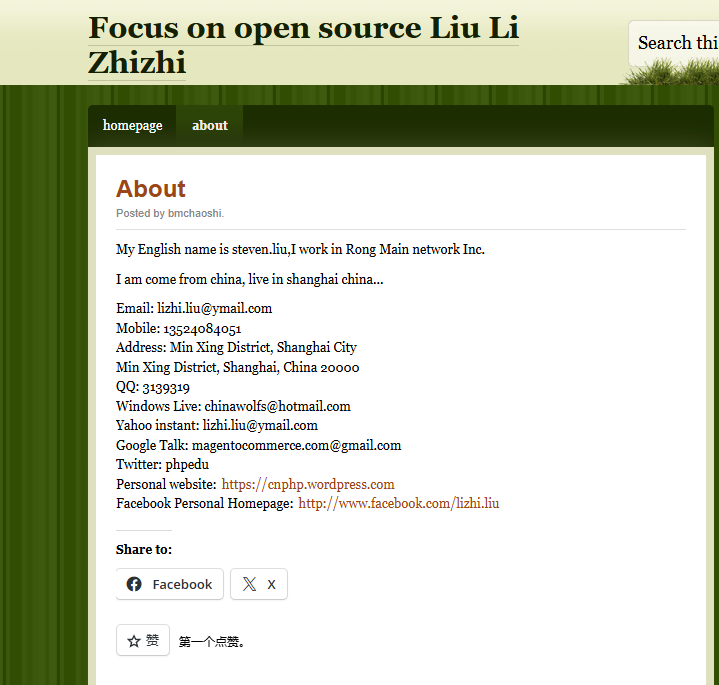
The “About” page on the blog features a variety of contact information, including email addresses and social media links for Liu. The accounts connect to many other pieces of infrastructure from different sources, confirming that it’s the same Liu Li Zhizhi, also known as Steven Liu.
The username “bmchaoshi” is exclusive to this website, but it appears to be an early Liu persona.
Source: cnphp[.]wordpress[.]com/about/
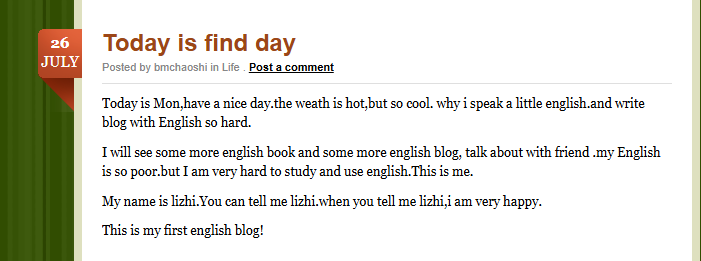
In July 2010, Liu posted his first blog explaining his goals to write and study more English.
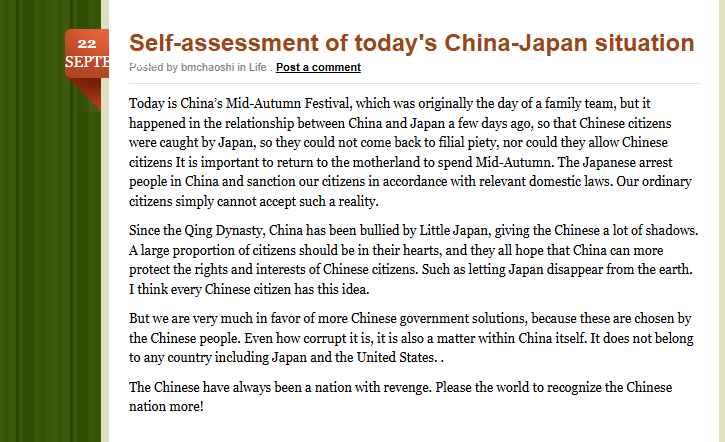
On September 22, 2010, Liu posted a rare political blog (cnphp.wordpress[.]com/2010/09/22/) during China’s Mid-Autumn Festival.
The section below, as translated by Google Translate, is rough. Still, other translation services confirmed this is essentially a post about grievances toward Japan, and also, to a lesser degree, the United States.
The post includes the comment that “every Chinese citizen” has the idea to let “Japan disappear from the earth.”
Liu further states that even if China has corruption, “it does not belong to any country including Japan [or] the United States.”
Liu ends the piece with a bold statement about revenge: “The Chinese people have always been a nation that must repay grievances. Please let the world better understand the Chinese nation!”
Liu’s rare political blog post
Second “Focus on Open Source Liu Li Zhizhi” Blog from 2010
Liu published another personal blog around 2010 with a similar title to the one hosted on WordPress, with this one hosted at liulizhi[.]info.
The content on this blog focuses on business optimization, life hacks, and a limited amount on technology issues. Most of the “blog posts” were hyperlinks to third-party content, but there is potentially some light original content here.
The “About” page for this blog features the name “Liu Lizhi” and three email addresses that align with other sources our team has observed:
chinawolfs@hotmail[.]com
liulizhi@liulizhi[.]info
nice.lizhi@gmail[.]com
The “About” page on Liu’s blog
Liu’s Personal Website Models[.]net[.]cn Highlights Interests in Computers, Fashion, and Some Politics
Liu has an active blog @ models[.]net[.]cn, which has seen over 900 posts since its launch in 2023 (models[.]net[.]cn/new-blog-start/).
Liu’s blog “models[.]net[.]cn/new-blog-start/”
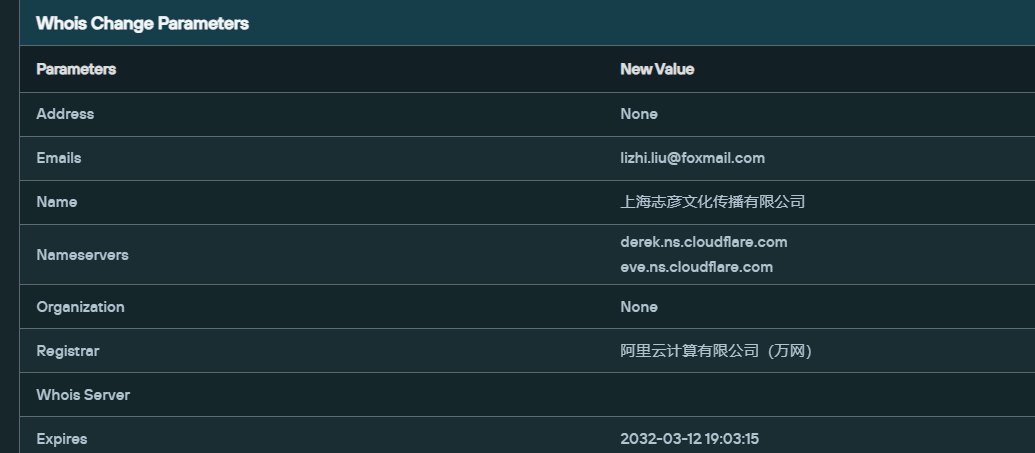
The WHOIS details from Silent Push associated with models[.]net[.]cn, show the email “lizhi.liu@foxmail[.]com” was used to register the domain, with the first record seen on March 12, 2022.
DNS “A records” were first observed associated with this domain in March 2022, but it appears the blog wasn’t launched immediately.
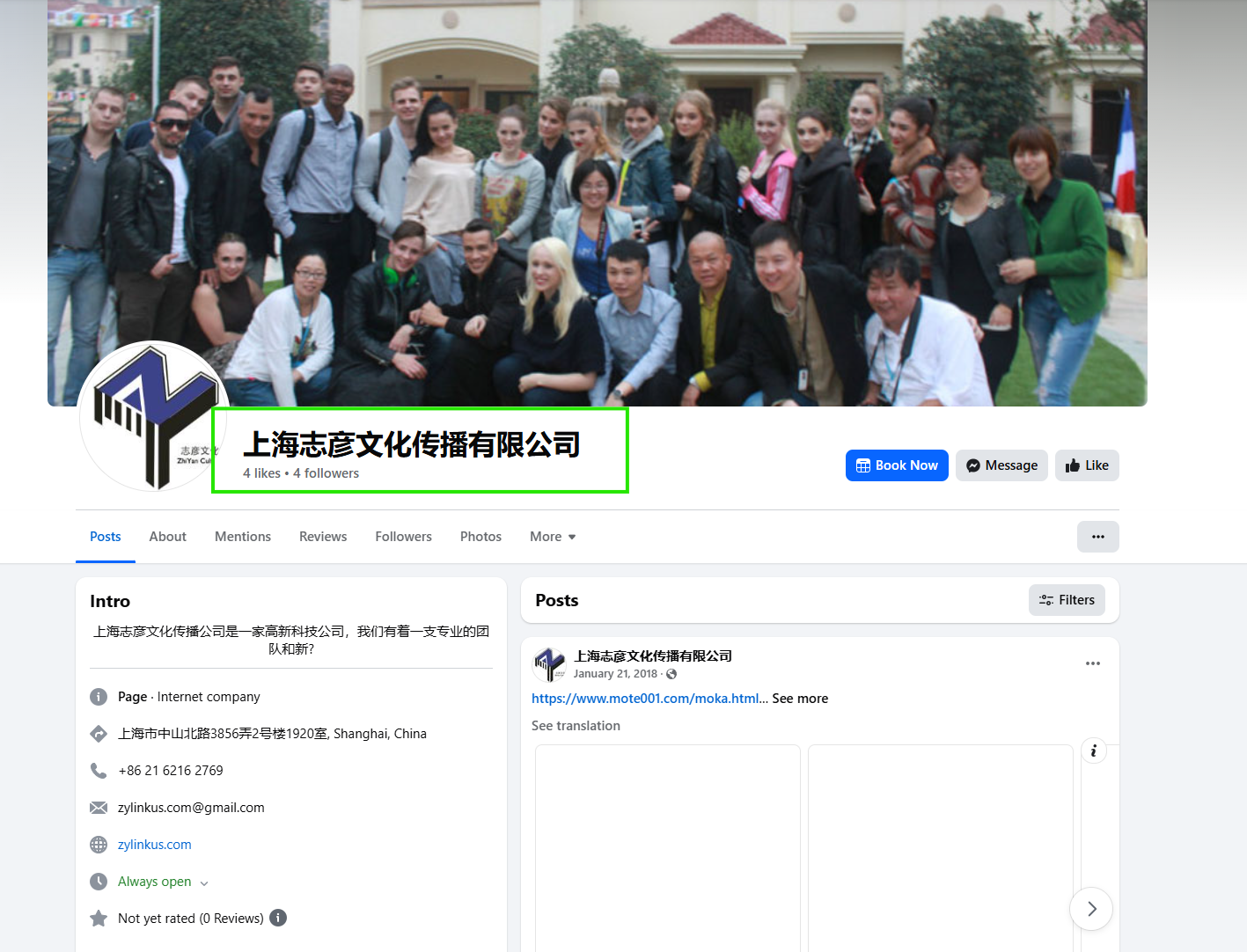
The “name” used to register this domain was “上海志彦文化传播有限公司” which translates to “Shanghai Zhiyan Culture Communication Co., Ltd.” – the same name used on the Facebook page for “shgnahaizhiyan” (facebook[.]com/shgnahaizhiyan) which is connected to Liu through the zylinkus[.]com and mote001[.]com domains.
Source: “facebook[.]com/shgnahaizhiyan”
Liu seems to have edited some of the posts on Models[.]net[.]cn on May 25, 2025, so the original publication dates are not precise.
In the first and second posts on the site, which were backdated to the 1980s (models[.]net[.]cn/day/day-1984-11-13/), Liu explains the day he was born and the second day after his birth, providing some background on his family and name.
Liu’s “models[.]net[.]cn/day/day-1984-11-13/”
On September 7, 2012, there was a post (models[.]net[.]cn/page/97/), “Today is the day when my company was established, please record it.” It’s unclear if this is the predecessor to FUNNULL or a separate tech company.
This appears to be another back-dated post, with a recent edit made on May 25, 2025.
Liu’s “models[.]net[.]cn/page/97/”
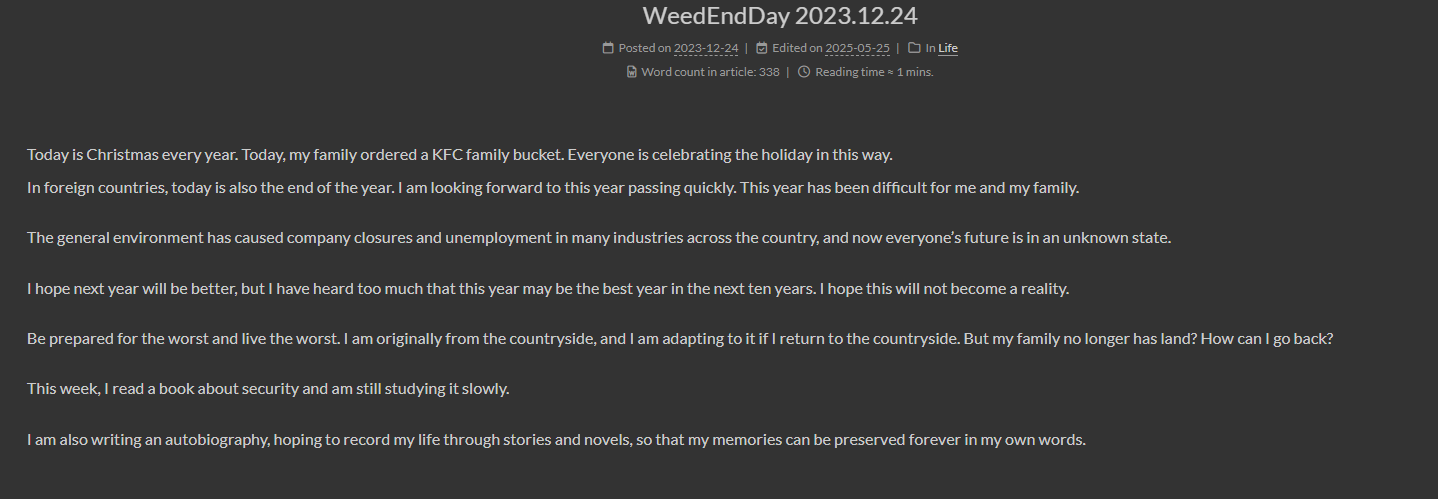
In December 2023, Liu wrote a blog on Christmas (models.net[.]cn/weekendday-2023-12-24/) and the challenges he faced, hoping the next year would bring more prosperity.
Across the rest of the blog, there are a significant number of “photos of models” and various fashion magazine covers. This is interspersed with links to third-party news sites, including some that cover cybersecurity threats and others originating from China.
The “About” page (models.net[.]cn/about-me/) features a brief description under the heading
“Hi 👋,I’m Steve”:
“I’m a software engineer with a passion for building high-quality software products. I have experience in full-stack web development, mobile app development, and cloud computing. I enjoy working on challenging projects and solving complex problems. I’m always looking to learn new technologies and improve my skills.”
The “Tools” page of the website (models[.]net[.]cn/tools/) features hundreds of links to developer websites and repositories, further showing the amount of time Liu has spent engaging with developer communities on the internet.
Zylinkus, aka Shanghai Zhiyancheng (上海志彦成) – Possibly Liu’s First Company, Founded 2012
The domain zylinkus[.]com referenced on many of Liu’s social profiles features content from a “Steve Liu” and makes mention of a company founded in 2012 called “Shanghai Zhiyan,” which is described as:
“Shanghai Zhiyan was founded in 2012 and is a network service agency focusing on high-end website construction and brand communication. Years of training have given us rich experience in creative design, marketing promotion and technology research and development. We are good at listening to corporate needs, exploring the core value of brands, integrating high-quality design and the latest technology to create a valuable creative design experience for you. The core team has a senior team with more than 8 years of industry experience, covering professionals in various fields such as creativity, strategy, and technology. We firmly believe that every successful project is the result of good teamwork and provide customers with professional and effective network solutions.”
Example of the domain “zylinkus[.]com”
On the zylinkus[.]com website the Chat widget brand “Tawk[.]to” provides chat services for visitors.
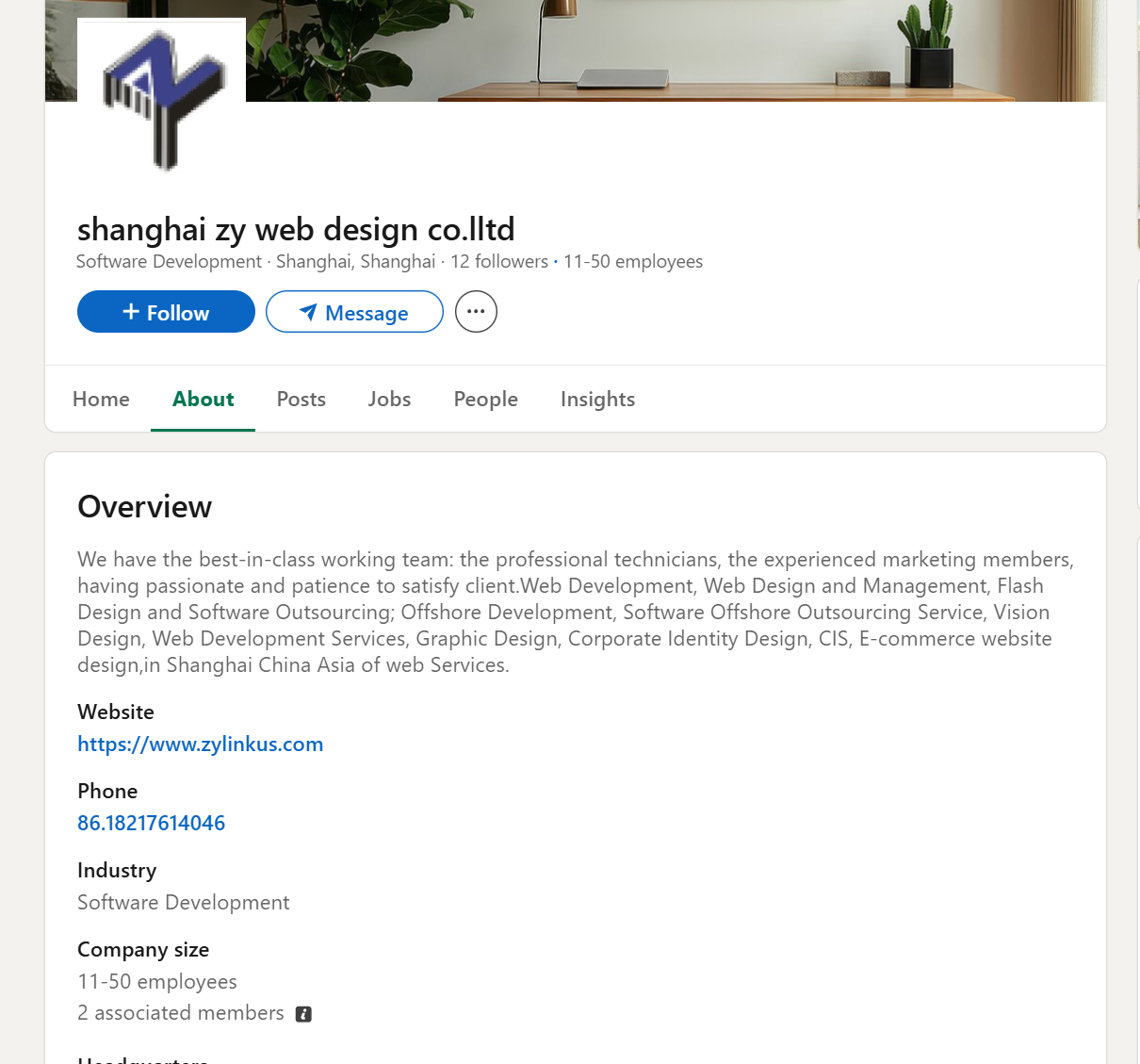
This same Zylinkus brand also has a LinkedIn page where they use the name “Shanghai zy web design co.lltd” with the phone number “86.18217614046” which is also seen on the Zylinkus contact page (zylinkus[.]com/contact-us/).
Further searching of the phone number from the LinkedIn page yields two pages on the Zylinkus domain: one is their Contact Us page, which clarifies that Steve Liu is the founder of “SHZY Inc.” The page further clarifies that the business goals align with website development:
“Shanghai Zhiyan was founded in 2012 and is a network service agency focusing on high-end website construction and brand communication. Years of training have given us rich experience in creative design, marketing promotion and technology research and development. We are good at listening to corporate needs, exploring the core value of brands, integrating high-quality design and the latest technology to create a valuable creative design experience for you.”
Example of the Contact Us page: “zylinkus[.]com/contact-us/”
The phone number also connects to a unique product and “DNS” sales page on the Zylinkus domain: (zylinkus[.]com/dns/).
The “GUNDNS Smart DNS system” is briefly explained on this generic sales page, accompanied by stock images and some generic details. It seems this sales page was essentially left unfinished:
Source: “zylinkus[.]com/dns/”
The “GunDNS Smart DNS System” from Zylinkus, with code originally from “PowerDNS,” may be associated with the FUNNULL infrastructure; our investigation is ongoing.
Zylinkus also has a Facebook page (facebook[.]com/webdesignshanghai).
Mote001[.]com – Previous Effort to Recruit Models, Work in Fashion, Used “Jane Liu” Persona
In March 2018, Liu’s “@phpedu” Twitter account posted a series of tweets for mote001[.]com
Liu’s “x[.]com/phpedu/status/969236051716984832”
The mote001[.]com website had the same content in 2018 as it did until late 2024, as seen on the Wayback Machine. The footer of the website states, “Powered by SHZY,” and links to zylinkus[.]com, which we confirmed is owned by Liu.
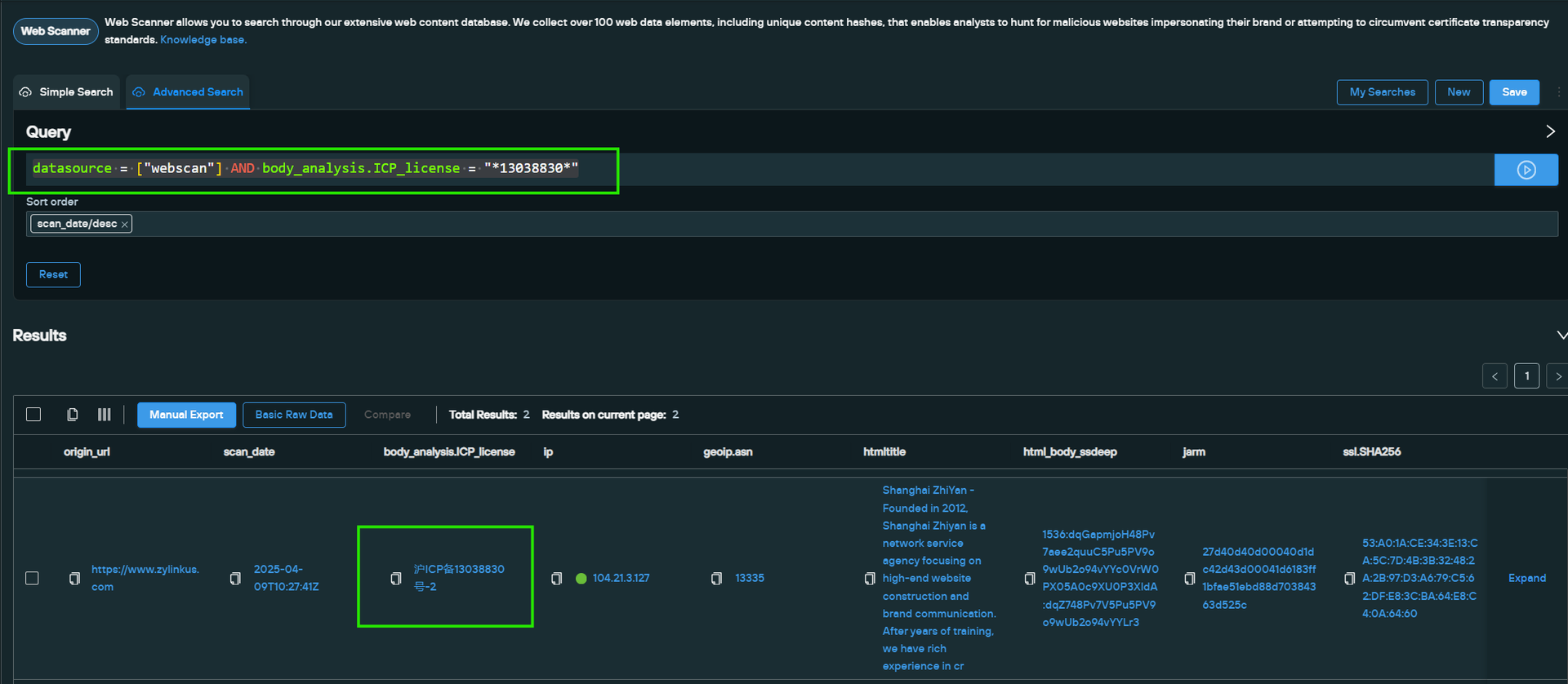
This blog also had an ICP number, the Chinese Internet License of “沪ICP备13038830号-4”
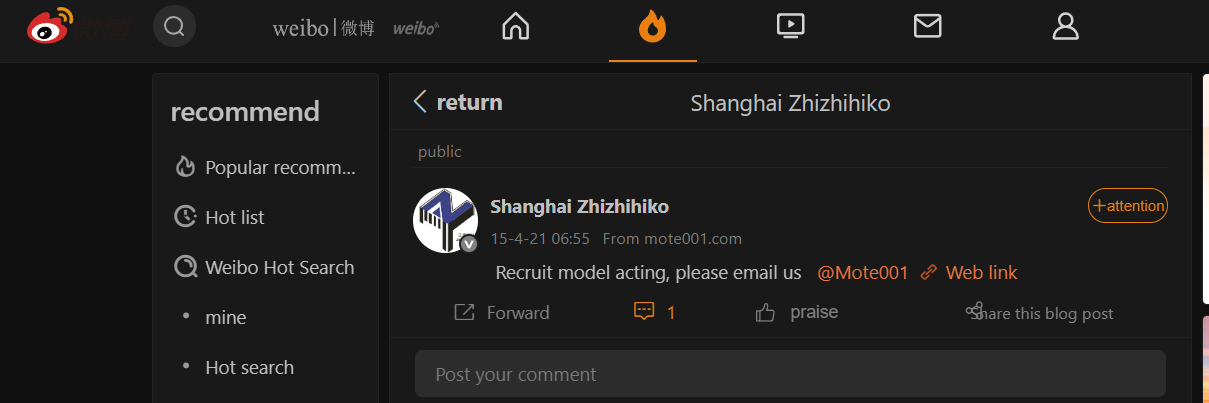
In 2021, Liu posted on Weibo about mote001[.]com, which can be seen here (weibo[.]com/3042772513/CeljQk2Sa) in Chinese, that translates to, “Recruit model acting, please email us @Mote001.”
Source: “weibo[.]com/3042772513/CeljQk2Sa”
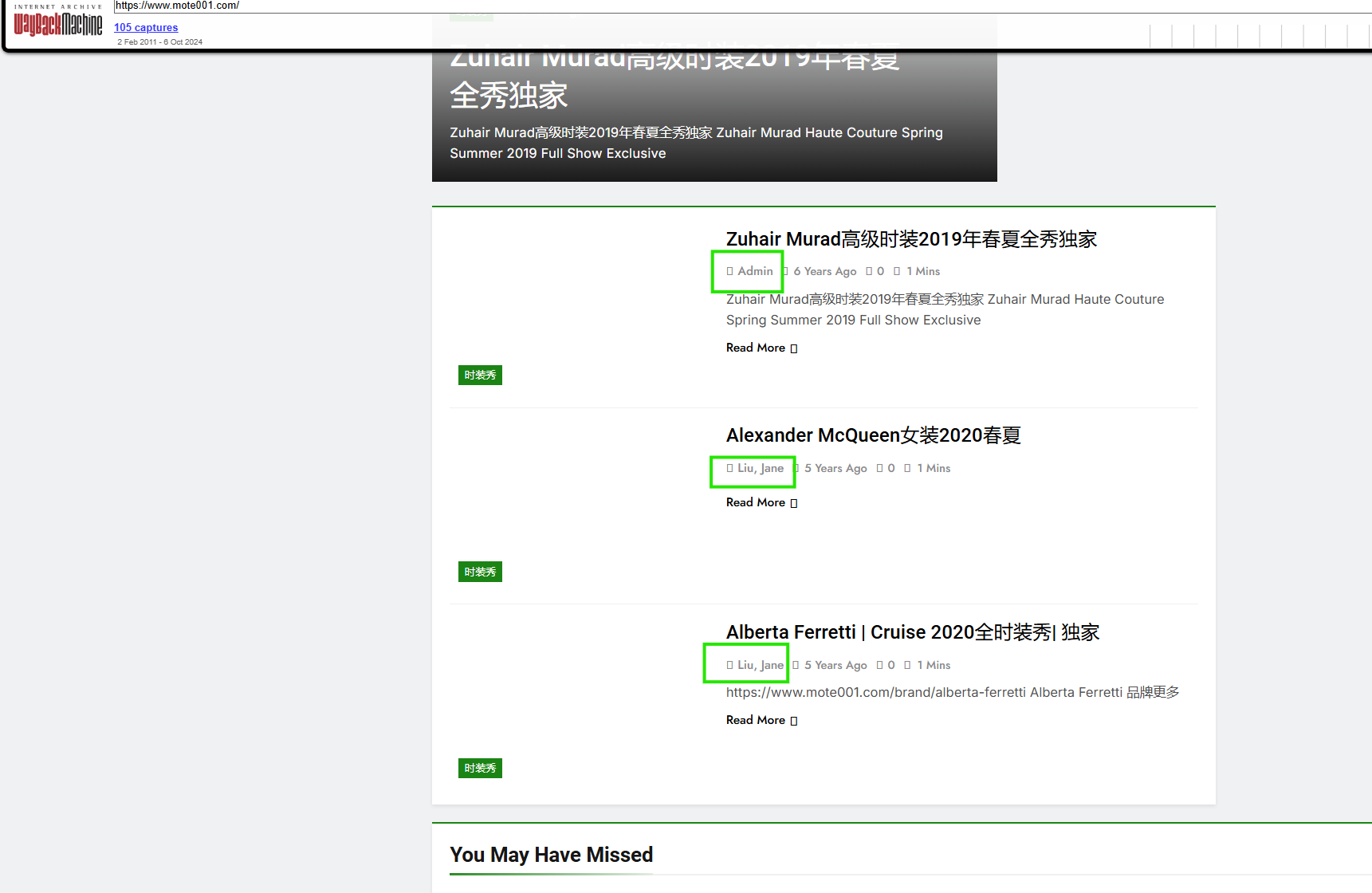
The website features some fashion details, which align with his personal blog. The only writers on the site (“Wayback Machine” link) are named “Admin” and “Jane Liu” – the “Jane” persona is likely a pseudonym used by Steve Liu for the project.
Wayback Machine example of the writers “Admin” and “Jane Liu” on the website
Liu’s Third “Focus on Open Source” Blog
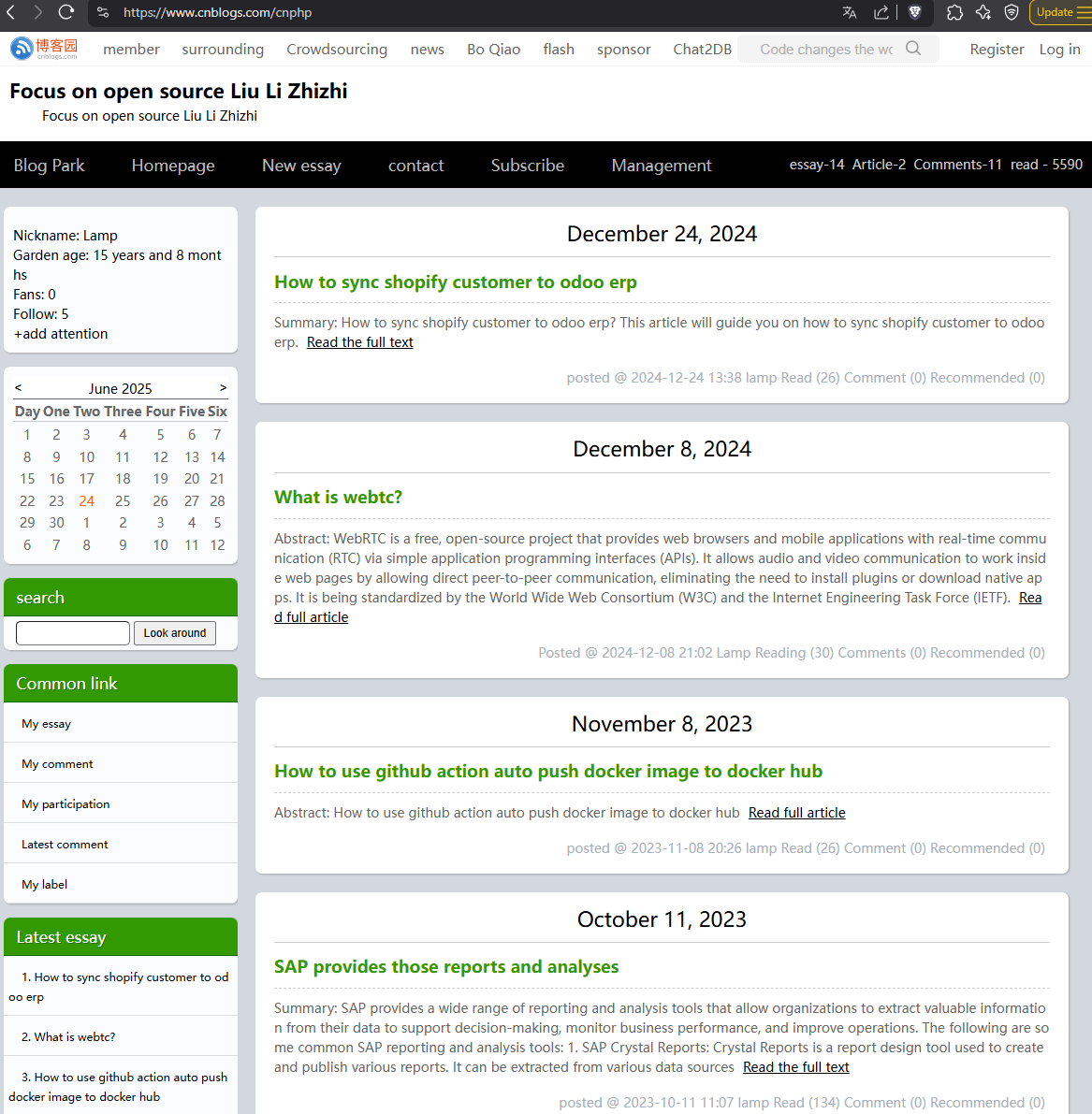
Liu also owns another low-quality developer blog hosted at cnblogs[.]com/cnphp – a Chinese service for hosting blogs. The blog was live from September 2023 until December 2024.
The title of the blog, when translated to English, is “Focus on open source Liu Li Zhizhi,” with the content primarily consisting of simple tutorials.
Liu’s third Focus on Open Source blog, “cnblogs[.]com/cnphp”
Google’s YouTube Potentially Banned Liu
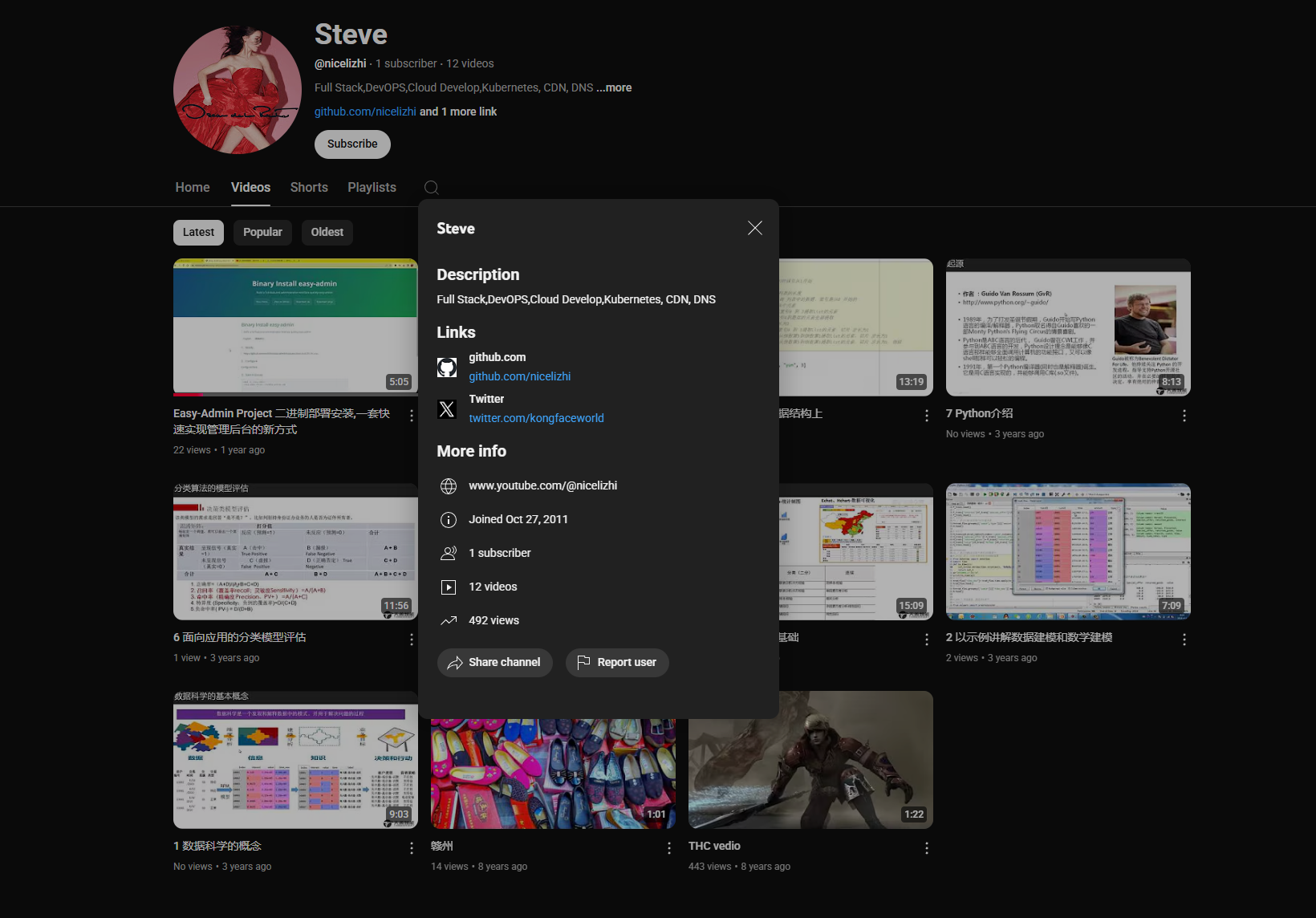
Liu had a YouTube account under the username “NiceLizhi” (youtube[.]com/@nicelizhi) until it was banned in mid-June 2025. The account was opened on October 27, 2011, and was essentially live for 14 years, featuring a series of developer demonstration videos for some of his projects.
The profile had the name “Steve” as the name, with the description, “Full stack,DevOPS,Cloud Develop,Kubernetes, CDN, DNS.”
Liu linked to his GitHub profile at github[.]com/nicelizhi which has since been renamed to github[.]com/xxl4 and a Twitter profile at twitter[.]com/kongfaceworld
Liu’s YouTube channel: “youtube[.]com/@nicelizhi”
The YouTube profile associated with this account features a model who is also showcased on a separate personal website, which includes numerous photos of models.
youtube[.]com/@nicelizhi
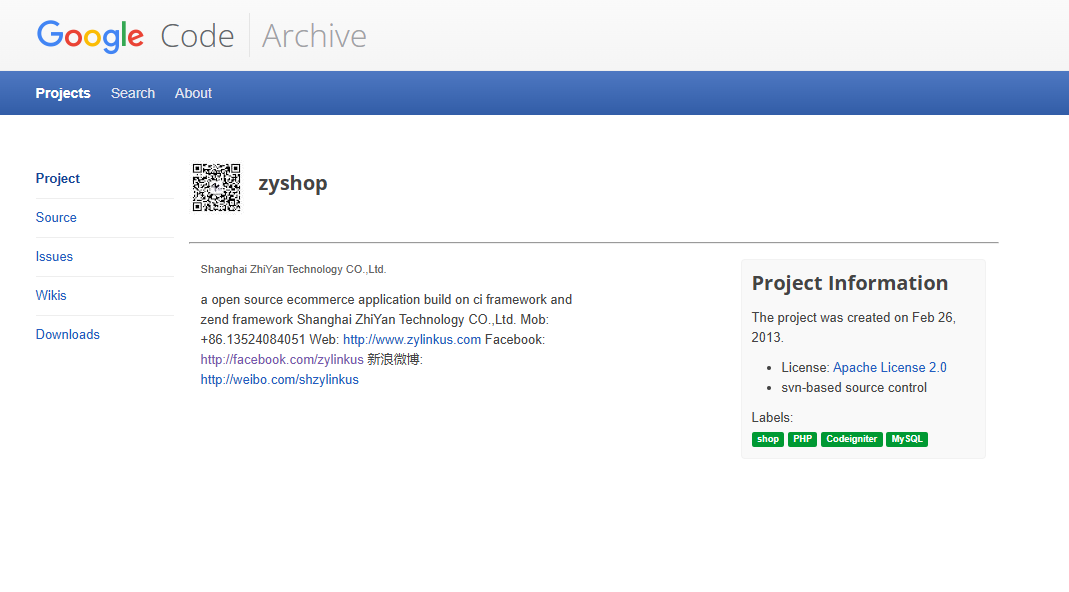
2013 Google Code Archive for Zylinkus: Still Live
Liu’s Zylinkus, also known as Shzy, had a Google Code Archive created on February 26, 2013.
Code created in 2013 for Liu’s Zylinkus is still active
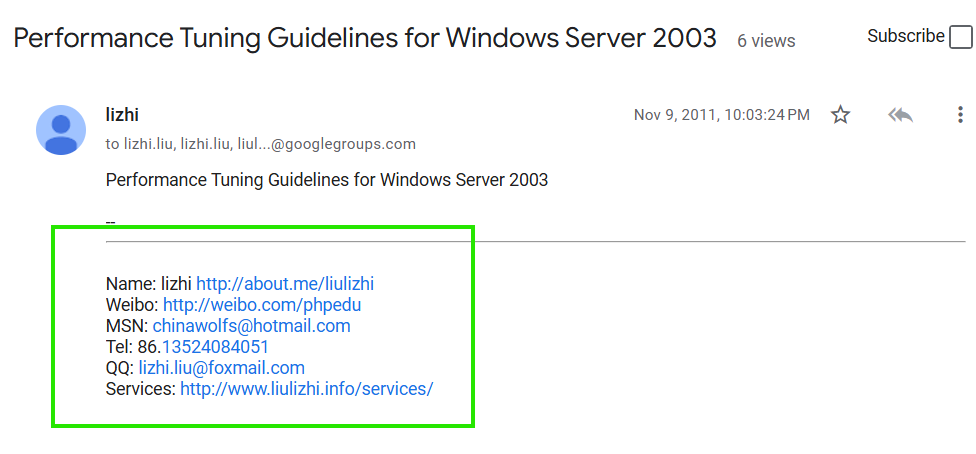
2011 Google Groups Post from “Lizhi” Connects to Numerous Liu Personas
In November 2011, user “liulizhi” with the name “lizhi” posted a guide for “Performance Tuning Guidelines for Windows Server 2003,” that included contact details connecting to numerous Liu personas and accounts:
Name: lizhi http://about[.]me/liulizhi
Weibo: http://weibo[.]com/phpedu
MSN: chinawolfs@hotmail[.]com
Tel: 86.13524084051
QQ: lizhi.liu@foxmail[.]com
Services: http://www.liulizhi[.]info/services/
2011 Google Group’s post: “groups.google[.]com/g/liulizhi/c/gpWJuBt3jaw”
Liu’s About[.]Me Profile Connects to Active LinkedIn, Flickr Accounts
The About[.]me profile for Lizhi Liu (about[.]me/liulizhi), linked from his Google Groups signature, further links to his Flickr and LinkedIn accounts:
linkedin[.]com/in/liulizhi/
flickr[.]com/people/liulizhi/
Liu’s “about[.]me/liulizhi”
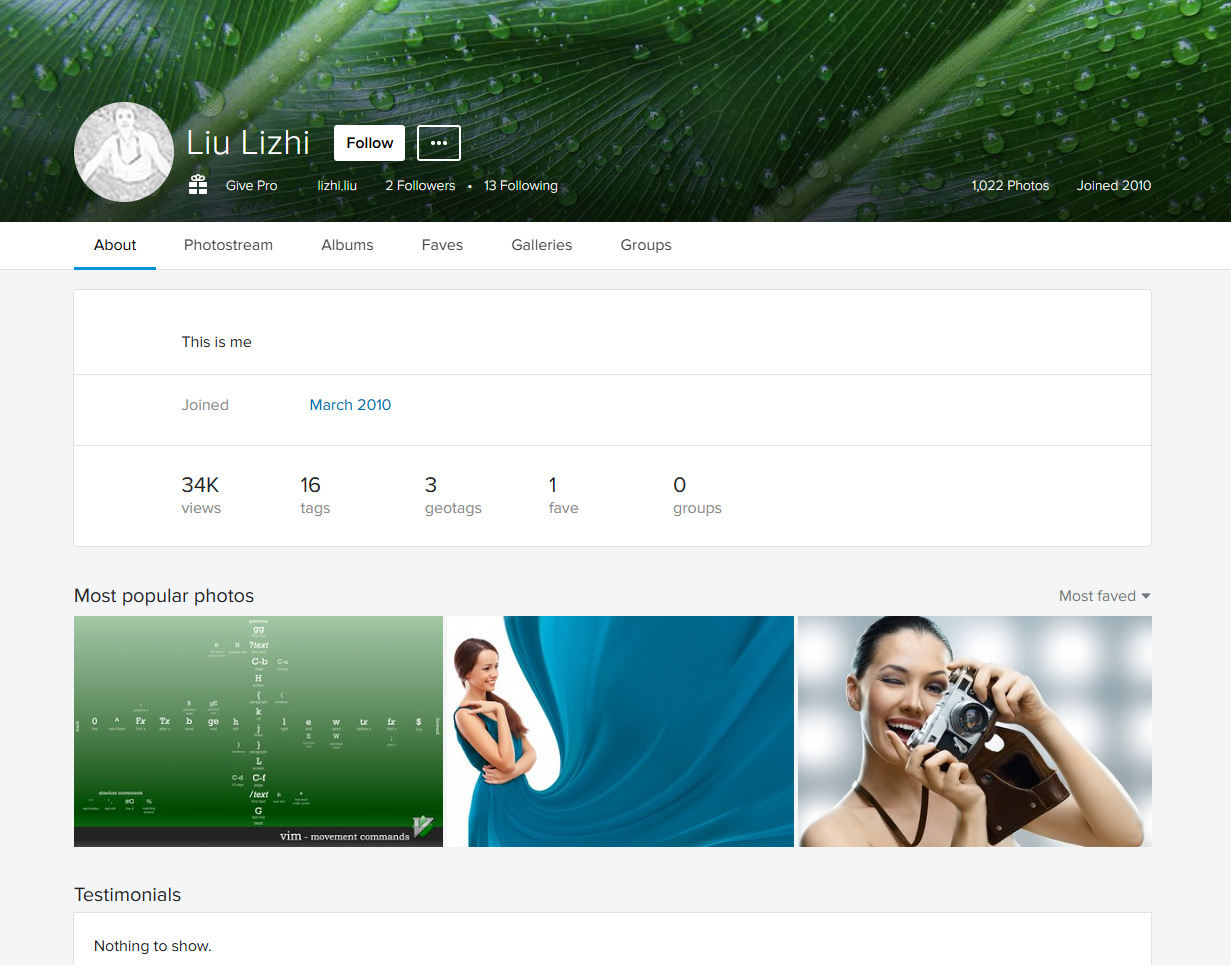
Liu’s Personal Flickr Started in 2010, 1,000+ Images Publicly Available
Liu’s personal Flickr account (flickr[.]com/photos/liulizhi/) was created in 2010 and uses the name “Liu Lizhi” and a profile photo seen on some of his other social accounts.
The account currently has 34,000 views, 16 tags, and over 1,000 photos.
Liu’s personal Flickr account: “flickr[.]com/photos/liulizhi/”
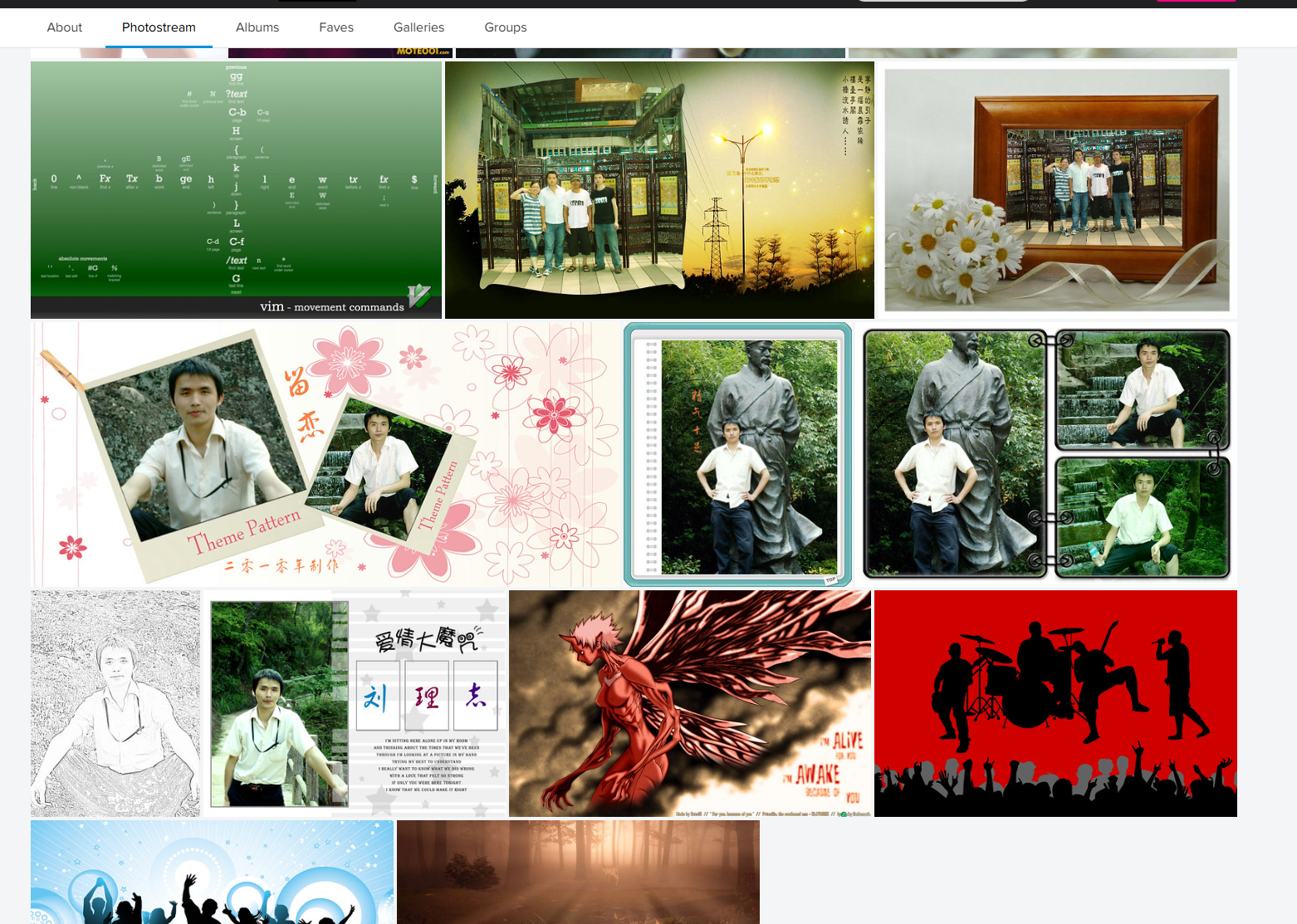
This personal account features hundreds of photos of models and various stock photography, along with a few pictures of Liu himself in multiple poses.
It appears all the images of Liu can be seen under the tag “刘理志”, which translates to “Liu Lizhi.”
Images of Liu accompany hundreds of models’ photos on “flickr[.]com/photos/liulizhi/tags/刘理志/”
Liu’s “Model ZY” Flickr Account: Currently Private
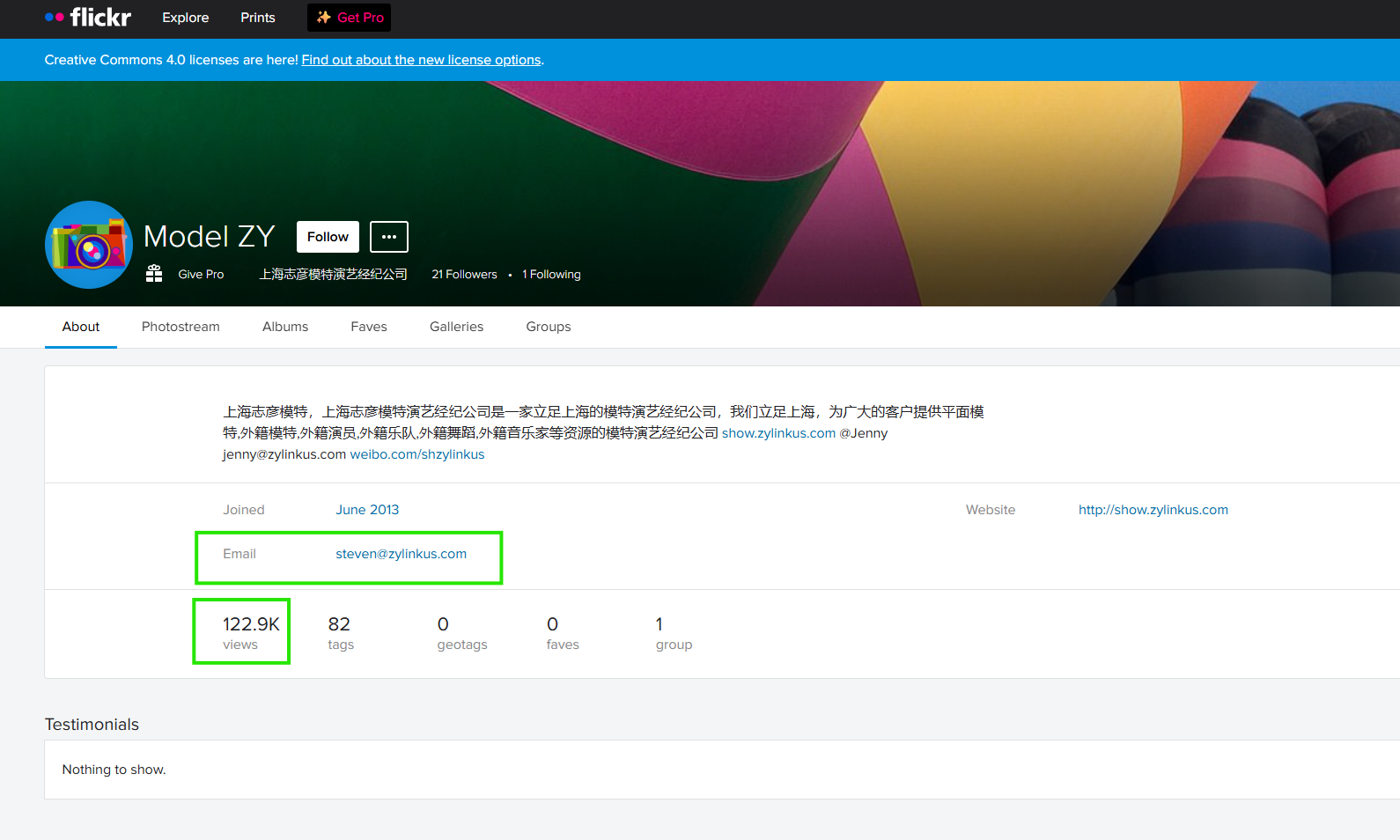
The “Model ZY” Flickr account, created in June 2013 with the email address “steven@zylinkus[.]com,” has over 120,000 views and 82 tags, but no images are currently public.
The account was made private at some point, but based on the views and tags, it is likely that private images are still uploaded in the account.
Liu’s “flickr[.]com/people/zymodel/”
Liu’s GitHub Profile Shows Significant Open Source Collaboration, GunDNS Code
Liu’s GitHub profile is currently github[.]com/xxl4
Original profile @ github[.]com/nicelizhi
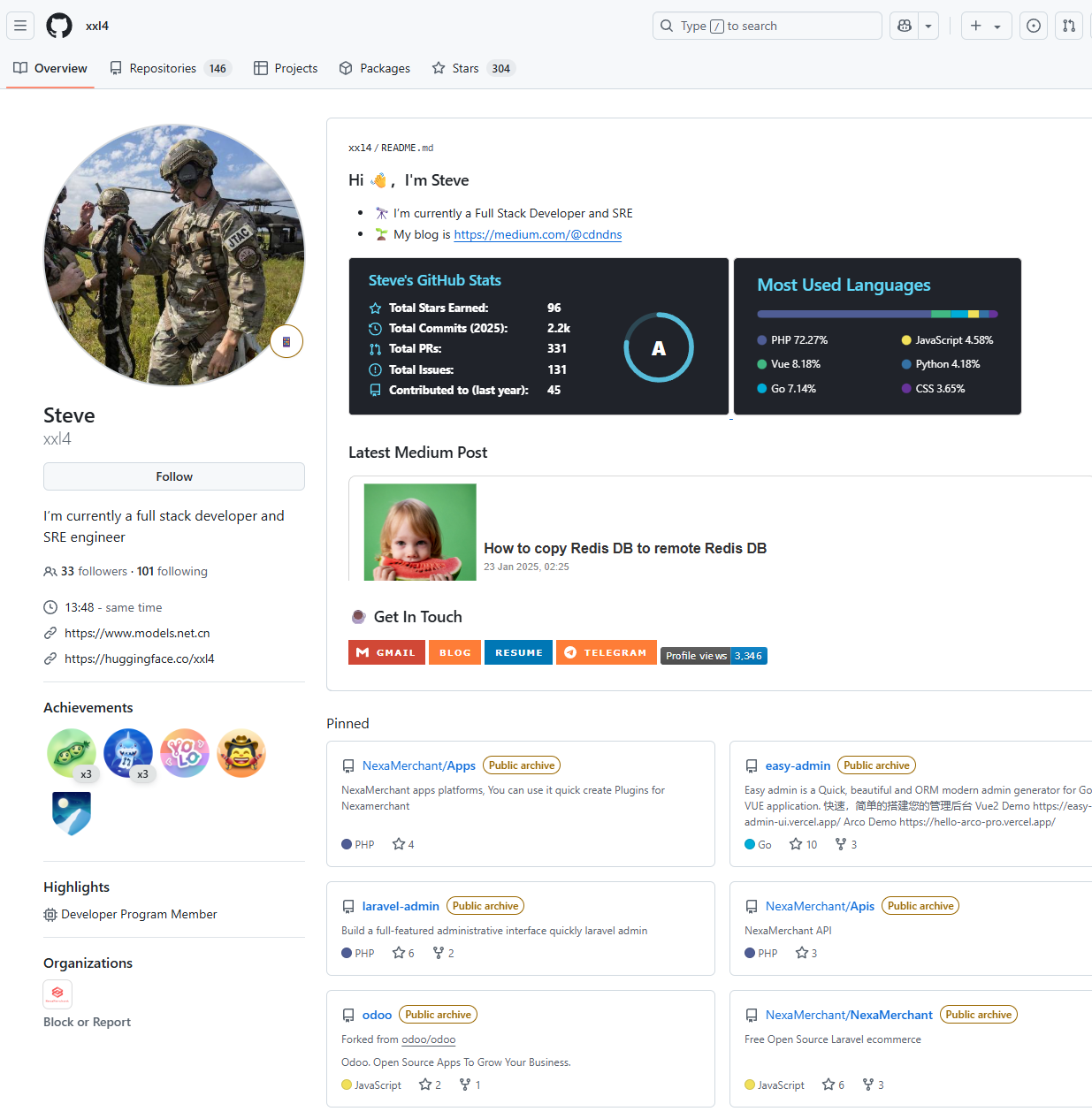
The “@xxl4” Github profile features the name “Steve” and the bio, “I’m currently a full stack developer and SRE engineer.”
The GitHub profile promotes three domains:
models[.]net[.]cn
Liu’s profile on huggingface[.]com/xxl4
Liu’s writing at medium.com/@cdndns
Liu’s GitHub profile
The profile photo for Liu’s “xxl4” profile on GitHub is odd – it’s not him. The original image was taken of someone in the “Tactical Air Control Party (TACP) Airmen with the New Jersey Air National Guard’s 227th Air Support Operations Squadron” – the original photo can be seen here. The GitHub profile photo is identical:
Profile photo from Liu’s “xxl4” GitHub account
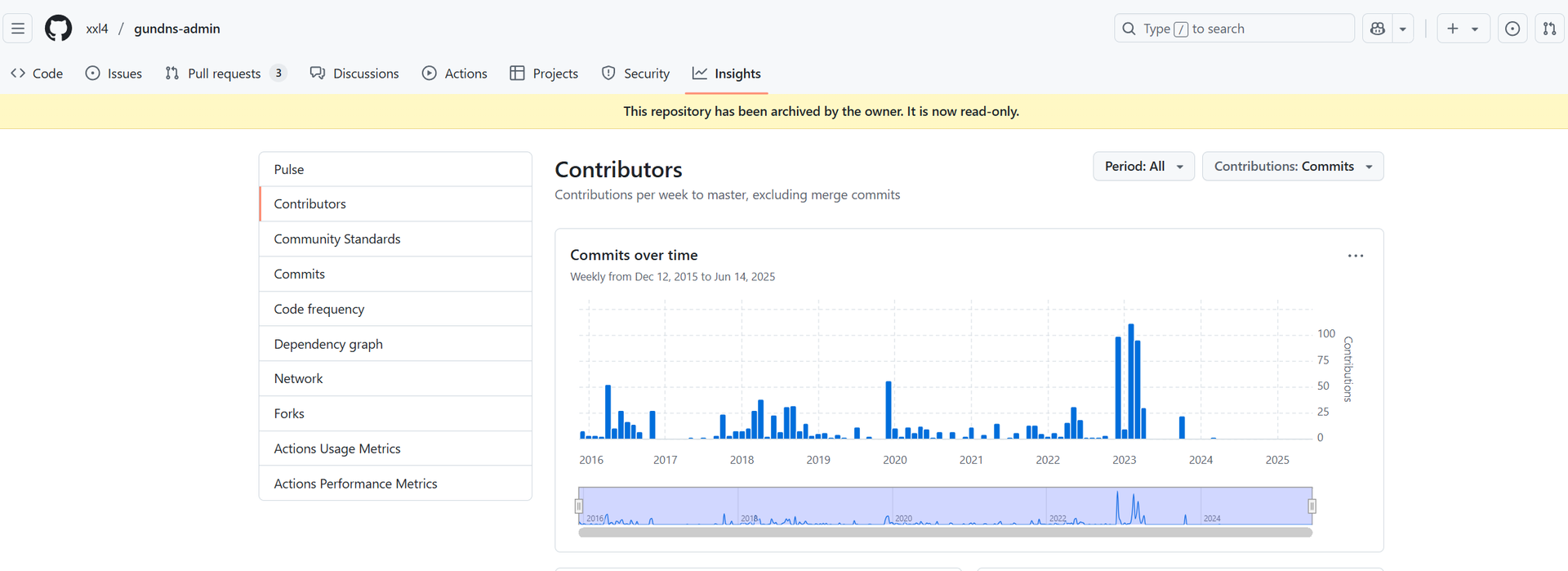
One of Liu’s repositories, called “GunDNS-Admin,” appears to be a clone of “PowerDNS-Admin” and has over 130 contributors to the code.
The “GunDNS-admin” project has many of the same contributors as “PowerDNS-admin” which is a popular open source repository (github[.]com/PowerDNS-Admin/PowerDNS-Admin). Liu’s relationship to this community and code is unclear, but it appears to be one of his more engaged repos.
NexaMerchant GitHub Organization
NexaMerchant (github[.]com/NexaMerchant) appears to be an unpopular open-source service created by Liu and hosted on GitHub, which connects to several of his other GitHub profiles.
The project is described as a “Free laravel ecommerce” framework.
“github[.]com/NexaMerchant”
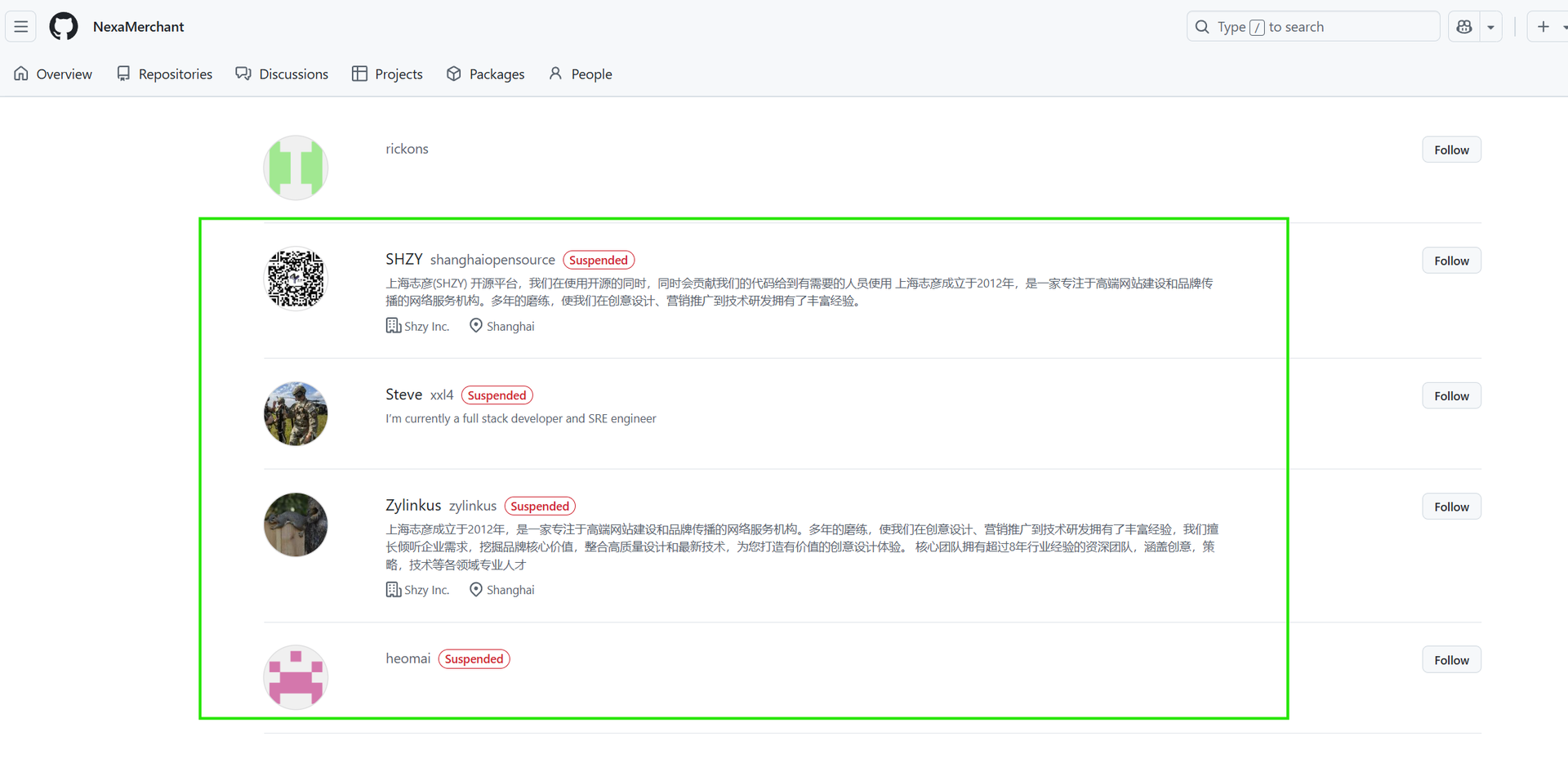
On the NexaMerchant “Followers” page (github[.]com/orgs/NexaMerchant/followers), there are unique “Suspended” notes visible next to four of the profiles, even though they are still visible and active on GitHub.
The NexaMerchant Followers page: “github[.]com/orgs/NexaMerchant/followers”
The four profiles with the “Suspended” note associated with NexaMerchant, are:
github[.]com/shanghaiopensource – includes links to zylinkus[.]com in the profile and appears to be the original GitHub account used by Liu’s first company, “Shanghai Zhiyancheng”
github[.]com/zylinkus – another official zylinkus[.]com profile
github[.]com/xxl4 – Liu’s personal GitHub account, tied to numerous other details
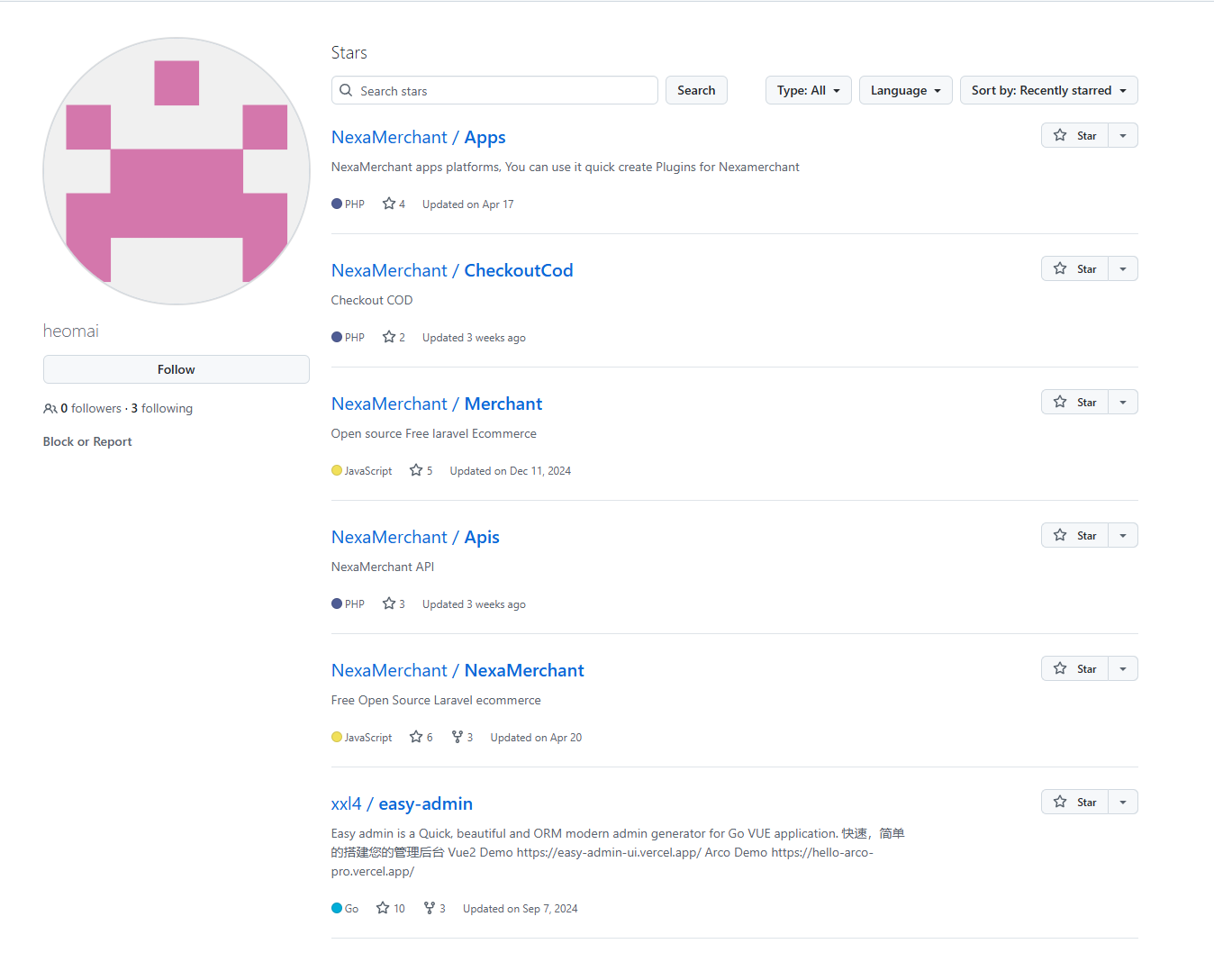
github[.]com/heomai – only connections to NexaMerchant and other Liu personas – started the xxl4 “Easy-admin” repo
Source: “github[.]com/heomai?tab=stars”
NexaMerchant claims to be a payment gateway working with numerous financial corporations. Their list of claimed partners includes::
The “NiceLizhi” profile on Deviant Art (deviantart[.]com/nicelizhi), created within the last six months, indicates it originated in 2025 or late 2024. The profile includes the name “Steve Liu” and has the birthdate set as November 13, the exact birthdate released by the U.S. Treasury Department.
The location was set as Hong Kong, and the pronouns used when signing up were “They/Them.”
Liu’s website: “deviantart[.]com/nicelizhi”
Liu’s Gravatar Profile Uses the Name “Steven Lizhi”
Liu’s Gravatar profile (gravatar[.]com/nicelizhi) with the username “Nicelizhi” uses the name “Steven Lizhi” and a unique profile photo from a 2017 fashion shoot for “Shuba Magazine.”
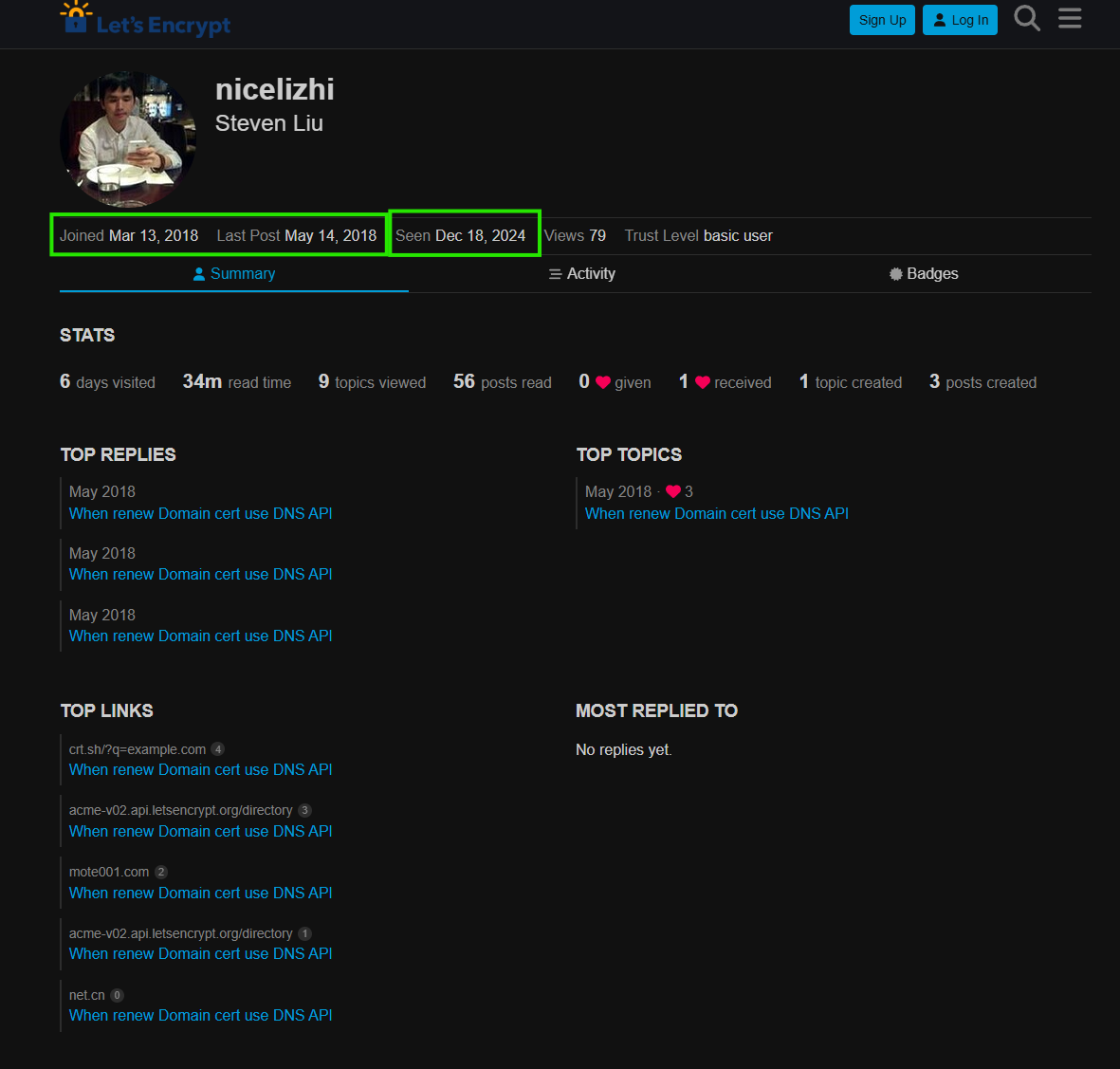
Let’s Encrypt Profile, Active Posting for 1 Month in 2018, Active Account Through 2024
“Steven Liu” created his Let’s Encrypt account in 2018, and it remained active for a month (community[.]letsencrypt[.]org/u/nicelizhi/summary). However, it was last observed on December 18, 2024, indicating that he has maintained his account for six years.
Hugging Face Comment & Metadata Indicate Liu Uses an Apple Laptop
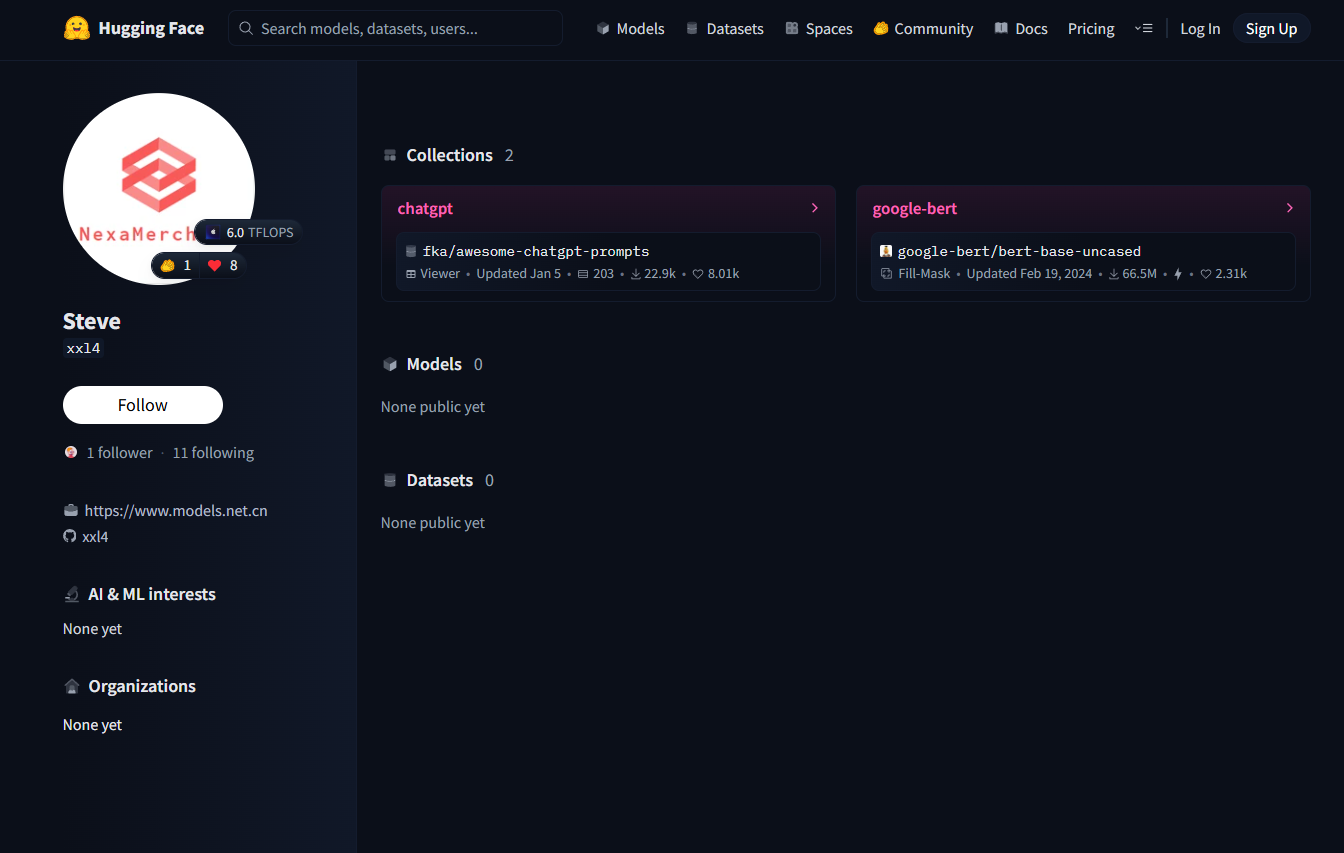
Liu has a Hugging Face profile (huggingface[.]co/xxl4) with the username “xxl4” and the first name Steve. The profile photo is for NexaMerchant, and features a link to his xxl4 GitHub along with the domain “models[.]net[.]cn.”
Liu’s Hugging Face profile: “huggingface[.]co/xxl4”
It appears that Liu loaded his “Hardware settings” via Hugging Face, which indicates he has an Apple M1 Pro with 16GB of RAM and a 32GB 13th Generation Intel Core (i7).
Liu’s laptop specs loaded in “hardware settings” on Hugging Face
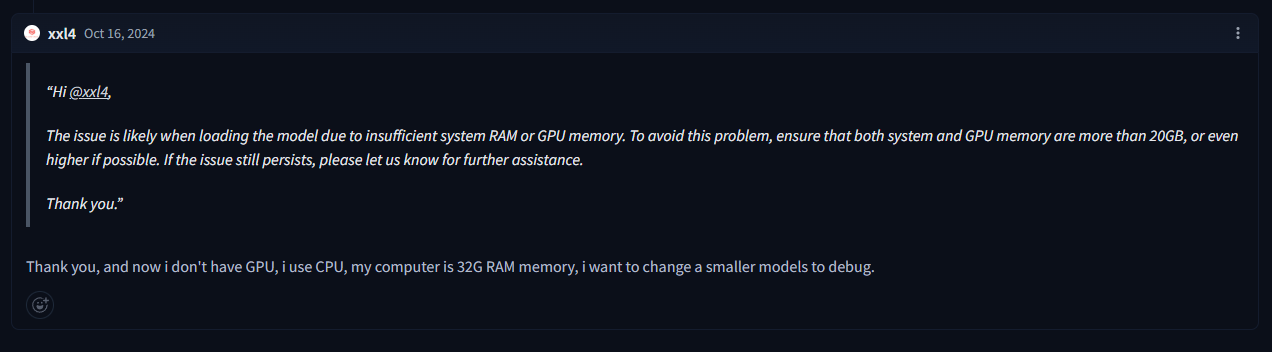
In a Google Gemma-7b discussion on Hugging Face, Liu was having trouble getting the model to run. A user at Google provided comments reminding him that 20GB of RAM was needed, and Liu responded, “Thank you, and now i don’t have GPU, i use CPU, my computer is 32G RAM memory, i want to change a smaller models to debug.”
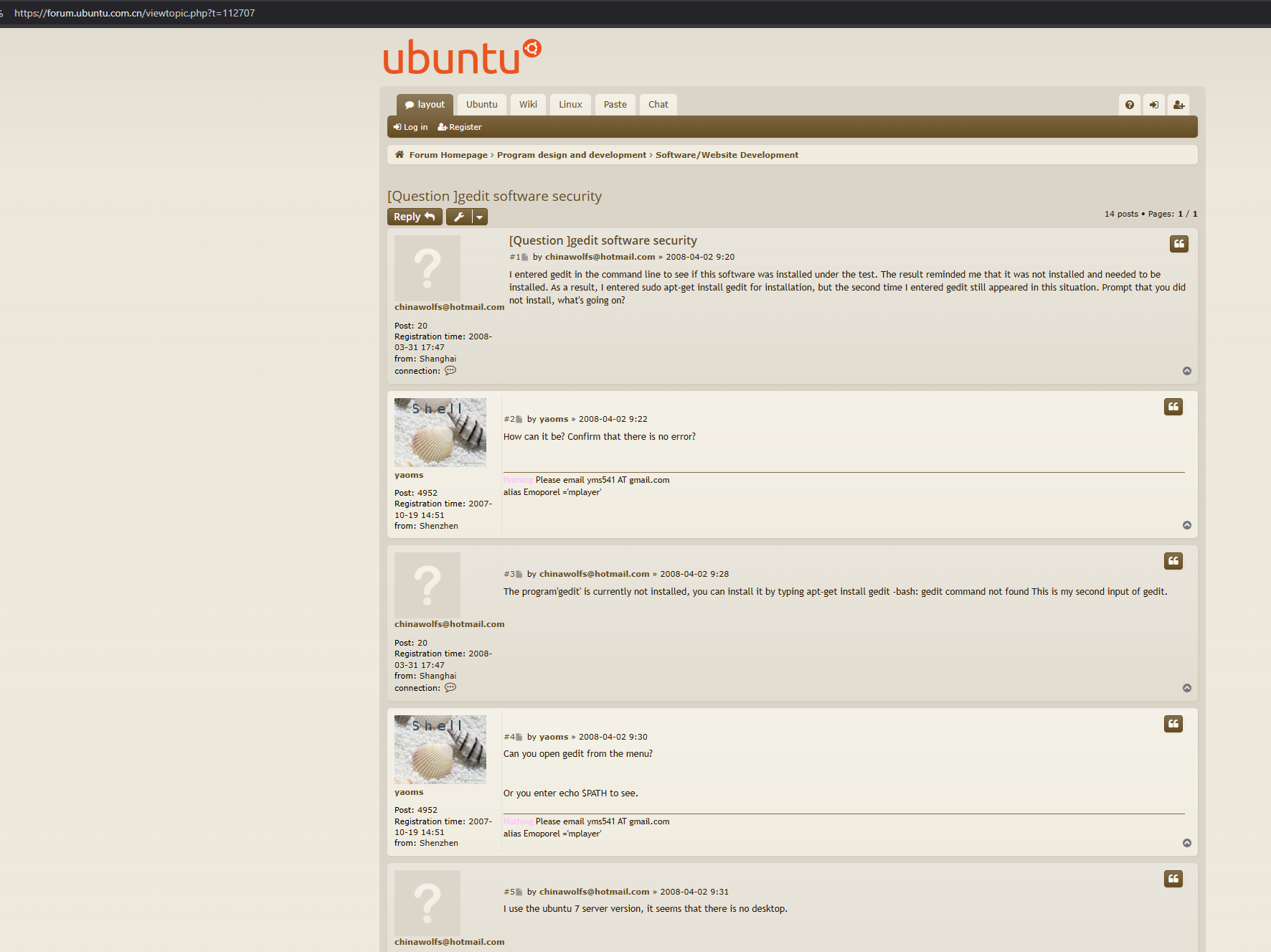
In March 2008, the Chinese Ubuntu forum featured a post from a user with the handle “chinawolfs@hotmail[.]com,” which was known to be used by Liu.
The Ubuntu user was from “Shanghai” and asked several beginner questions about getting started with developing projects in PHP on Ubuntu Linux.
Chinese Ubuntu forum page: “forum.ubuntu[.]com.cn/viewtopic.php?t=112707”
Liu asked questions on the forum page: “forum.ubuntu[.]com.cn/viewtopic.php?t=112707”
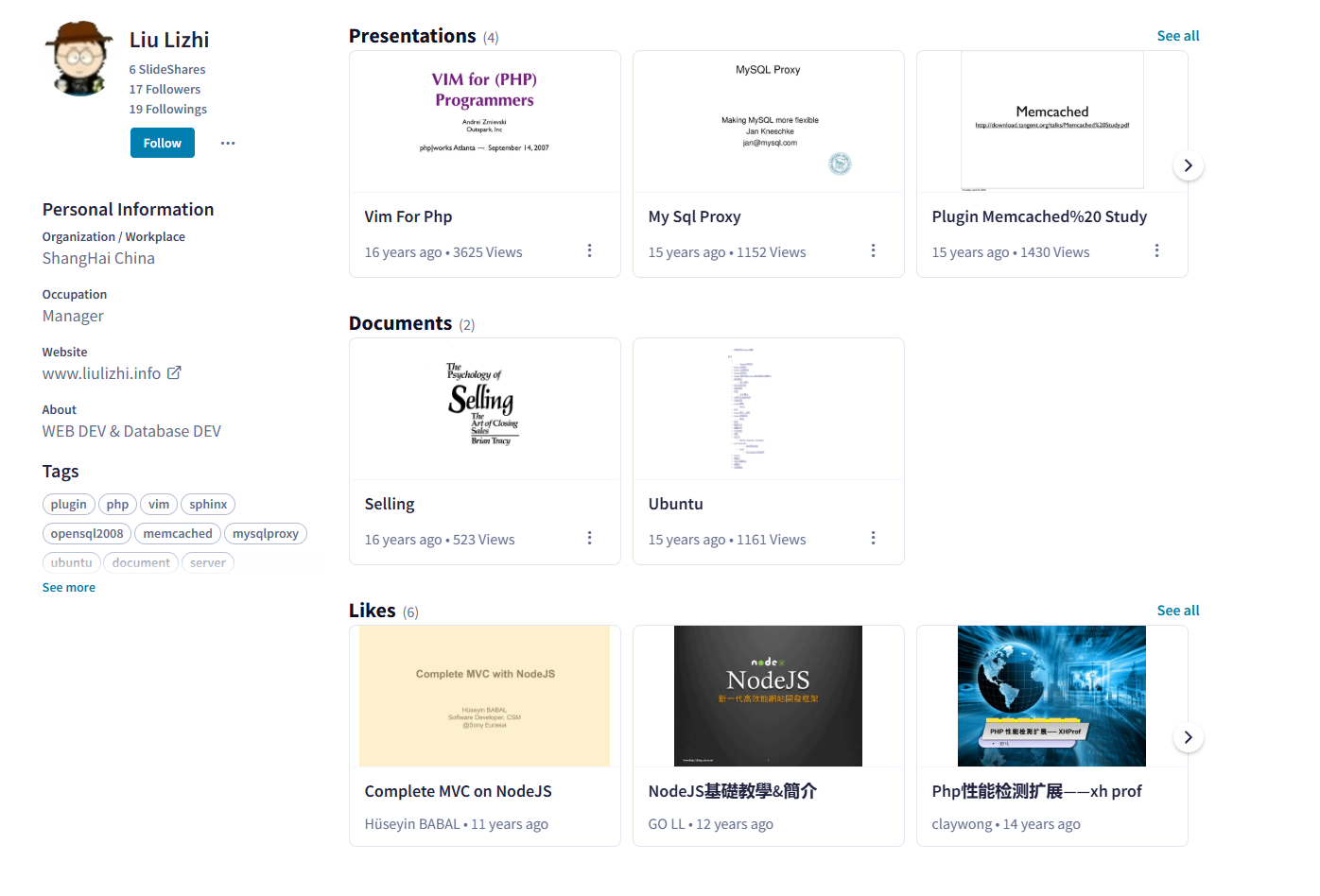
Liu Lizhi’s Slideshare Connects to “ChinaWolfs” Persona and Personal Website
Liu Lizhi uses what appears to be a “South Park” profile photo on his Slideshare account, which promotes the domain “liulizhi[.]info” and uses the username “chinawolfs.”
The account features four developer presentations from 15 and 16 years ago, created by other individuals, as well as “likes” for several developer presentations. Additionally, it includes a document, “The Psychology of Selling” by Brian Tracy, and a document about Ubuntu Linux.
Liu’s location is listed as “ShangHai China”, his Occupation is “manager” and a “WEB Dev & Database DEV.”
slideshare[.]net/chinawolfs
Liu’s SlideShare: “slideshare[.]net/chinawolfs”
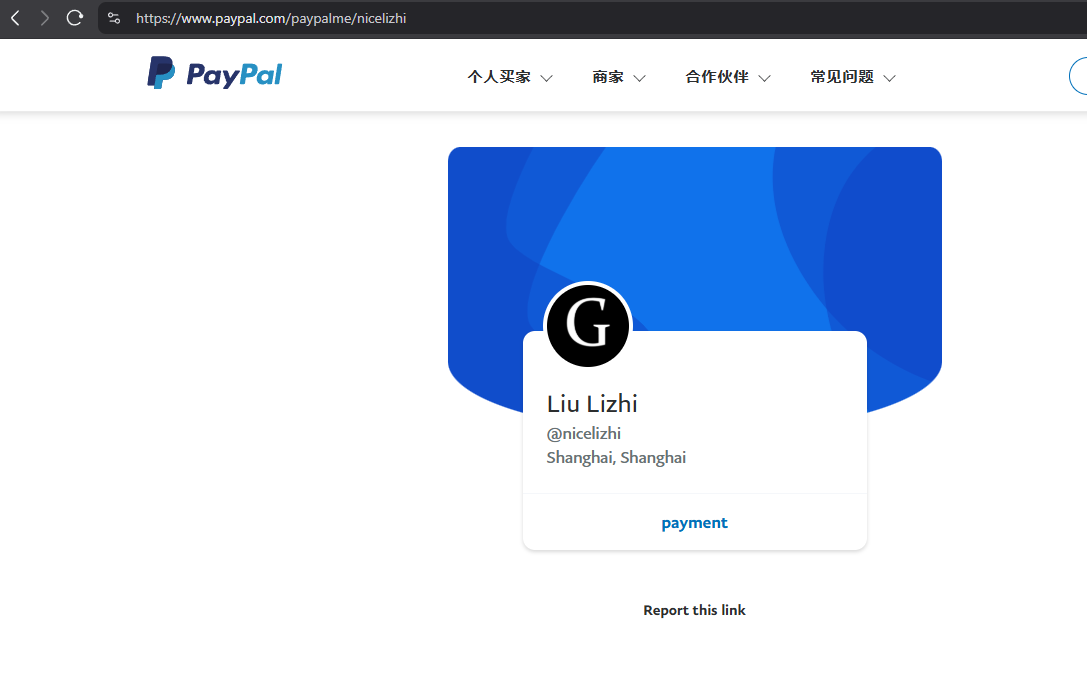
Liu’s PayPal Profile
Liu also has a PayPal profile @ paypal[.]com/paypalme/nicelizhi. He uses the name “Liu Lizhi” on the profile “nicelizhi,” and the location is set to Shanghai.
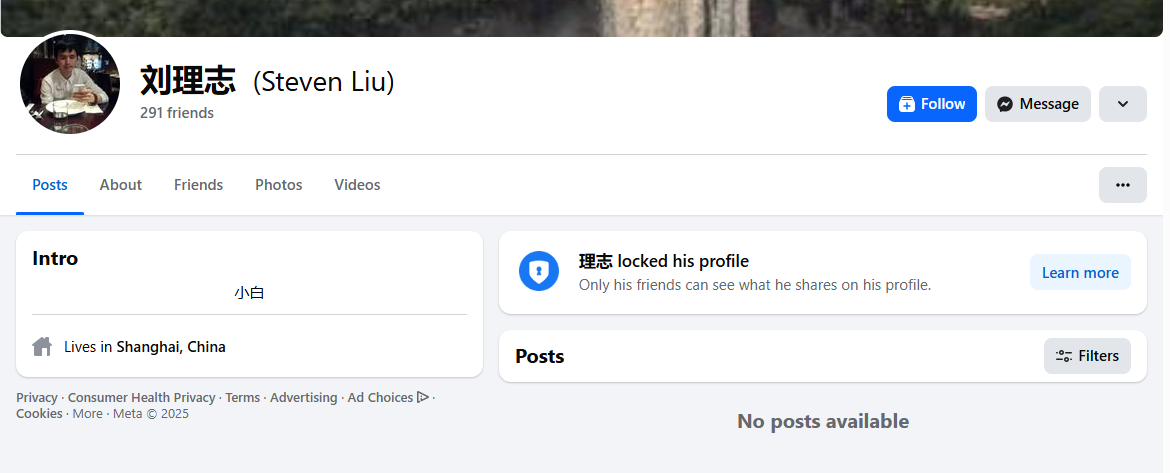
Steven Liu (刘理志) has a Facebook profile (facebook[.]com/lizhi.liu) with 291 friends and a location set to Shanghai, China. Liu’s “Intro” text is “小白” which translates to “noob.”
All other details on the account have been locked down and made private.
Source: “facebook[.]com/lizhi.liu”
Liu is still actively using his Facebook account even after the U.S. Treasury sanctions were issued, with edits to his Facebook Group (facebook[.]com/groups/ganzhou) occurring as recently as June 22, 2025, when he changed the group name from “赣州” (Ganzhou) to “赣州-客家摇篮” (Ganzhou – Cradle of Hakka).
Liu’s “facebook[.]com/groups/ganzhou”
There are two admins of this Ganzhou Facebook Group – Liu controls both accounts.
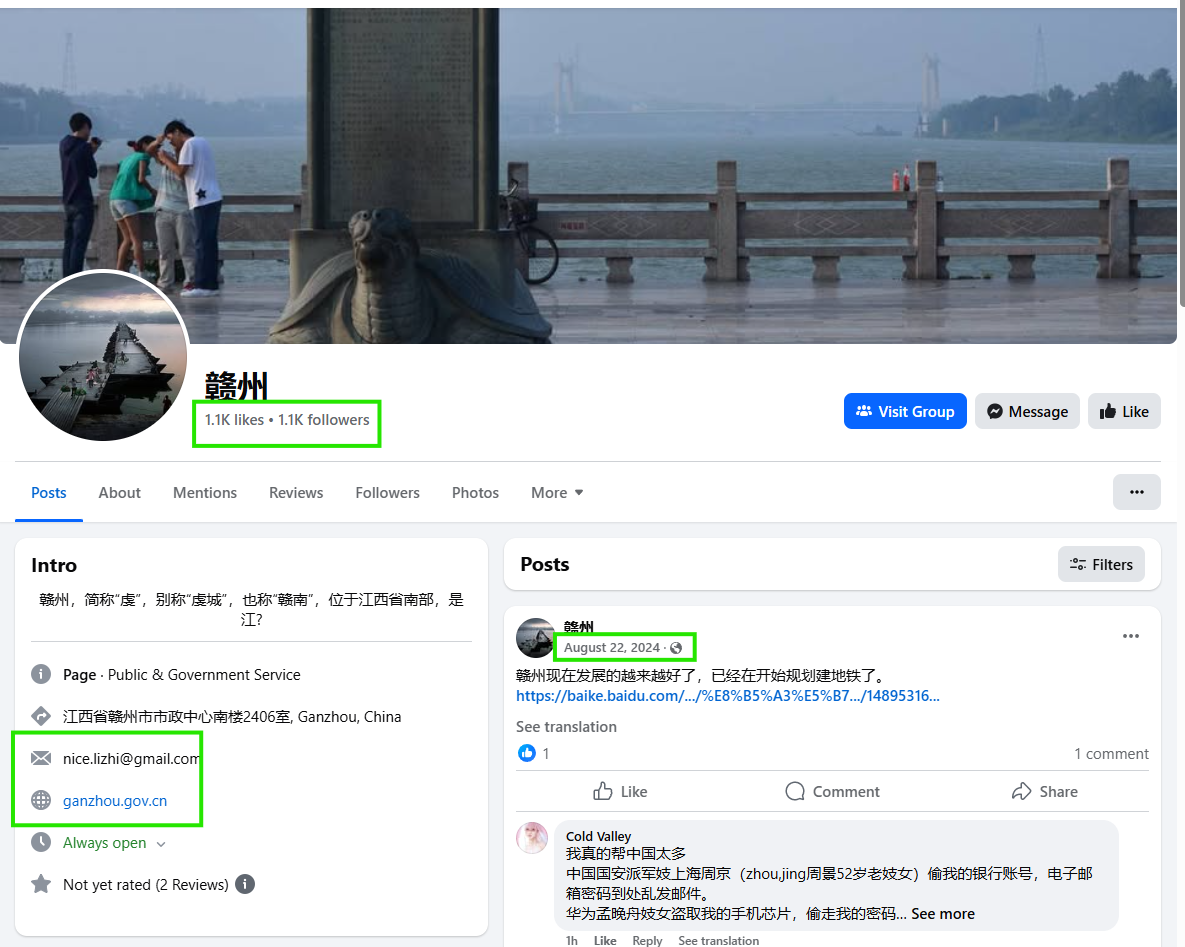
Liu also controls another Ganzhou tourism page called “赣州” (facebook[.]com/enjoyganzhou/) with over 1,000 followers, where he promotes his email “nice.lizhi@gmail[.]com” along with the government domain “ganzhou[.]gov[.]cn.” The most recent post from this page was in August 2024.
Liu controls the tourism page: “facebook[.]com/enjoyganzhou/”
In March 2017, Liu created a Facebook page (facebook[.]com/modelsnetcn) named “中国模特演艺人才网” which translates to “China Models and Performing Arts Talent Network.” This was renamed in March 2022 to the current name, “models[.]net[.]cn.”
Liu’s models page: “facebook[.]com/modelsnetcn”
This “models[.]net[.]cn” Facebook page uses the email address “steve@models[.]net[.]cn.”
Liu’s models[.]net[.]cn Facebook page
The “models[.]net[.]cn” Facebook page links to both the “models[.]net[.]cn” domain and the “mote001[.]com domain” – both have been observed as connected to Liu elsewhere.
The “models[.]net[.]cn page connected back to Liu
Liu created a Facebook Group (facebook[.]com/groups/models.net.cn/) in April 2014, which is still live, promoting his Chinese modeling and photography efforts on the domain mote001[.]com and models[.]net[.]cn.
Source: “facebook[.]com/groups/models.net.cn/”
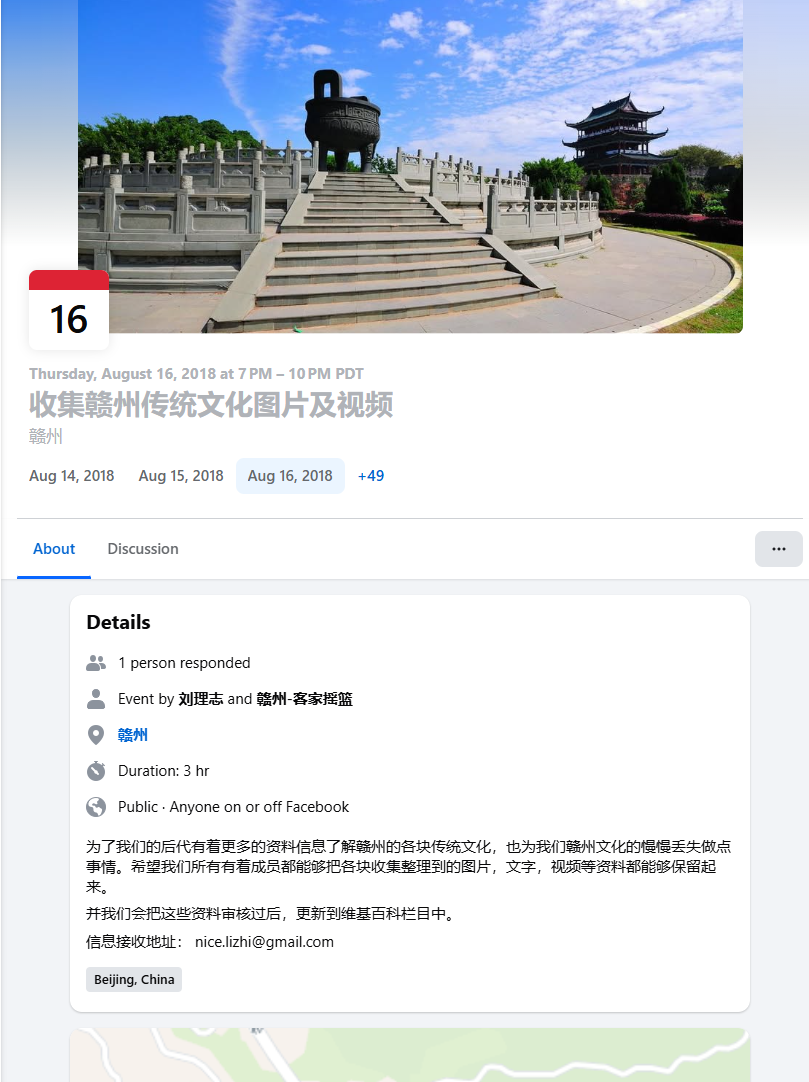
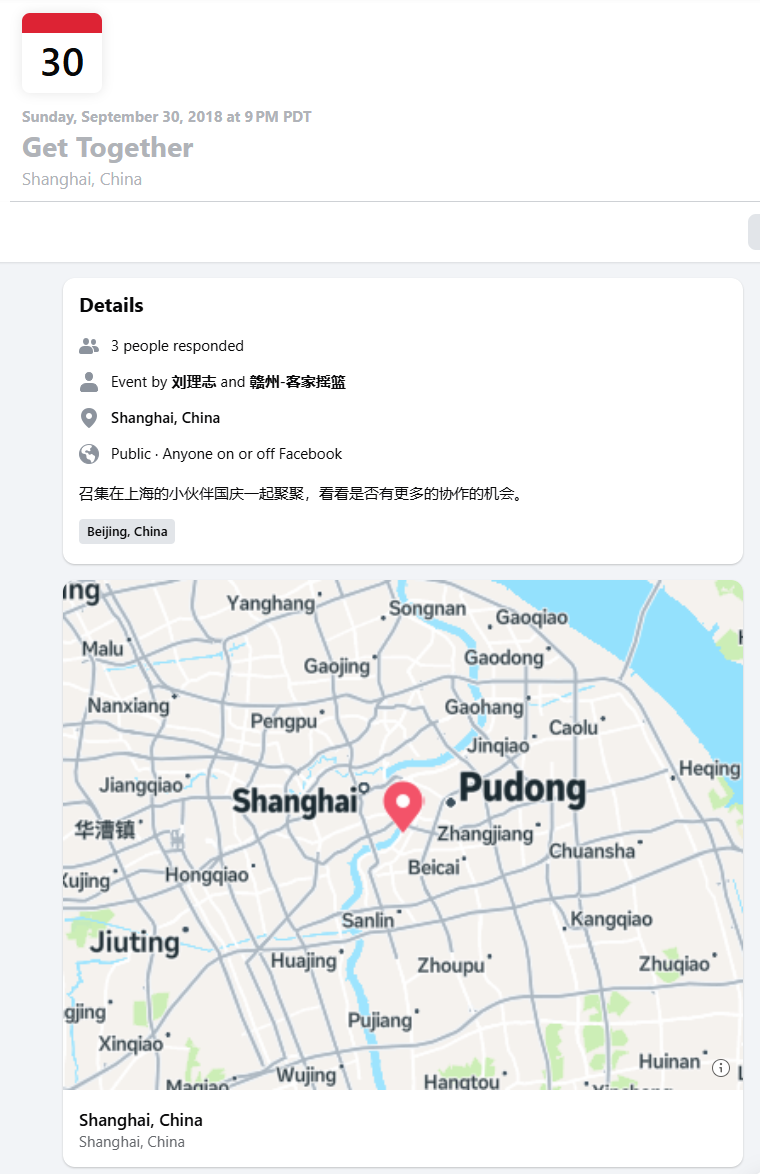
In 2018, Liu organized two Facebook events that are still live on Facebook.
The first event (facebook[.]com/events/1987558024892514/1987558044892512/) from August 16, 2025 was described as:
“In order for our descendants to have more information about Ganzhou’s traditional culture, and to do something about the gradual loss of Ganzhou culture. I hope that all of our members can keep the pictures, texts, videos and other materials collected from various areas. We will review these materials and update them to the Wikipedia column. Information receiving address: nice.lizhi@gmail[.]com”
The second Facebook event, (facebook[.]com/events/shanghai-china/get-together/2139435819601167/), was hosted on September 30, 2018 and titled “Get Together” with a Chinese description translated to read, “Gather friends in Shanghai to get together during the National Day and see if there are more opportunities for collaboration.”
Liu also has another Facebook page for his “zylinkus[.]com” development company (facebook[.]com/webdesignshanghai/), which was created in August 2012.
Source: “facebook[.]com/webdesignshanghai/”
PHP[.]net Post in 2010 from Liu Closed by Testy Member, Calling His Problem “Bogus”
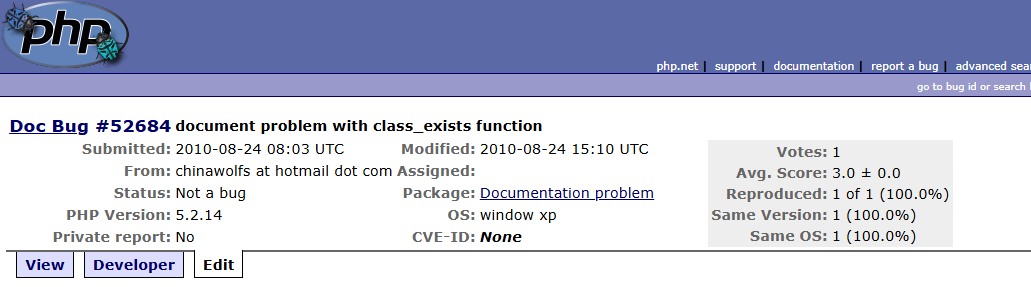
The profile “chinawolfs at hotmail dot com,” seemingly controlled by Liu, posted a comment in 2010 on the PHP[.]net forums (bugs.php[.]net/bug.php?id=52684&edit=2) about a problem he was having. Two people responded to the thread, largely resolving his issue, with the final one calling it “bogus” due to the perceived simplicity of the problem.
Silent Push Threat Analysts released this research as a reminder to enterprise organizations that when the U.S. Treasury sanctions an individual, there are expectations to identify accounts owned by those individuals and potentially terminate service to them.
All defenders need to be aware of the “pig butchering” investment fraud schemes and money laundering websites that are hosted on the FUNNULL CDN and take actions to not only defend their users and networks from these websites, but also to ensure that services provided to this sanctioned entity and the admin running its network are reviewed and potentially terminated.
Our team continues to investigate the FUNNULL CDN and related Triad Nexus threat actors, who host their malicious scam websites via this CDN. Silent Push Enterprise customers enjoy customer-only reporting streams on this threat and many others. Where possible, we will share the details that can be made public here with our readers.
Silent Push Threat Analysts followed a tip from Mexican journalist Ignacio Gómez Villaseñor about a threat actor targeting “Hot Sale 2025,” an annual sales event similar to “Black Friday” in the U.S.
Our team pivoted from that Mexico-centric campaign into thousands of websites that broadly targeted a more global audience with abundant waves of fake marketplace scams.
We identified a private technical fingerprint associated with this infrastructure, which contains Chinese words and characters to strongly indicate that the developers of this network are from China.
Our analysts observed this threat actor group building multiple phishing websites with pages spoofing well-known retailers, including Apple, Harbor Freight Tools, Michael Kors, REI, Wayfair, and Wrangler Jeans.
The threat actor has also been caught abusing online payment services, including MasterCard, PayPal, and Visa, as well as payment security techniques such as Google Pay, across the campaign’s network of scam websites.
Executive Summary
From a lead gained through a recent X/Twitter post by Mexican journalist Ignacio Gómez Villaseñor, Silent Push Threat Analysts have been investigating a new phishing e-commerce website scam campaign.
The original campaign observed was targeting Spanish-language visitors shopping for the “Hot Sale 2025.” The research by Gómez Villaseñor focused on specific domains found on one IP address targeting Spanish-language audiences; however, it was but one slice of a much larger campaign.
As we began our deeper research, our team soon uncovered a much broader fake marketplace scheme targeting English and Spanish language audiences in many other countries outside of Mexico. After we found a private technical fingerprint associated with the threat actor’s infrastructure, which contained Chinese words and characters, we have high confidence that the developers of this network are from China.
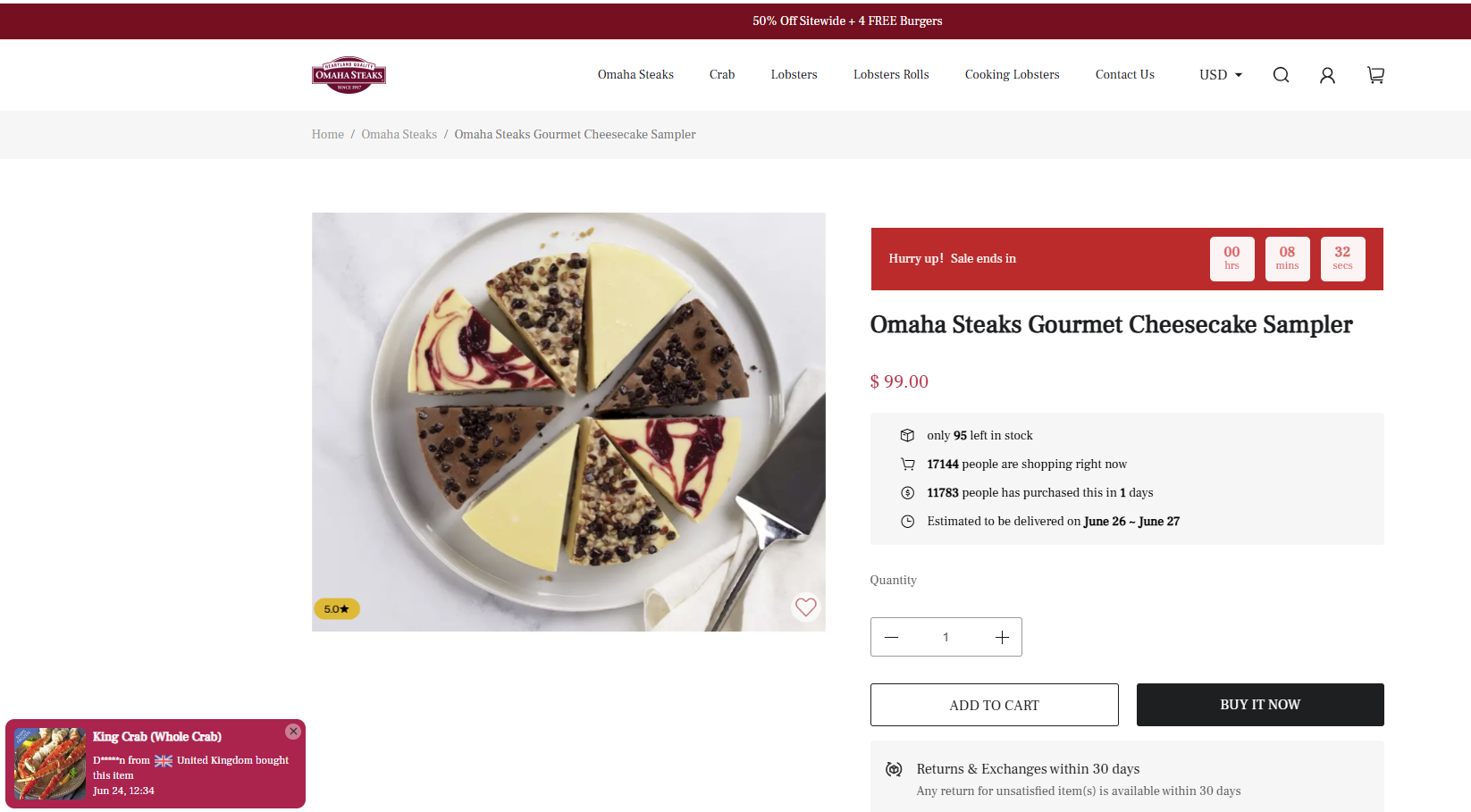
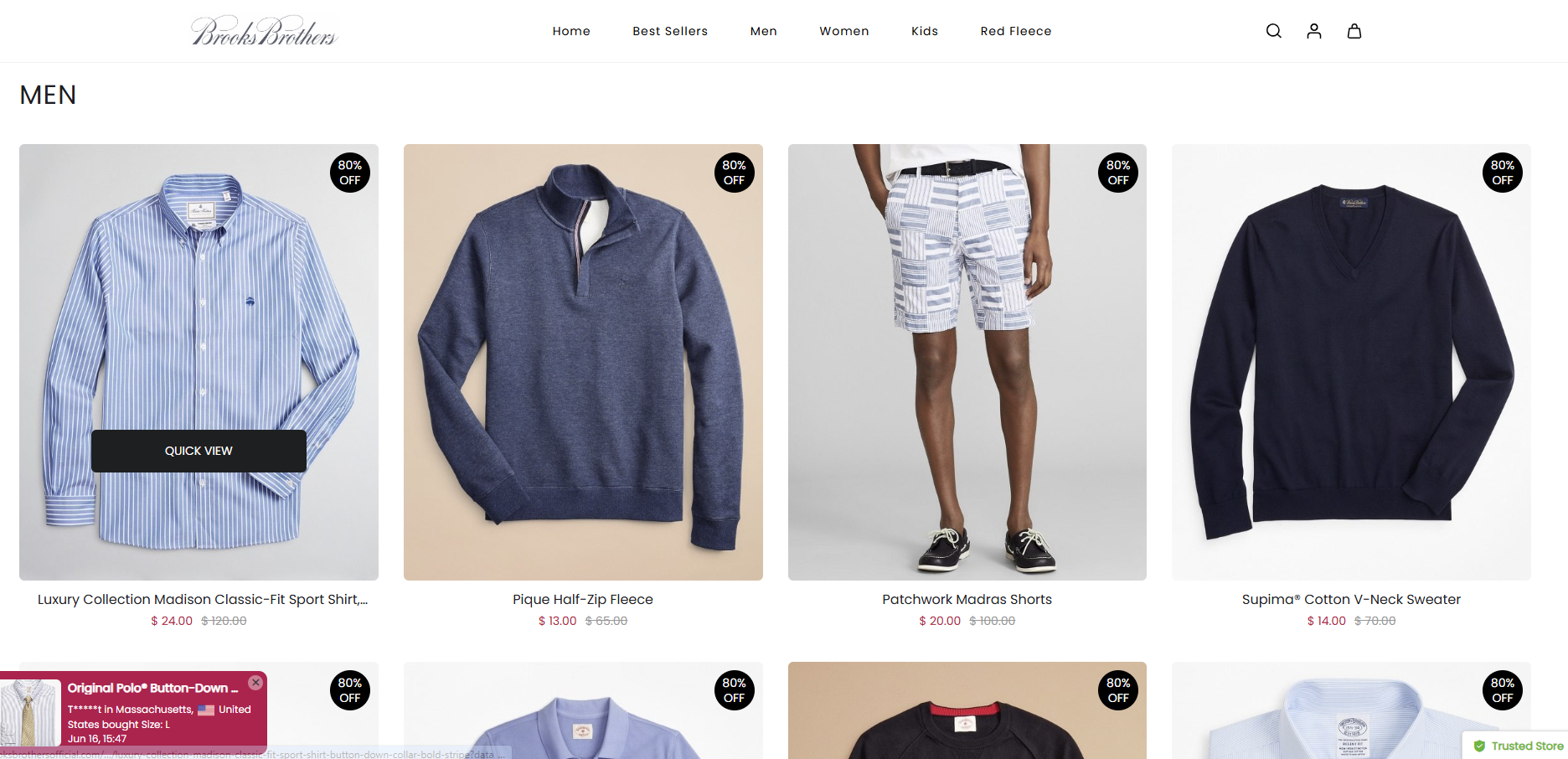
Our team has uncovered thousands of domains spoofing various payment and retail brands in connection to this campaign including (but not limited to): PayPal, Apple, Wayfair, Lane Bryant, Brooks Brothers, Taylor Made, Hermes, REI, Duluth Trading, Omaha Steaks, Michael Kors, and many, many more peddling everything from luxury watches to garage doors.
Silent Push Threat Analysts have investigated a seemingly endless series of online retail campaigns involving threat actors employing various techniques to scam potential buyers out of their money.
This latest scam campaign targets English and Spanish language shoppers with fake marketplace ads, which we began investigating following a tip we discovered on journalist Ignacio Gómez Villaseñor’s May 26, 2025, X/Twitter post.
The campaign’s timing took advantage of the recent “Hot Sale 2025,” an annual shopping event sponsored by Asociación Mexicana de Ventas Online (AMVO) (amvo[.]org[.]mx/), which ran from May 26 to June 3, 2025.
Websites in this network don’t appear to actually process transactions or purchases, but instead steal credit card information entered on the (fake) payment page. The write-up from Gómez Villaseñor on Publimetro included this important detail from their testing (translated into English):
“In tests carried out by Publimetro México, by entering false bank card data into these portals, the system reacts as if you were actually processing a payment. A “reserved cart ” timer and platform logos are displayed as Visa, MasterCard, PayPal, Oxxo, and SPEI. This simulation is done to gain user trust and steal your information without raising immediate suspicion.”
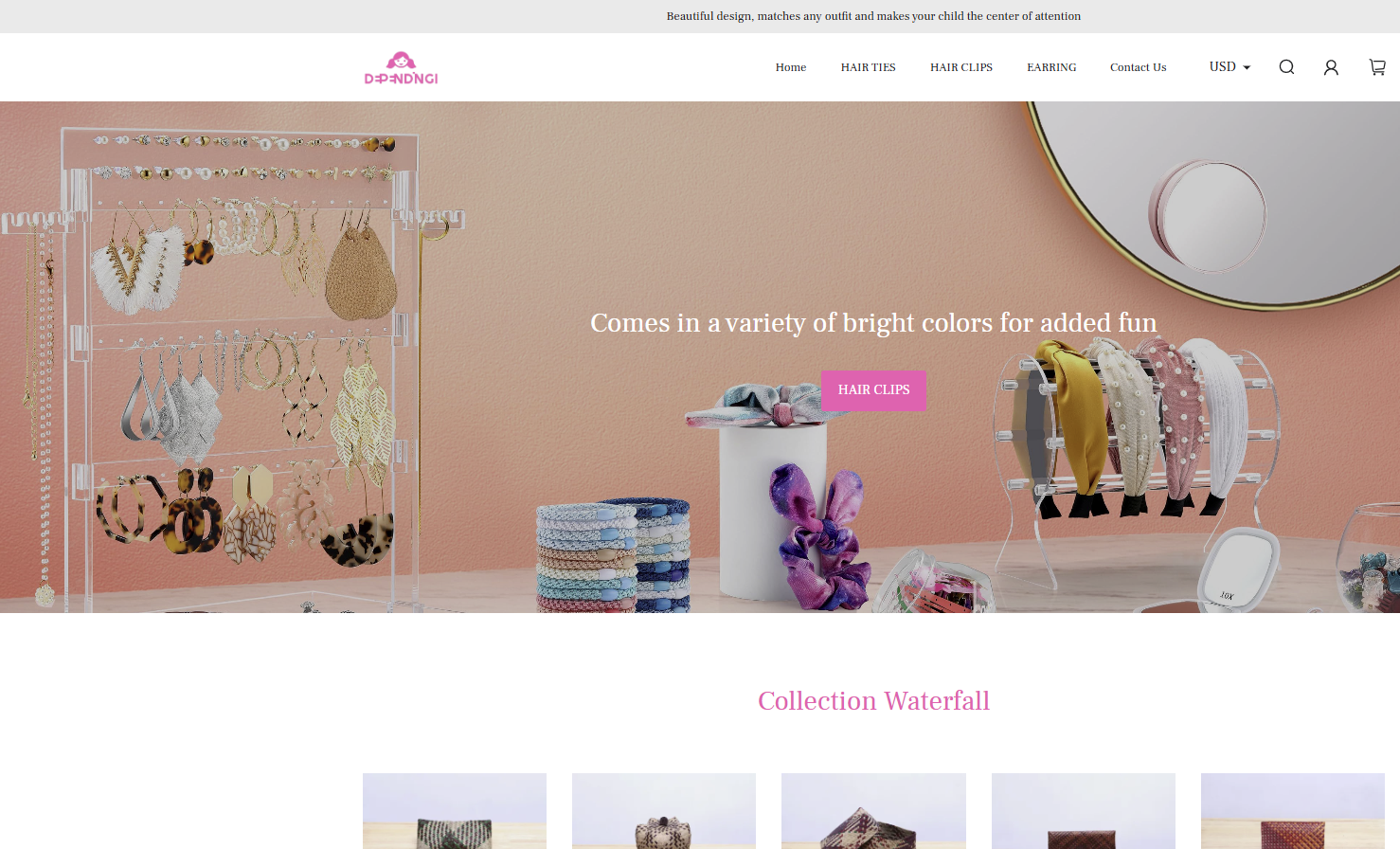
Our threat analysts observed that the threat actor had created multiple phishing websites with pages spoofing a wide array of retailers, many of which are well-known brands. The phishing pages feature products that appear to have been scraped from other sites and abuse online payment security techniques to orchestrate scam websites.
Additionally, as our team has continued to investigate this online scam, we have found multiple suspicious sites using Google Pay, which suggests that this threat actor group is also stealing payments (as Google Pay uses virtual credit card numbers) and then not actually delivering any of the supposedly “purchased” goods.
Google Pay Widget Integrated Into Sites to Take Real Payments
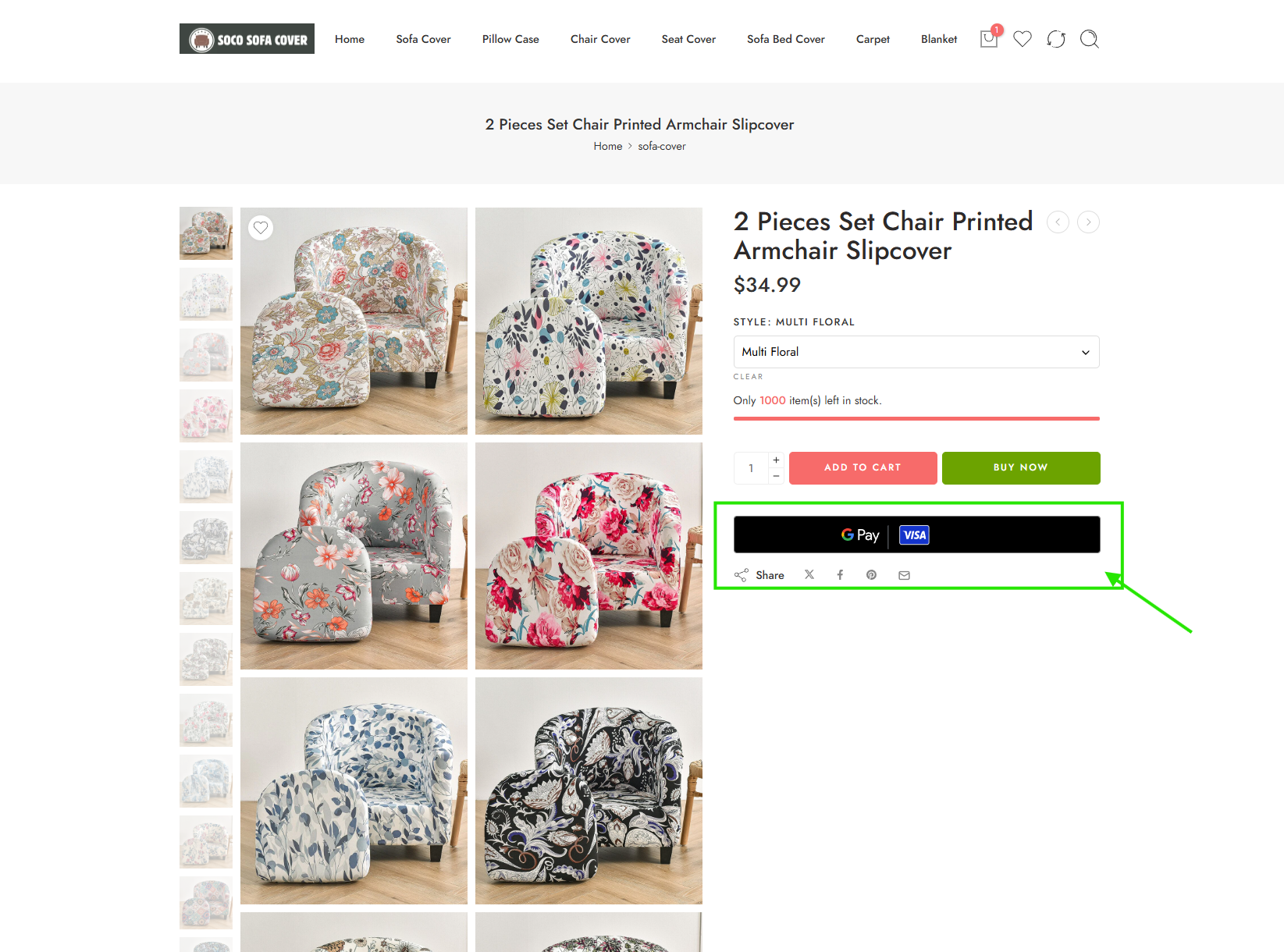
Some of the websites in this network, such as rizzingupcart[.]com, include genuine Google Pay purchase widgets.
These purchase widgets typically offer an extra layer of security protection to online shoppers, as Google Pay has a key security feature that uses virtual card numbers, which are randomly generated, instead of sharing buyers’ actual credit card details. Since credit card data is not accessible to merchants, threat actors behind fraudulent sites cannot typically steal it.
Despite the security of raw credit card information not being shared via this method, a threat actor can often circumvent the protection of virtual card numbers. Even when accepting payments made via this process, a threat actor can still successfully orchestrate its online scam by simply failing to deliver the ordered products after payment.
Example of the site “rizzingupcart[.]com/product/2-pieces-set-chair-printed-armchair-slipcover/” with Google Pay integrated to take real payments
Brands Mixed Between Domains and Sites
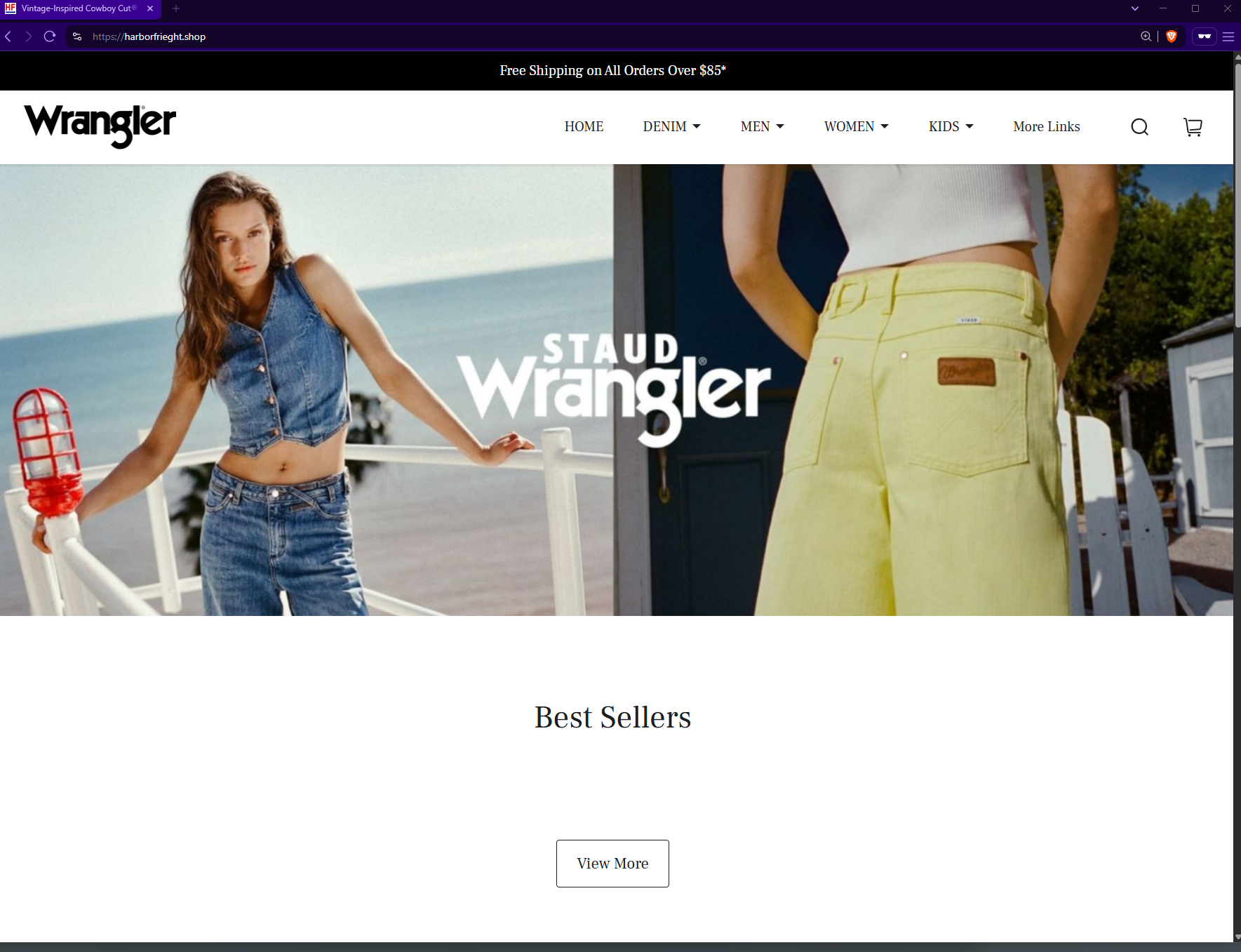
Our team found many sloppy deployments on sites such as “harborfrieght[.]shop” (note the misspelling of “freight”), which in theory would be promoting Harbor Freight Tools, yet the website instead featured a clone of the Wrangler jeans site:
The “harborfrieght[.]shop” fake website featured a clone of the Wrangler Jeans site
Brands and Organizations Targeted
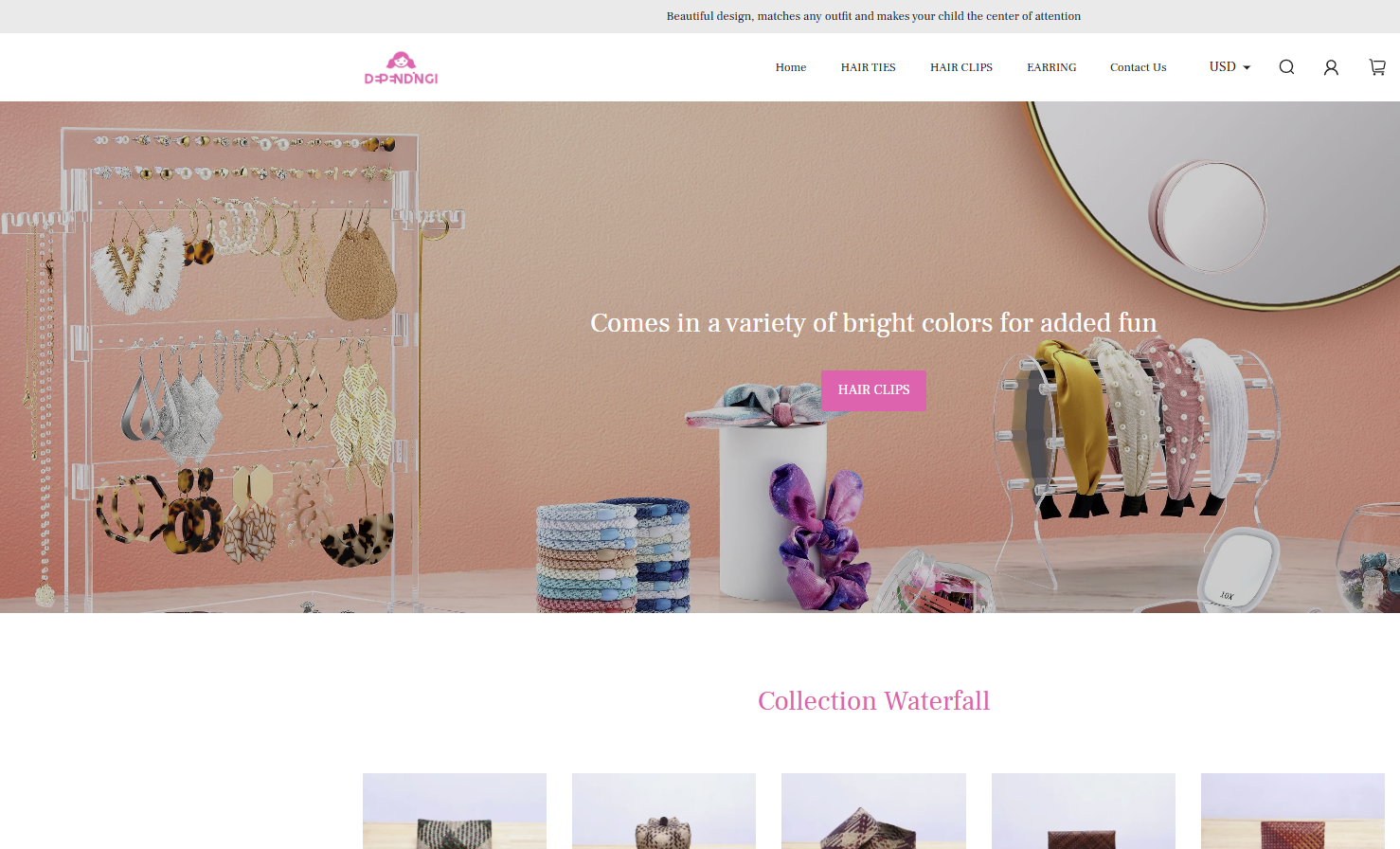
The fake marketplace campaign has targeted numerous well-known brands. We are listing a few of the more popular organizations that have been targeted. We are also including screenshots when we were able to catch the phony sites still being viewable online:
Harbor Freight Tools
Wrangler Jeans
Guitar Center
Lane Bryant
Nordstrom
Omaha Steaks
REI
Thousands more…
Example of “guitarcentersale[.]com spoofing Guitar Center
The site “guitarcentersale[.]com” spoofing retailer Guitar Center appears to offer children’s accessories with no sign of any musical instruments for sale.
Example of phony site, “omahasteaksbox[.]com”
The site “omahasteaksbox[.]com tried to pattern its design on the actual Omaha Steaks’ website in its spoofing attempt by partially copying portions of legitimate content. The phony site appears somewhat convincing at first glance, but on closer inspection, it is a shoddy attempt at emulating the popular brand.
Another fake marketplace site, “nordstromltems[.]com” (note the URL has a lower-case “l” instead of an “i” for the word “items”), attempted to spoof the brand of retailer Nordstrom. This fake site only displayed casual kids’ accessories, rather than the breadth of high-end clothing, accessories, shoes, and cosmetics typically associated with the Nordstrom brand, which caters to women, men, and children.
Our team also noted the phony site builder merely cloned the entire site for “guitarcentersale[.]com” and used it for the “nordstromltems[.]com” site, which further confirmed it was the work of the same threat actor.
Example of the phony site for “nordstromltems[.]com” – a direct copy of the fake site: “guitarcentersale[.]com”
Another site, spoofing the well-known Brooks Brothers brand, scraped parts of the legitimate website but then listed selections of clothing at impossibly low prices—especially for the BB brand.
Example of the phony site, “brooksbrothersofficial[.]com” abusing the Brooks Brothers’ brand
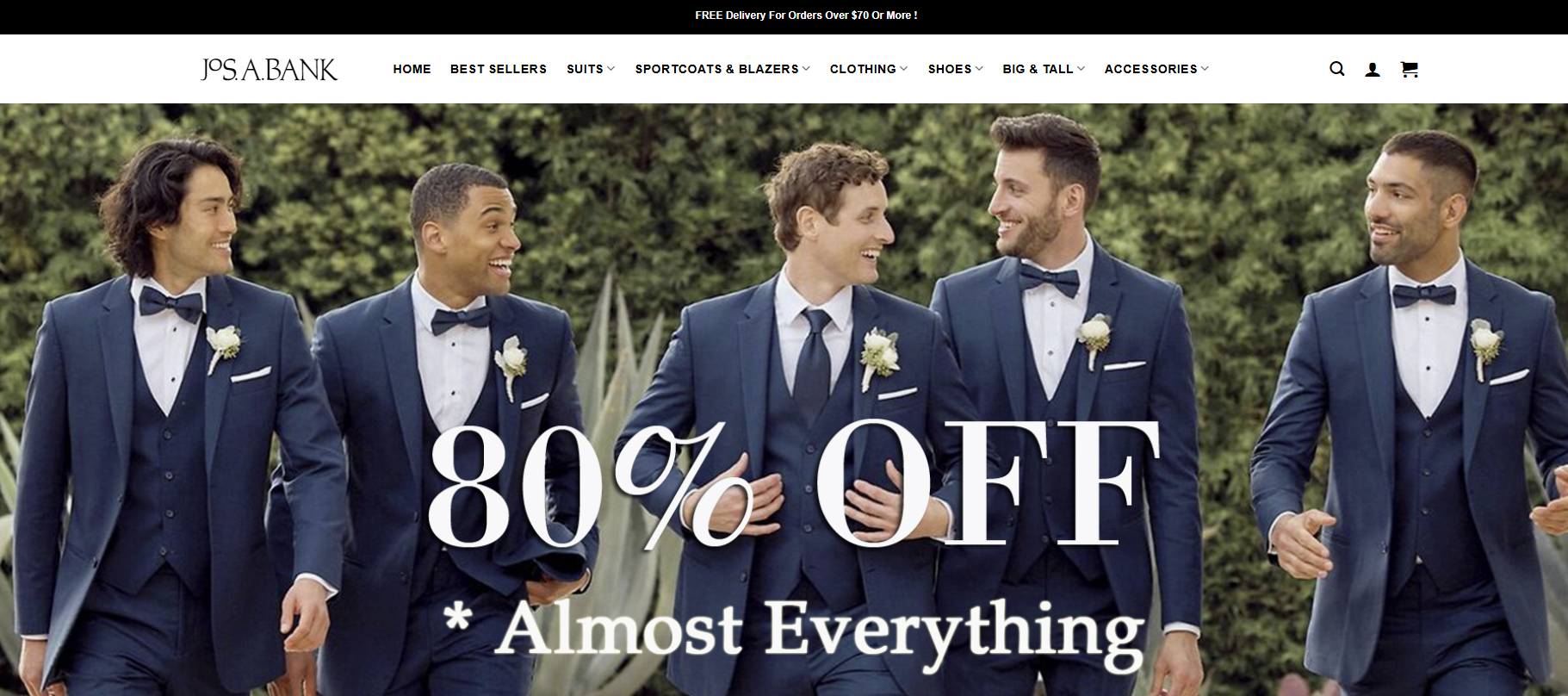
Our team found numerous additional sites abusing clothing brands, including one site “josbankofficial[.]com” that attempted to spoof the historic menswear merchant Jos. A. Bank.
Example of phony site, “josbankofficial[.]com” spoofing the Jos. A. Bank website
Example of fake website “tommyilfigershop[.]com”
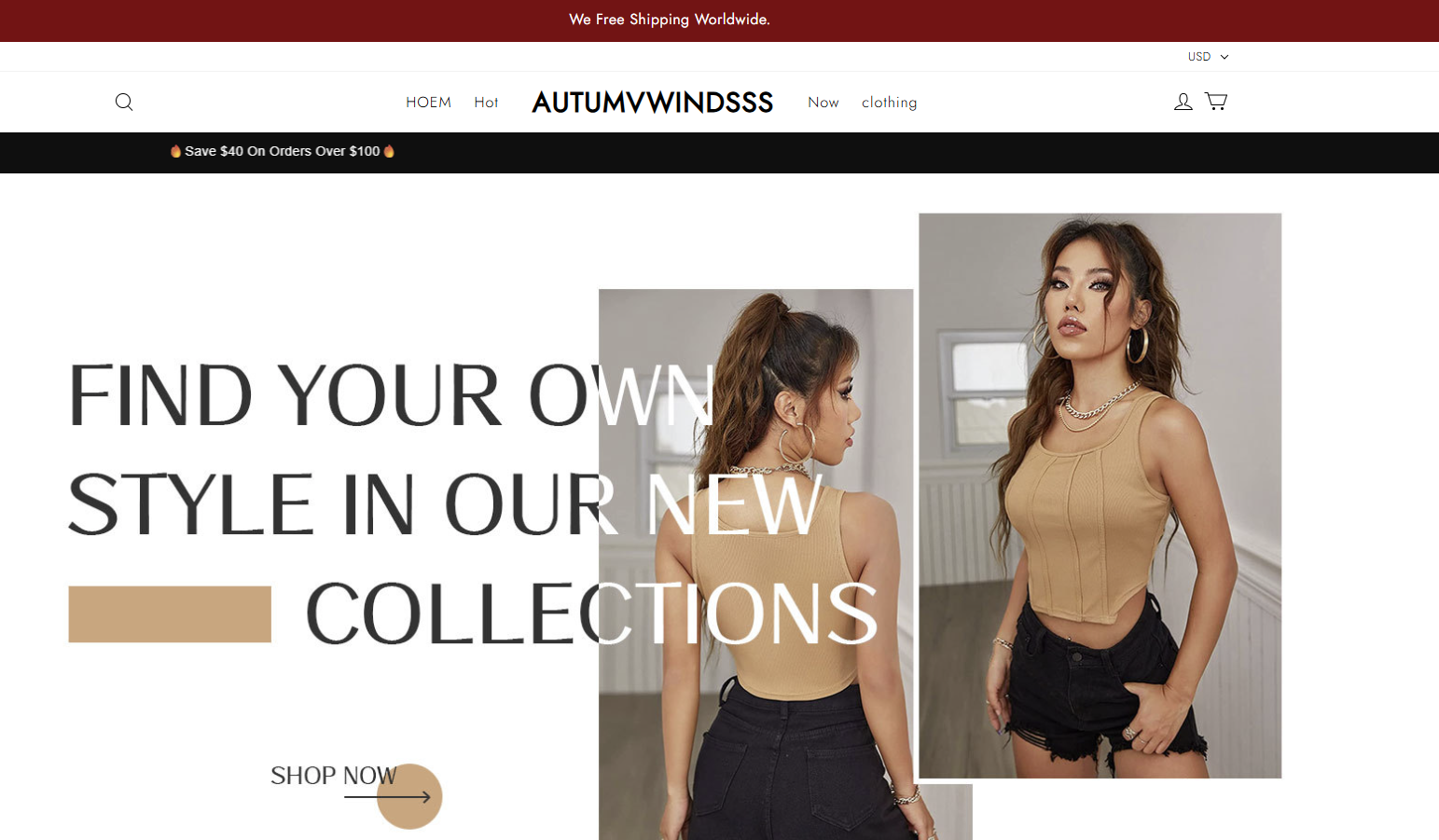
Our team also found a website attempting to spoof the premium clothing brand Tommy Hilfiger. Unlike the typical designer clothing found on the legitimate Tommy Hilfiger site, the spoof site, “tommyilfigershop[.]com” (note the missing “h” for the Hilfiger name and multiple misspellings on the home page) displays a model promoting women’s casual wear advertised by the brand “Autumvwindsss.”
During the course of our research, we determined that many of the fake marketplace sites had been blocked by their hosts once they were discovered (a given site’s fake content was frequently replaced with red warning messages instructing users not to continue browsing on some suspicious domains). However, despite many sites being taken down by both hosts and defenders, thousands remain active as of June 2025. In the face of these types of scaled-up, persistent threats, traditional methods appear unable to hold back the tide.
Continuing to Track the Mexican Hot Sale / Chinese Fake Marketplace Phishing Campaign
Silent Push Threat Analysts will continue to track this Fake Marketplace Chinese Phishing Campaign and update our findings with future posts and reports as we uncover new developments.
If you or your organization has any information on this threat actor, we would love to hear from you.
Mitigation
Silent Push believes that all websites associated with this campaign represent some level of risk. This fake marketplace campaign primarily targets consumers with a phishing threat that exploits major brands, well-known organizations, and the fame of some political figures.
Our analysts have developed a series of Silent Push IOFATM feeds in response to these types of phishing efforts to best protect our customers from global threats.
Silent Push IOFATM Feeds are available as part of an Enterprise subscription. Enterprise users can ingest IOFATM Feed data into their security stack to inform their detection protocols or use it to pivot across attacker infrastructure using the Silent Push Console and Feed Analytics screen.
Sample Indicators Of Future AttackTM
Silent Push is sharing a small sample of our Indicators Of Future AttackTM (IOFATM) list, which we associate with the Mexican Hot Sale/Chinese fake marketplace phishing campaign to support ongoing efforts within the community. Our enterprise users have access to an IOFATM feed currently containing significantly more indicators from this campaign.










![Screenshot of Liu's blog starting on his site Models[.]net[.]cn](https://www.silentpush.com/wp-content/uploads/funnull-admin-image-9-models-net-new-blog.png)
![Liu posted about his day of birth on his Models[.]net[.]cn site](https://www.silentpush.com/wp-content/uploads/funnull-admin-image-12-models-net-1984.png)
![Screenshot of Liu's Models[.]net[.]cn page talking about "Sunny Shanghai" in 2012](https://www.silentpush.com/wp-content/uploads/funnull-admin-image-13-models-net-sunny-shanghai.png)
![Screenshot of Zylinkus[.]com domain](https://www.silentpush.com/wp-content/uploads/funnull-admin-image-15-domain-zylinkus-com.png)
![Screenshot of the Tawk[.]to website chat widget Liu used](https://www.silentpush.com/wp-content/uploads/funnull-admin-image-16-tawk-to-example.png)

![Screenshot of Zylinkus[.]com/dns](https://www.silentpush.com/wp-content/uploads/funnull-admin-image-19-zylinkus-gundns.png)



![Screenshot of Liu's "About[.]me" page](https://www.silentpush.com/wp-content/uploads/funnull-admin-image-30-lius-about-me.png)



![Liu's website "Deviantart[.]com"](https://www.silentpush.com/wp-content/uploads/funnull-admin-image-41-deviantart-1.png)





![Liu's Models[.]net[.]cn main page on Facebook](https://www.silentpush.com/wp-content/uploads/funnull-admin-image-56-fb-lee-hye-seung-1.png)
![Liu's Models[.]net[.]cn page links to the domain Mote001[.]com, also connected to Liu](https://www.silentpush.com/wp-content/uploads/funnull-admin-image-57-models-net-cn-pix.png)
![Screenshot of Facebook groups page for Models[.]net[.]cn](https://www.silentpush.com/wp-content/uploads/funnull-admin-image-58-models-fb-groups.png)
![Another Facebook page Liu created was for his "Zylinkus[.]com" development company](https://www.silentpush.com/wp-content/uploads/funnull-admin-image-61-zy-web-design.png)