


- Company
Silent Push Inc. ©2025

Smishing Triad is an advanced e-crime group from China that has been in operation since 2023, with criminal affiliate partners operating in multiple countries. Silent Push has found evidence of this group, known primarily for its SMS phishing (“smishing”) campaigns that use postal delivery and government services as lures. These campaigns have targeted at least 121 countries and numerous industries with up to 100,000 texts daily.
In a new twist first seen in March 2025, Silent Push has discovered Smishing Triad appears to be working on new phishing kits focused on banks and financial organizations. The kits were initially focused on Australian financial institutions, but several major global financial brands have also been included.
Smishing Triad is also selling its phishing kits to other maliciously aligned threat actors via Telegram and likely other channels. These sales make it difficult to attribute the kits to any one subgroup, so the sites are currently all attributed here under the Smishing Triad umbrella. As of this writing, Silent Push Threat Analysts have seen roughly 25,000 Smishing Triad domains in use within the last 8 days, and currently over 90,000 domains across the observed lifetime of this campaign.
Register now for our free Community Edition to take advantage of all the tools and queries highlighted in this blog.
Resecurity first wrote about the “Smishing Triad” in August 2023, with a substantial follow-up in August 2024. Their research helped provide context that this SMS phishing campaign was targeting multiple countries. It initially used compromised Apple iCloud accounts to send spam over iMessage and then later used local phone numbers. Resecurity confirmed that the SMS phishing kit was being sold to other threat actors, and they were able to acquire details to map 36 domains being used for the attacks.
In October 2023, Krebs on Security reported that a phishing campaign was targeting USPS and 12 other national postal services. These included services in Australia, Ireland, Spain, Costa Rica, Chile, Mexico, Italy, Netherlands, Denmark, Norway, Sweden, and Finland. This phishing effort appeared to be an early Smishing Triad campaign.
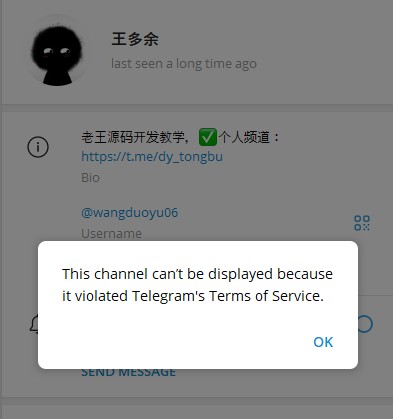
In 2024, security researcher Grant Smith hunted the same threat actors due to them scamming his wife with one of the USPS package scams, covered by Wired. Smith wrote up his efforts to compromise their phishing kits. He confirmed the creator of the kit was someone named “王多余” (Wang Duo Yu) who used the Telegram account “wangduuoyu0” (t[.]me/wangduoyu06). The creator originally communicated with buyers on the t[.]me/dy_tongbu channel. It was later shut down by Telegram due to Terms of Service violations. Resecurity confirmed similar details.
In April 2024, the FBI Internet Crime Complaint Center (IC3) noted it had received over 2,000 complaints about smishing texts related to fake toll road collection efforts, a primary lure from Smishing Triad.
In June 2024, the U.S. Postal Inspection Service issued a warning about package tracking text scams, reminding readers, “USPS utilizes the 5-digit short codes to send and receive SMS to and from mobile phones.”
In July 2024, Fortinet released a blog on Smishing Triad and helpfully noted that Apple ID allows the use of third-party email addresses. This helped explain why many of the “email-to-SMS” examples we’ve seen don’t use iCloud email addresses. The blog described the process: “We have observed third-party email addresses such as Hotmail, Gmail, or Yahoo being used in phishing emails on iMessage. Apple allows users to create an Apple ID using these third-party email addresses as the primary email associated with their Apple ID. Once the Apple ID is created and configured for iMessage, the sender can use that third-party email address to send messages through iMessage.”
Following these initial reports, there have been hundreds of significant local news reports about smishing campaigns – the vast majority do not name “Smishing Triad,” but they do mention toll road lures (aka E-ZPass phishing), USPS lures, and other government services that we’ve seen targeted via Smishing Triad domains.
In a new twist first seen in March 2025, Silent Push Threat discovered Smishing Triad appears to be working on new phishing kits to target banks and financial organizations. As mentioned in our key findings, these kits focus primarily on Australian and APAC-based financial institutions.
In January 2025, Brian Krebs from Krebs on Security was the first to cover the new “Lighthouse” branding being used by the Smishing Triad phishing kit backend software, based on his tracking of its Telegram marketing.
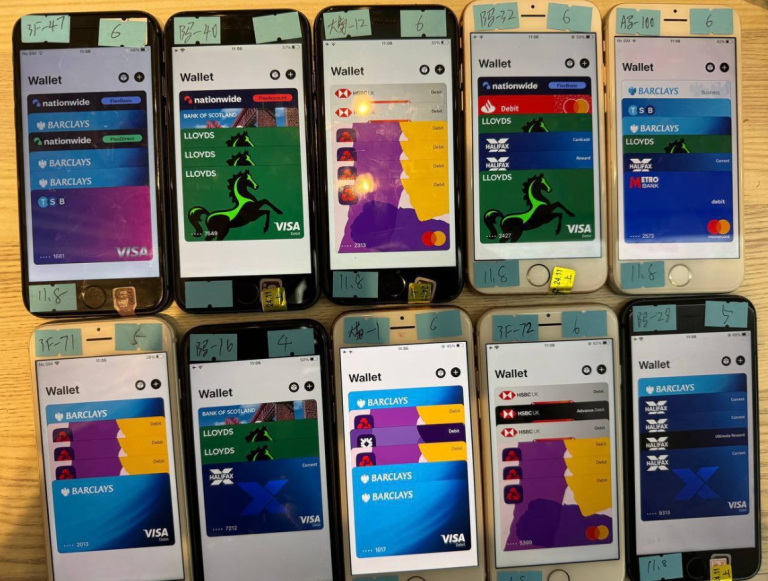
In February 2025, Krebs continued his publishing on Smishing Triad and highlighted their cash-out schemes and new methods for loading stolen credit cards onto iPhone digital wallets in “How Phished Data Turns into Apple & Google Wallets.” It’s important to note that while images of devices found on Telegram being used in the attacks are exclusively Apple iPhones, this is just one of the cash-out schemes to load mobile Apple wallets with stolen credit cards, and is not an indication that only Apple devices are targeted.
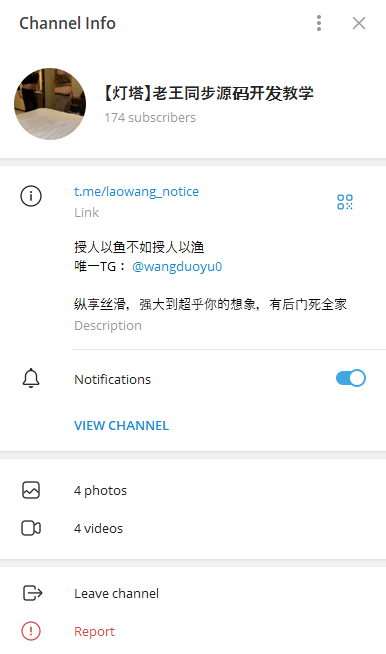
On March 18, 2025, the developer behind the Smishing Triad phishing kit released a new Telegram channel about the creation of his new “Lighthouse” kit. Details allude to extremely sophisticated bank phishing efforts being set up. One video featured in the channel also included details of the USPS phishing template.
The new Lighthouse kit targets dozens of financial brands, many with a focus on Australia, including PayPal, Mastercard, Visa, Stripe, HSBC, Bendigo and Adelaide Bank, Bank of Sydney, Bank Australia, Bank of Queensland, Bank of Nova Scotia, Australia and New Zealand Banking Group, CitiGroup, Commonwealth Bank of Australia, Cuscal LTD, HSBC Bank Australia, ING Bank (Australia), National Australia Bank, Newcastle Permanent Building Society, Police Bank, George Bank, Westpac Banking Corporation, and Macquarie Bank.
Smishing Triad has systematically targeted organizations in at least 121 countries across numerous industries, including postal, logistics, telecommunications, transportation, finance, retail, and public sectors.
Our team has constructed the extensive lists below to show the scope of targeting, including only those countries explicitly mentioned by name in a Smishing Triad domain. Some country codes in observed domains alluded to other countries, but have been left off until stronger confirmation is found.
With nearly two-thirds of all countries in the world targeted by Smishing Triad, it’s safe to say they are essentially targeting every country with modern infrastructure outside of Iran, North Korea, and Russia. Our team has observed some potential targeting in Russia (such as domains that mentioned their country codes), but nothing definitive enough to indicate Russia is a persistent target.
Interestingly, even though these are Chinese threat actors, we have seen instances of targeting aimed at Macau and Hong Kong, both special administrative regions of China.
Numerous organizations outside of the shipping, postal, and logistics industries are being targeted, with a secondary focus on toll road brands and financial organizations. These organizations include:
It should be noted that all phone numbers include a country code. This makes it easy for a threat actor to send geo-targeted phishing messages even to relatively small countries like Iceland, Kosovo, or Jamaica.
In some countries, such as the U.S. and Canada, mobile phone numbers even include an area code, making regional targeting of victims (for example, when impersonating toll operators) more effective.
Silent Push analysts discovered a new Telegram channel (t[.]me/laowang_notice) created on March 18, 2025, being used by Smishing Triad developer “Wang Duo Yu” to communicate with buyers of the smishing kit.
This access helped us better understand some of the new Smishing Triad kit’s features, targeting details, and the lures they are planning to use. A partially translated capture of the developer’s handle is:
“It is better to teach a man how to fish than to give him a fish.
The only TG: @wangduoyu0”
The most recent message also explains why Wang Duo Yu created a new one, “The old channel has been blocked, so I will use this channel to release the latest news in the future.”
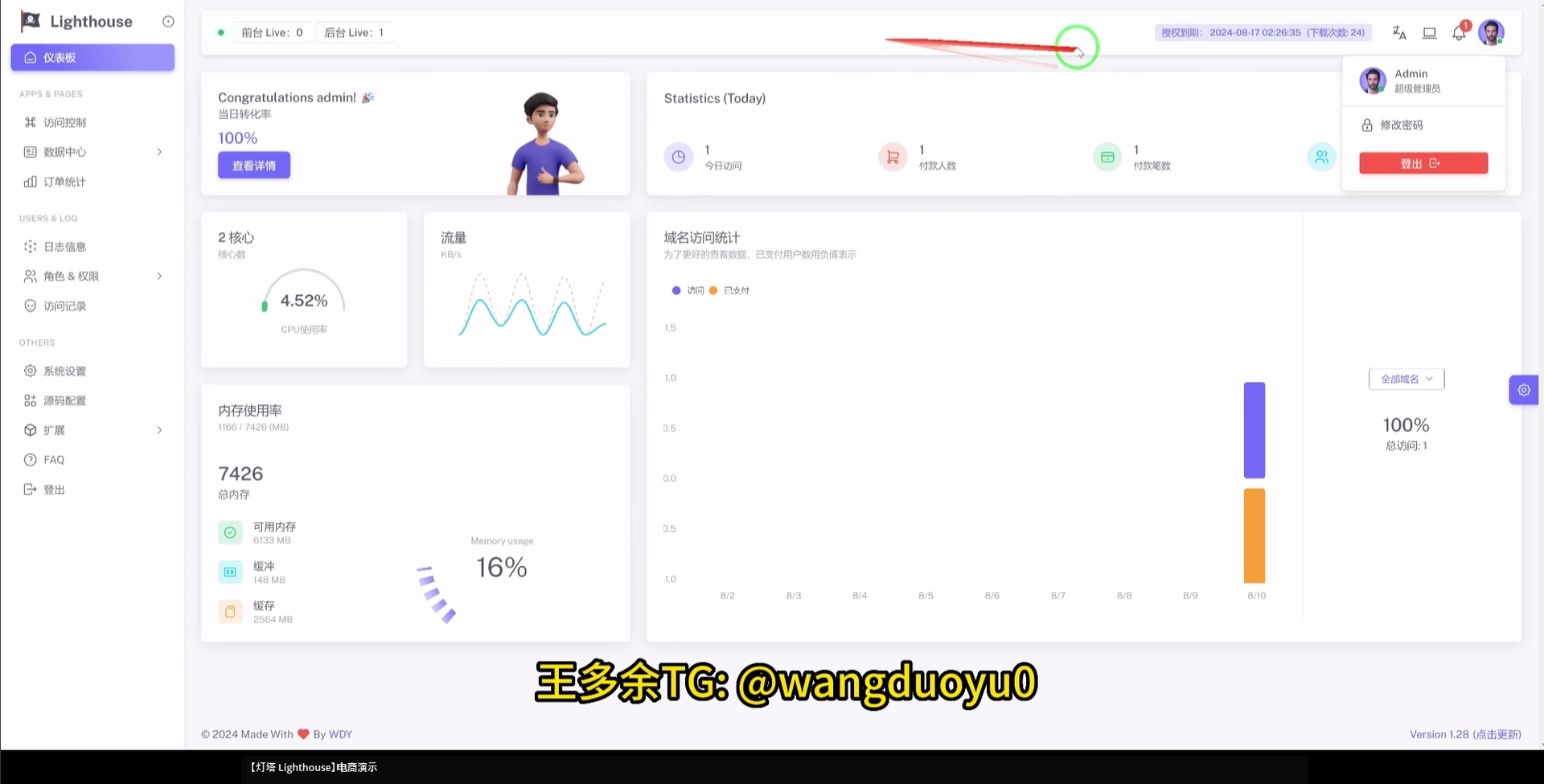
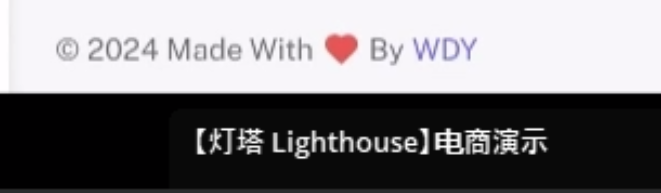
Access to this Telegram channel confirmed the name of the Smishing Kit as “Lighthouse.” Readers can see the Lighthouse interface here in this screenshot from one of the videos posted on Telegram in March 2025:
The Lighthouse description alludes to the sophistication of the bank phishing features, directly calling out how they have “300+ front desk staff worldwide”:
”【Lighthouse】E-commerce Demo
The most powerful synchronization backend: supports real-time synchronization, one-click setup, one-click update, automatic diversion, card header notes, OTP verification, APP verification, PIN verification, 3DS verification, code scanning verification, contacting banks, card replacement payment, online banking verification, points customized products, multiple customized verifications, etc., with a real interface, high bit rate, and stable operation
300+ front desk staff worldwide
Enjoy the silky smoothness, powerful beyond your imagination, with a backdoor to kill your whole family!”
The Lighthouse footer also includes a reference to the creator Wang Duo Yu with the reference, “Made with <heart> By WDY”
Other details within the Telegram channel align with past attacks and provide context for current targeting.
The new Lighthouse phishing kit promoted on Telegram featured several options for threat actor groups that buy the tool. A translated version of the interface confirmed these options were available for admins:
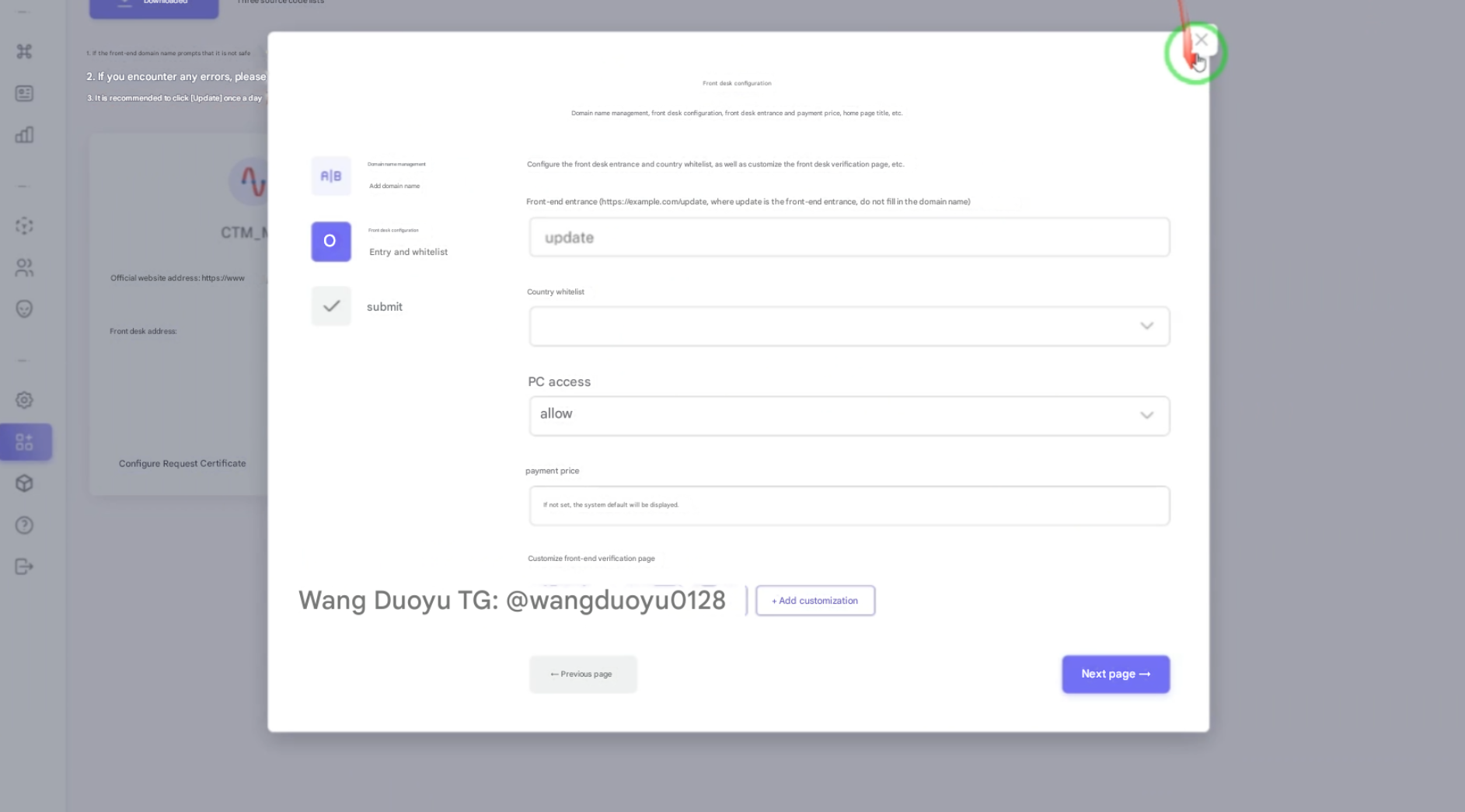
You can watch a full video walkthrough of the Lighthouse app from the creator himself—although it is in Mandarin—at https://youtu.be/o6lNR7zfwZ8*.
The developer of the Smishing Triad kit communicates with potential affiliate partners in Mandarin, and the text on the phishing kit’s JavaScript also contains Chinese text. The ties to China are significant and were relatively easy to confirm.

The USPS phishing kit was one of the first launched by Smishing Triad, but it continues to see updates. The kit provides a real-time sync between the front-end phishing pages and the back-end database with features for easy viewing of victims’ data:
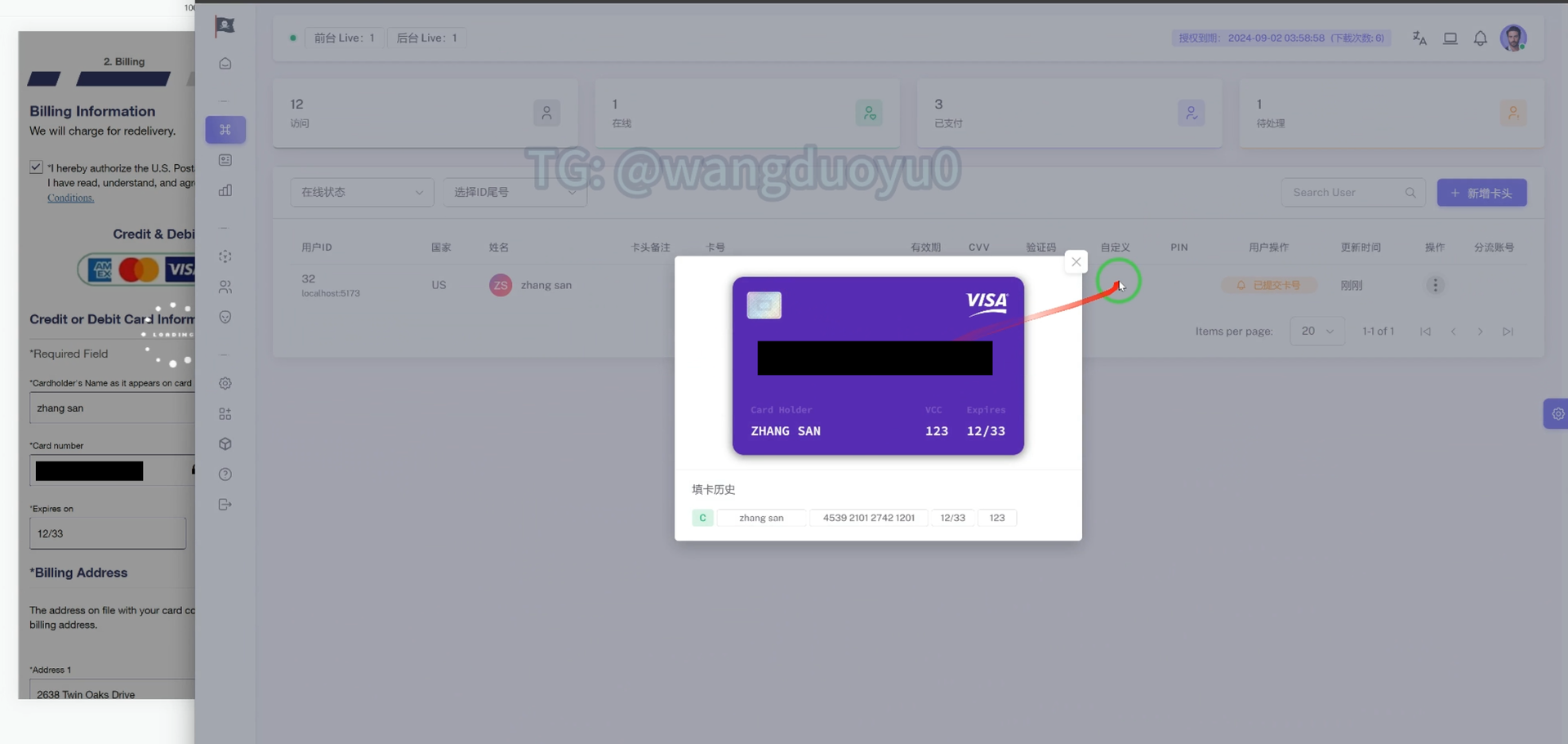
Depending on the type of card entered in the form, an additional verification can be triggered to ensure the card can be used. You can see the Card Verification Value (CVV) prompt below:
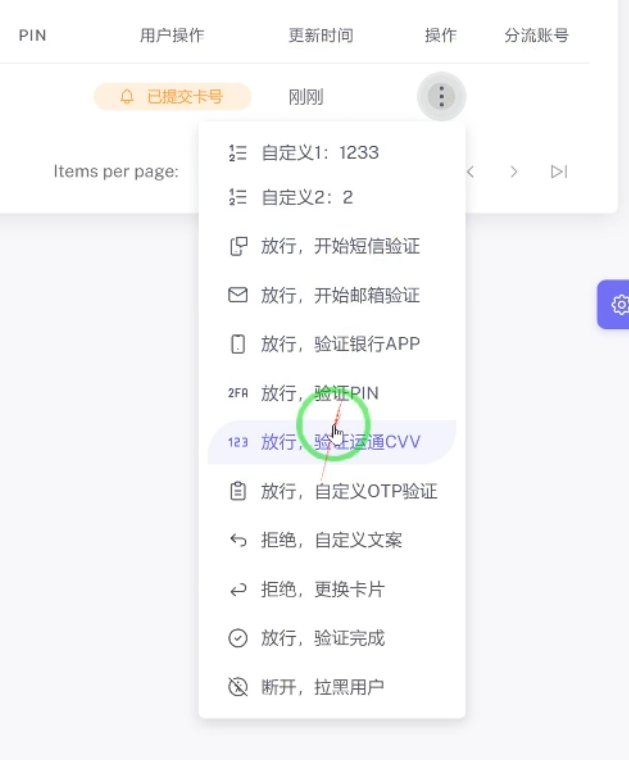
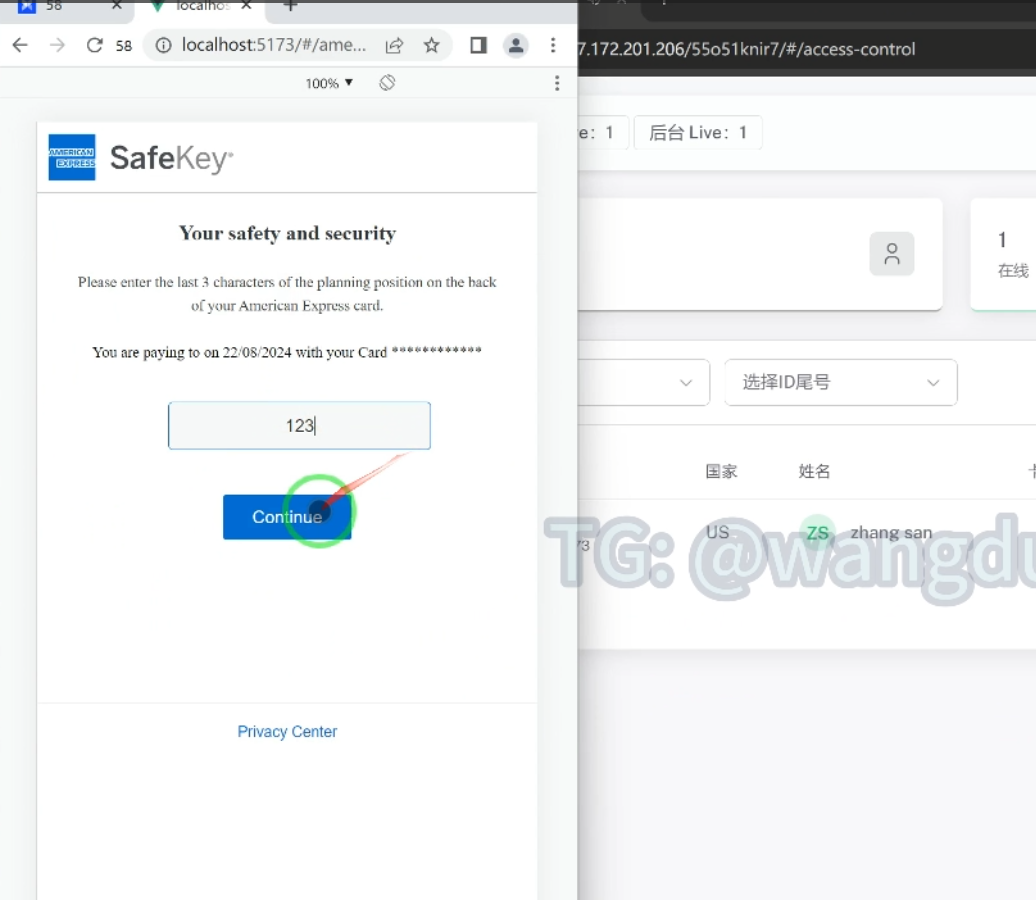
This triggers a screen based on the type of credit card used (American Express is featured in the USPS Phishing Kit on Telegram, example below):
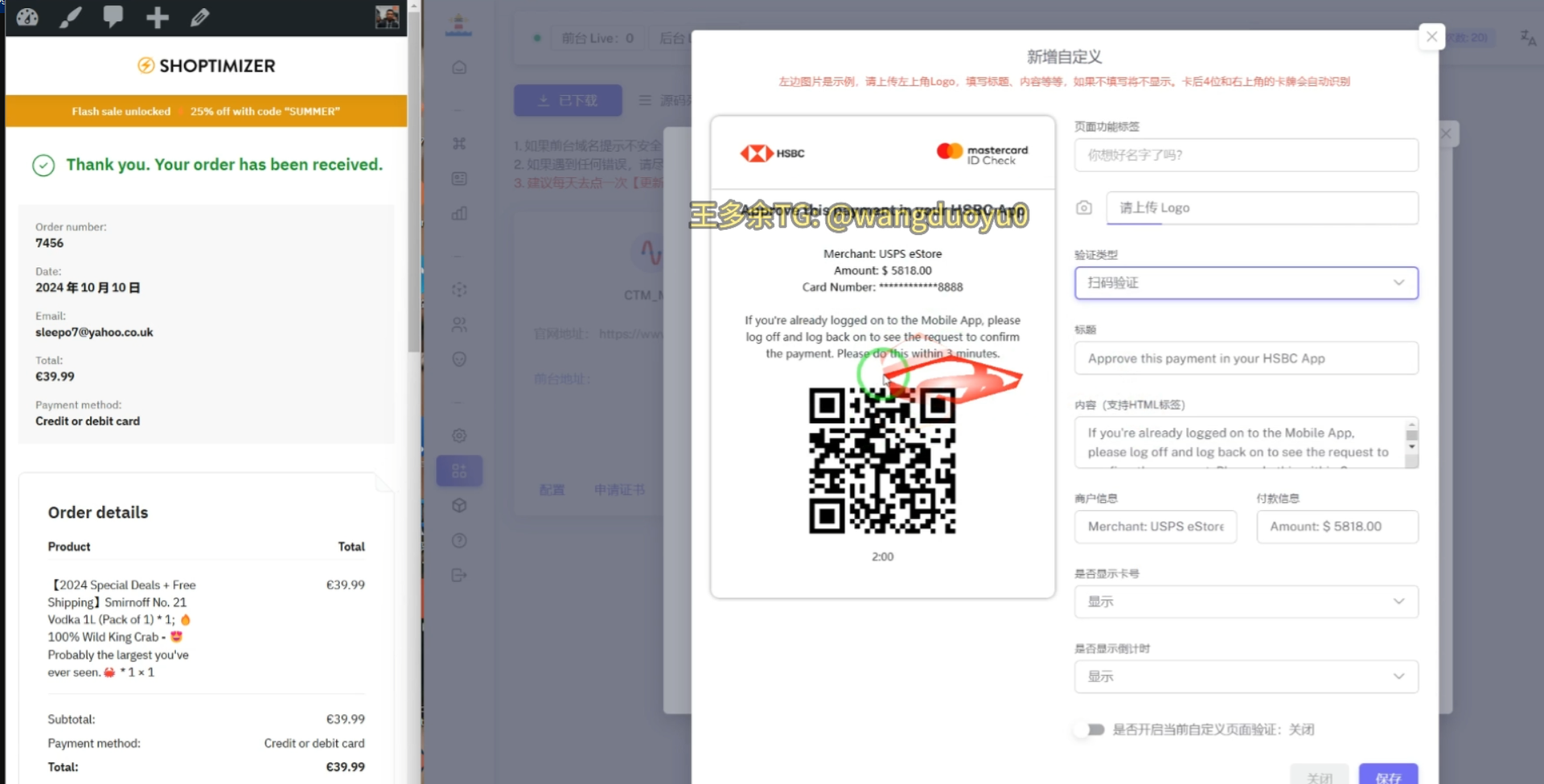
There is also a feature to support real-time purchasing so that if a threat actor is stopped from using a victim’s credit card, they can direct victims to a QR code to get a code from a mobile app.
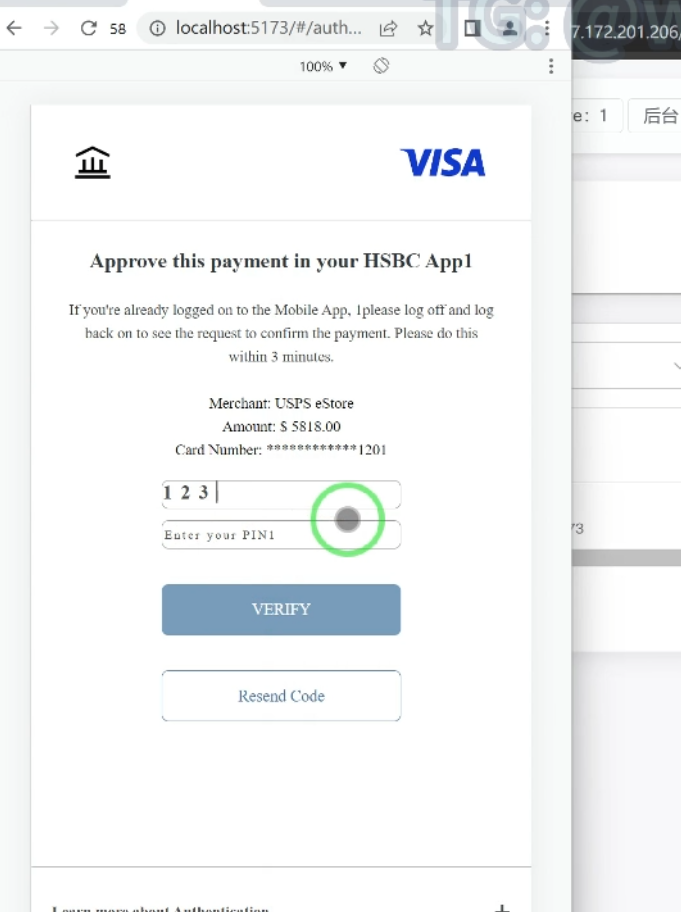
There are also screens encouraging victims to approve payments within the HSBC mobile app and requesting their transaction’s personal identification number (PIN):
Watch the full video promoting the USPS kit from the Smishing Triad developer here: https://youtu.be/307WeScSBc4.*
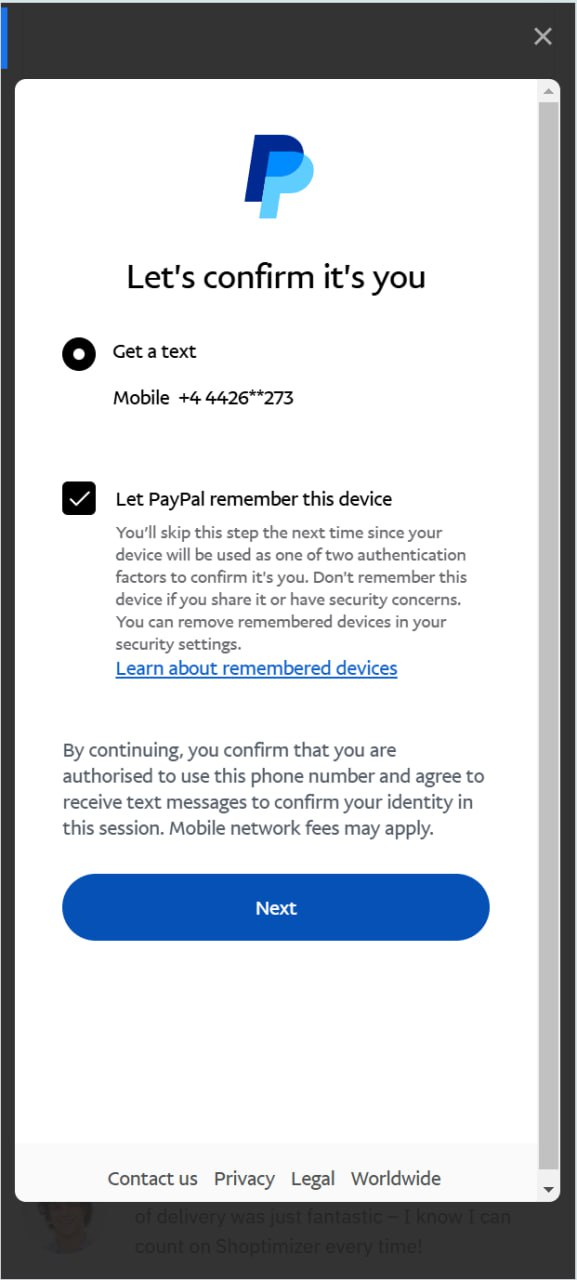
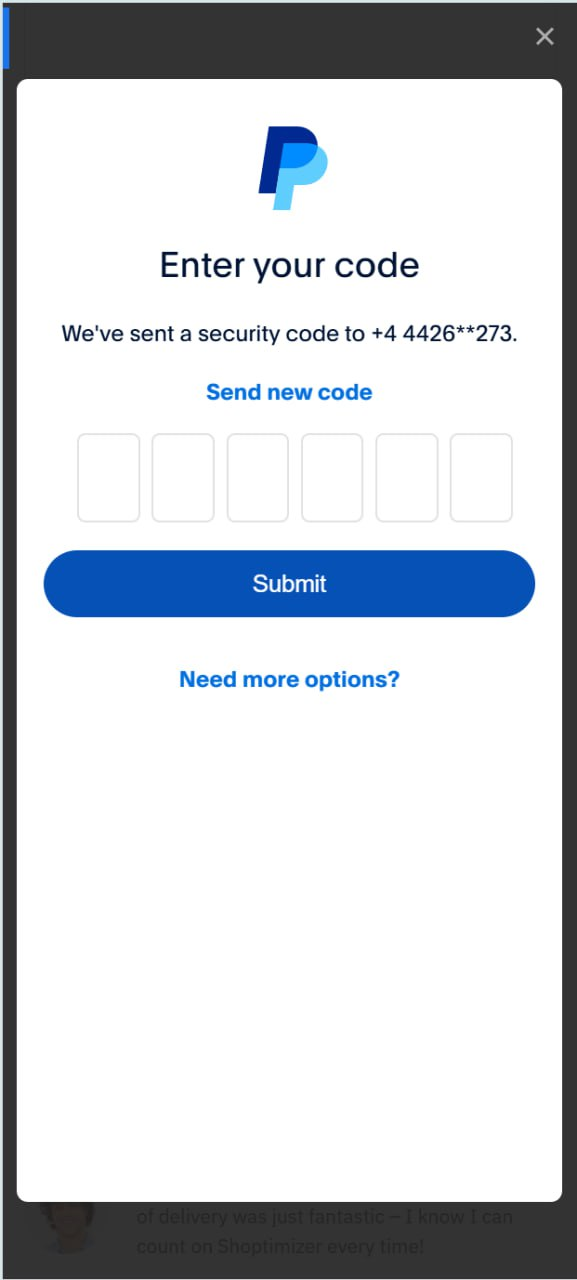
The threat actor group’s Telegram channel describes the PayPal phishing kit as:
“【Lighthouse】E-commerce PayPal Update
Supports simultaneous fishing of accounts and cards”
Screenshots of the phishing pages look like this:
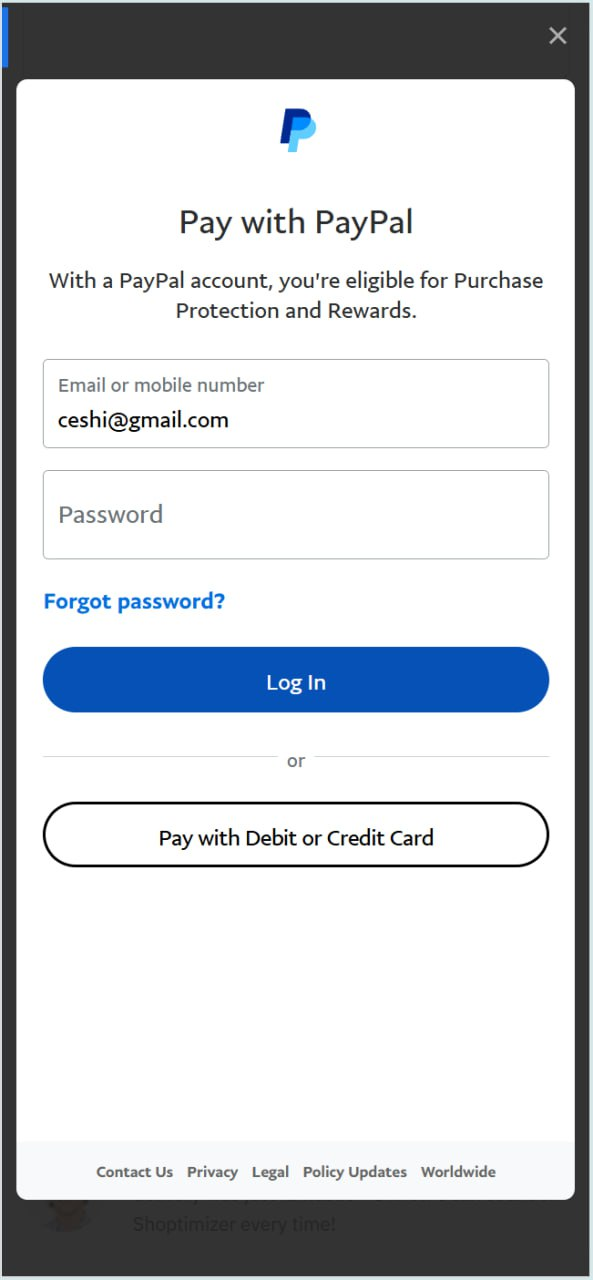
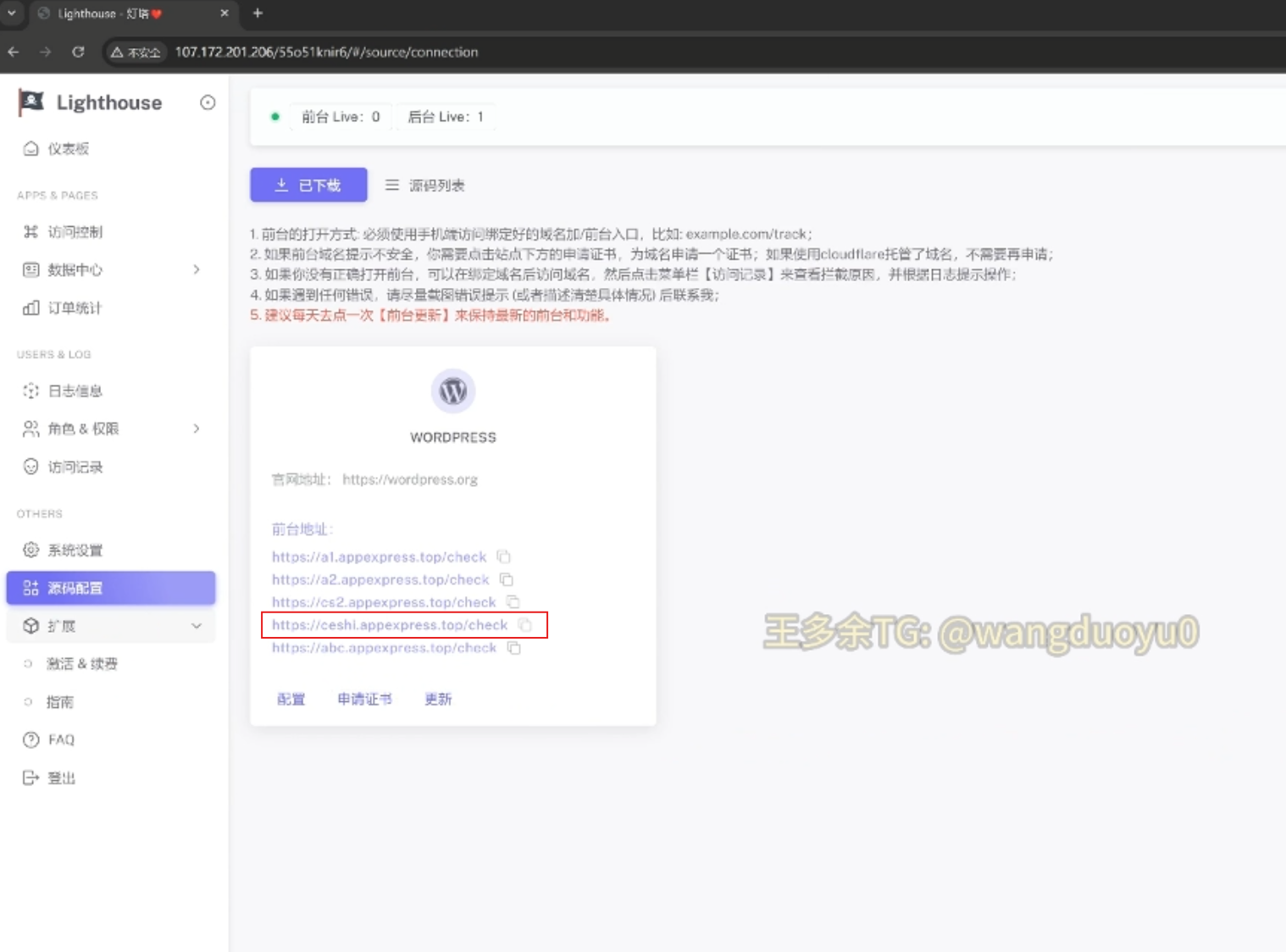
The ceshi@gmail[.]com email address may actually be the personal email of the threat actor. It has been seen in breach files from Shein[.]com, Youku[.]com, and hiapk[.]com – all Chinese brands. It’s also been seen in some stealer logs, with one unique hand-created password being “wuppypuppy1,” which could be a pivot point into other accounts controlled by this same threat actor.
In other parts of the phishing kit infrastructure, there are references to “ceshi” like in one of the C2 subdomains, which you can see in this screen capture of the video from the Telegram channel:
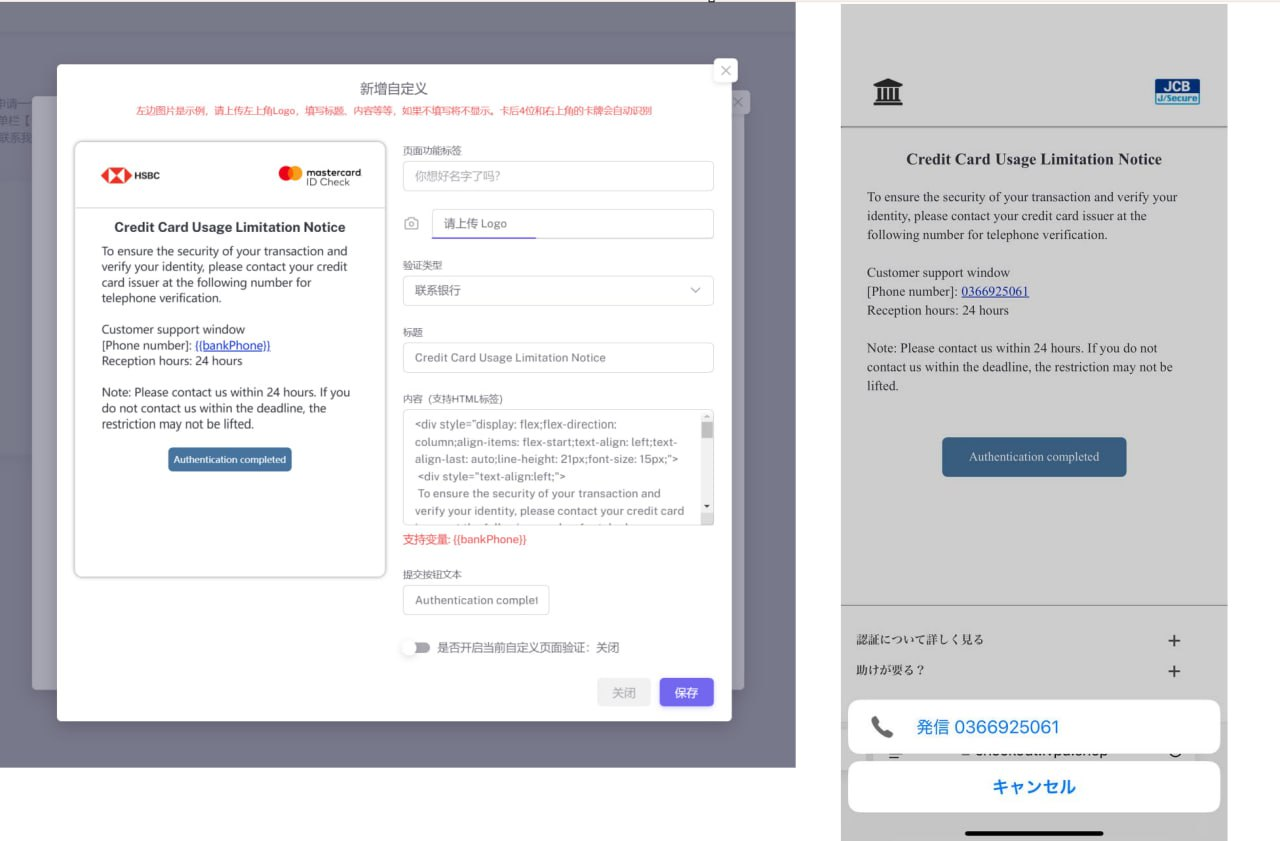
The Telegram channel promoting the Lighthouse tool also featured new templates for phishing HSBC Mastercard users. For unknown reasons, multiple new layouts and features were made to target HSBC customers.
Silent Push’s Threat Analysts have developed extensive fingerprints that enable our team to track the various server setups being used by Smishing Triad threat actors. The diversity in server setups hosting their phishing kits further confirms that multiple threat actors are using similar TTPs and code kits, while making their own deployment decisions.
For operational security reasons, we can’t make the queries used to track Smishing Triad public, but we are sharing 50 IOFATM domains at the bottom of this report to support external research.
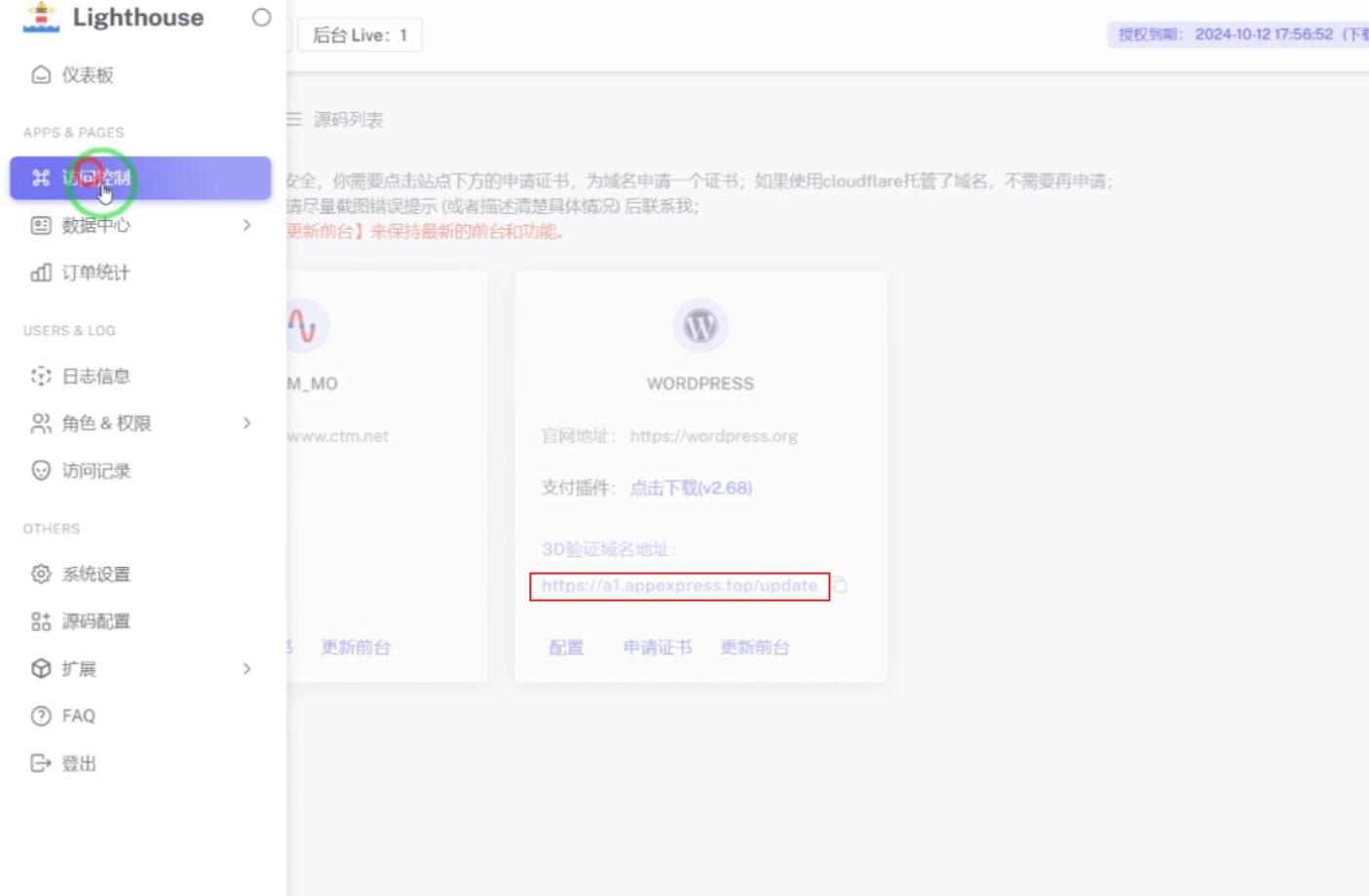
Within the Telegram channel, the admin recorded a video showing the testing domain they had set up, “appexpress[.]top,” which appeared to be a C2 where credentials would be sent from phishing pages.
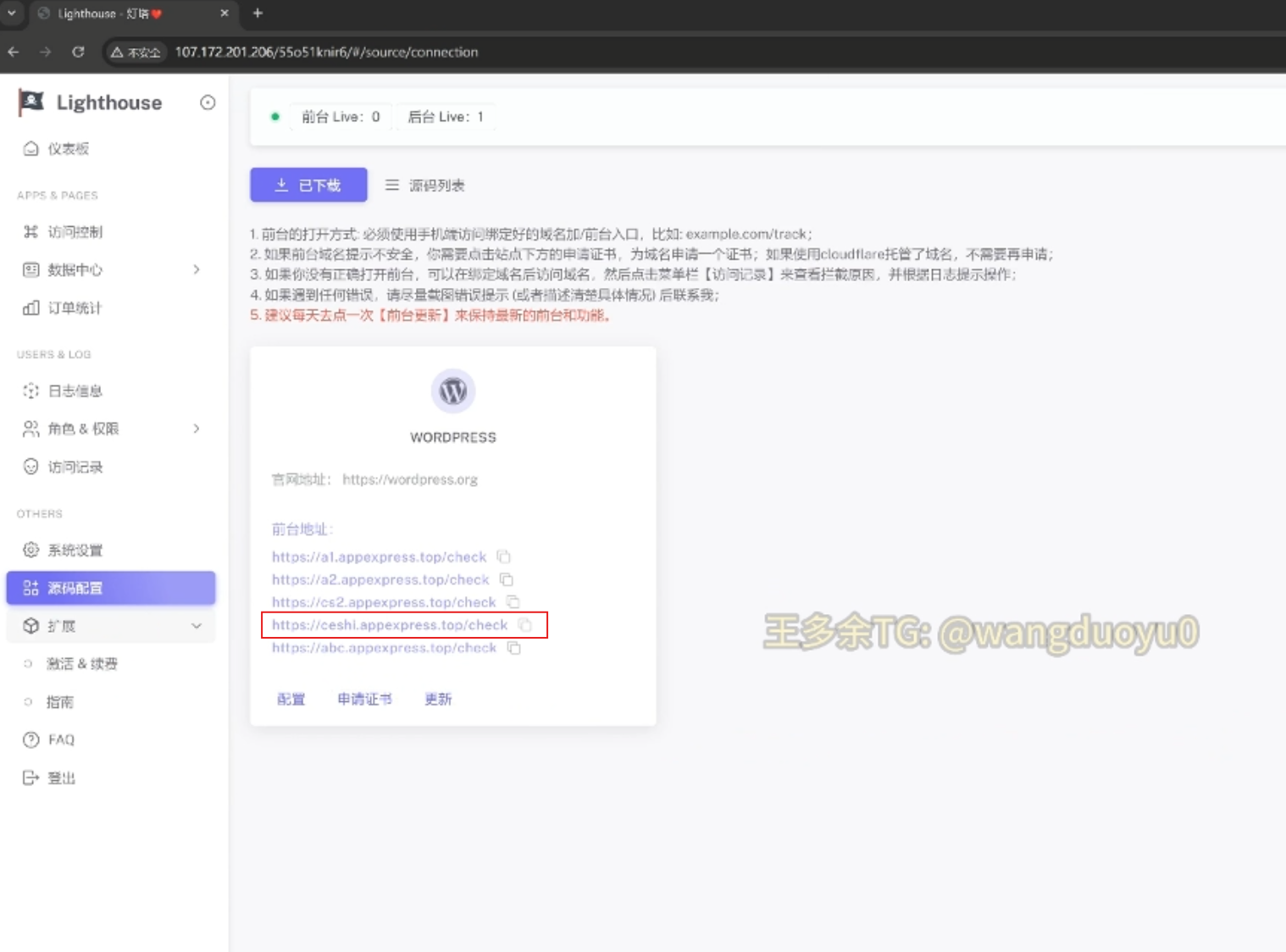
It appears this detail was inadvertently included, as it was blurred out in previous sections of the video:
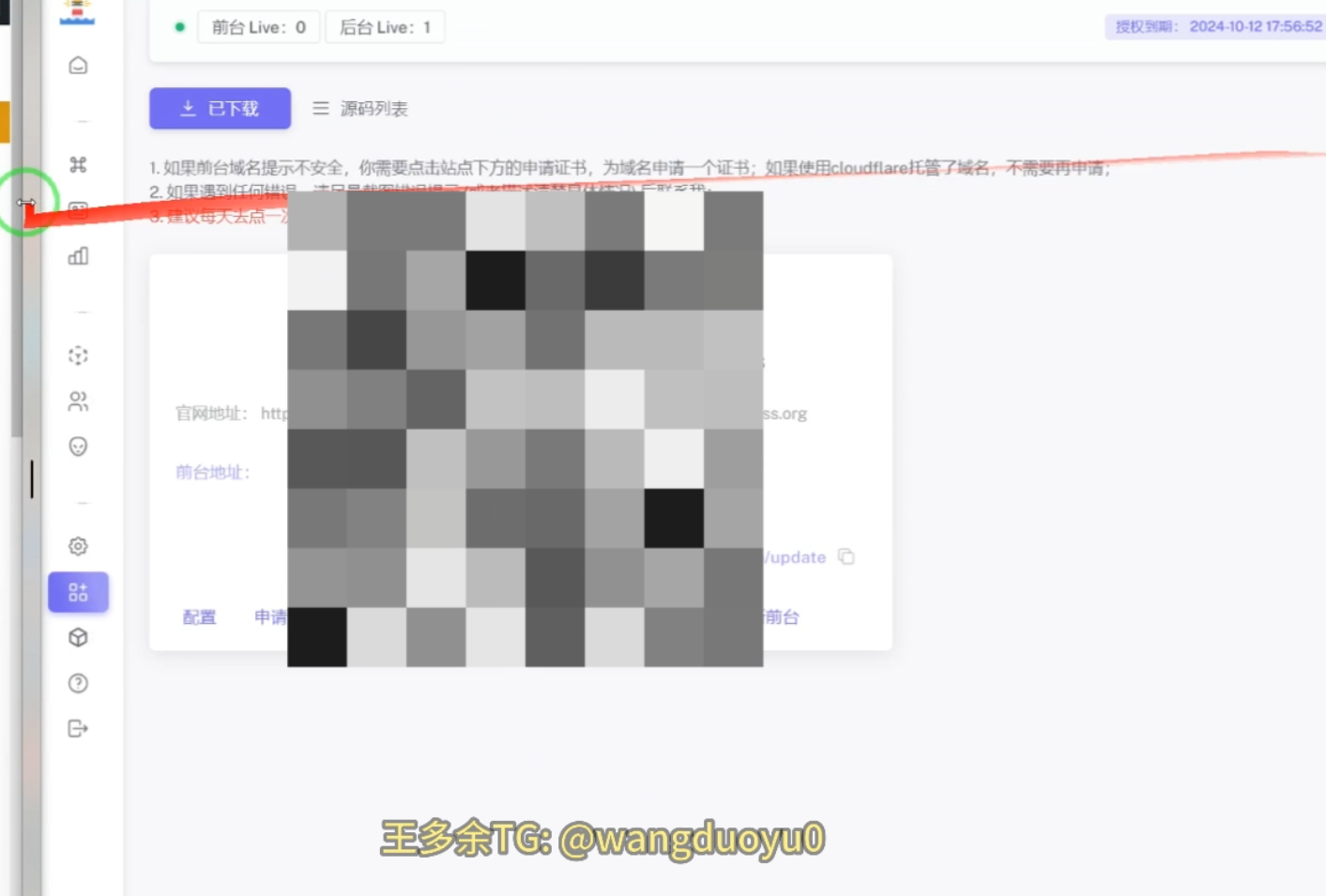
Even in that section, however, the admin messed up the blurring, and it was briefly visible in the video:
Silent Push analysts found a JavaScript file connected to this C2 in a phishing kit. The file references a wide variety of banks and financial institutions, including several Australian finance organizations.
We believe this file showcases early targets of the threat actor’s new bank phishing template, and expect this group to expand targeting beyond this initial list:
Silent Push Threat Analysts also discovered a vulnerability that led to an information leak from one of Smishing Triad’s phishing pages. For operational security reasons, we can only share a limited view of the findings.
Here you can see a JSON file with log records:
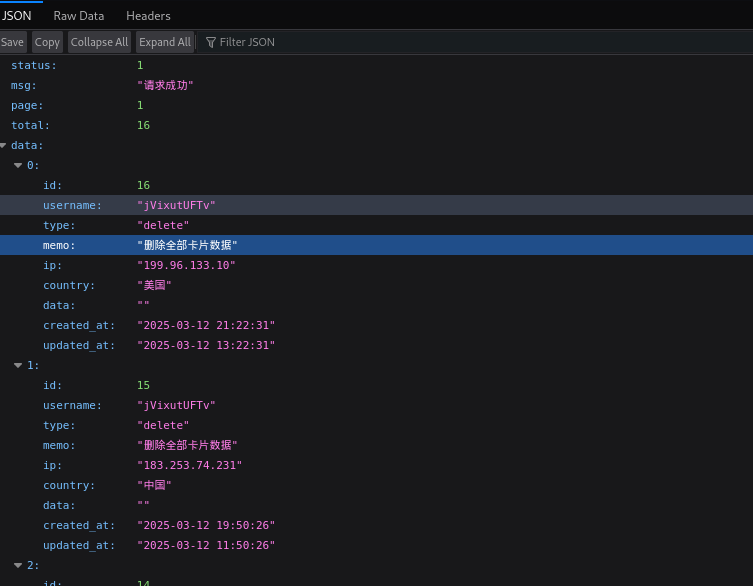
When translating this information, it was noted that the logs included the text “Delete all card data” and “Export all card data.” This indicated these logs were actual phishing log records from Smishing Triad. Additional data showed that this was a log from a website user.
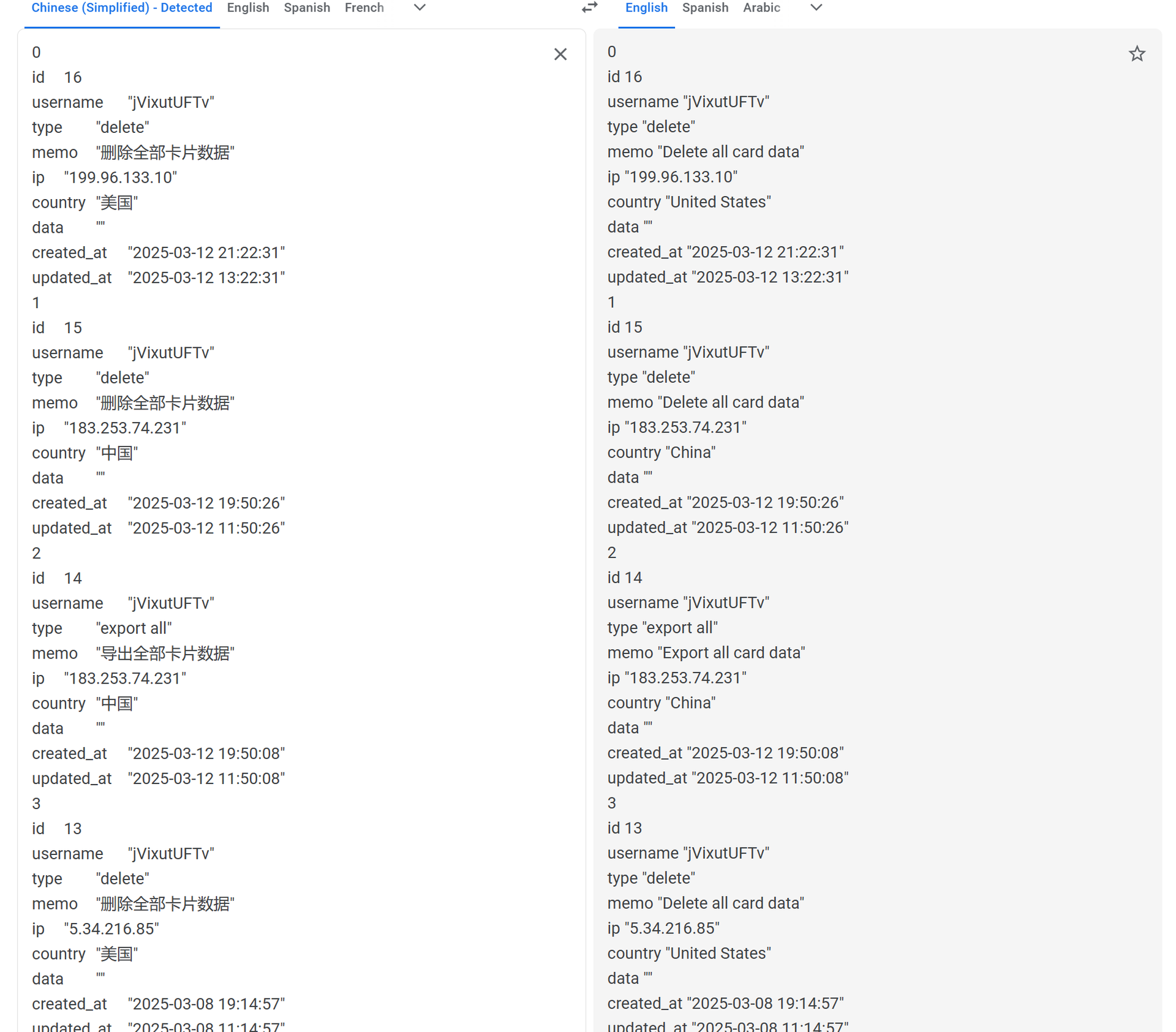
Based on the information found, Silent Push Threat Analysts scanned 9,270 unique domains and narrowed the list to 450 IP addresses—all likely controlled by Smishing Triad.
Another leak revealed page visits from victims and the specific phishing page they had visited.
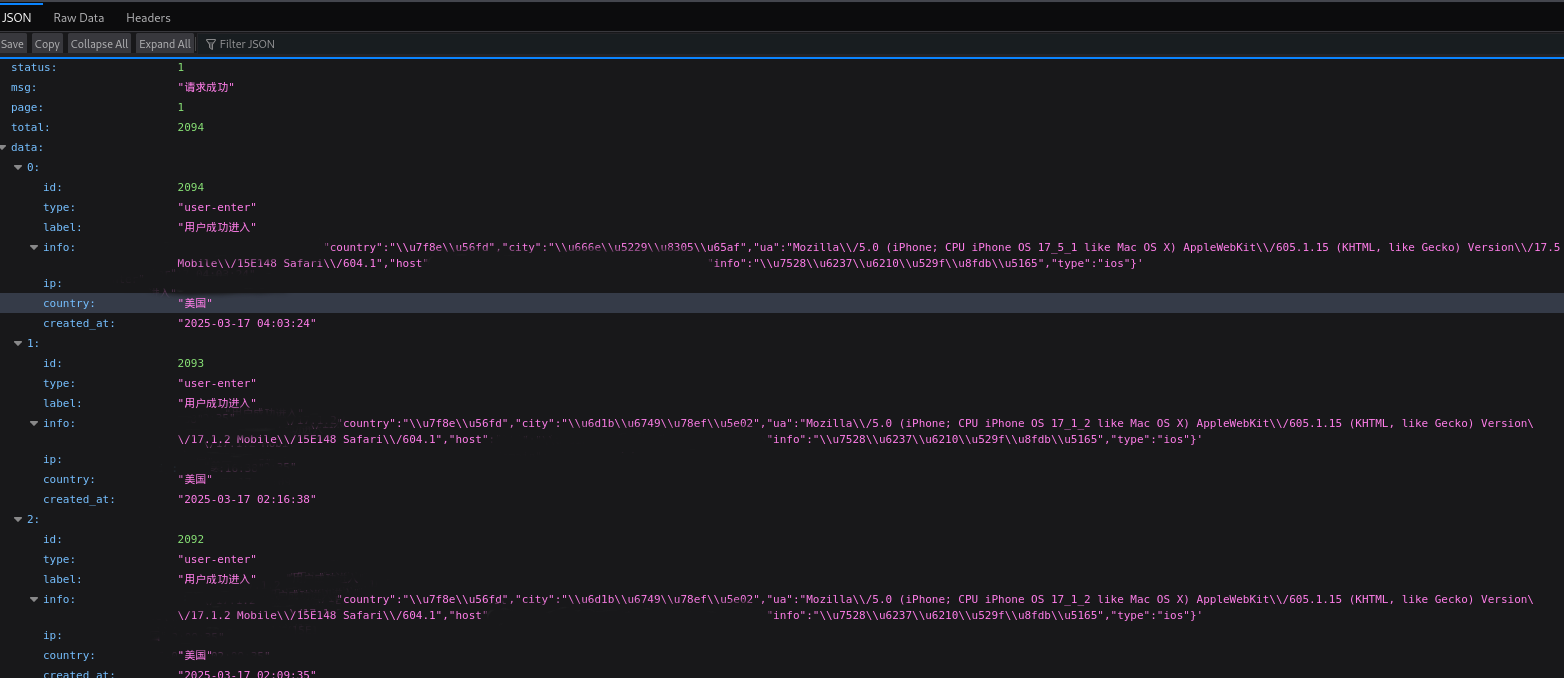
Silent Push Threat Analysts scanned all 9,000+ unique domains for the specific attributes used here and were left with a file containing 105,500 lines of output.
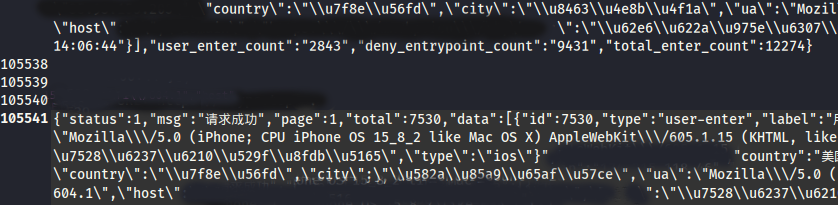
This information served as the basis for the million+ page visits referenced in the earlier section in our report. Based on the data we gathered, our team has calculated that the total number of phishing page visits was well over 1,000,000 potential victims within a 20-day time span.
Approximately 200,000 domains have been used by Smishing Triad threat actors.
Tens of thousands of Smishing Triad domains are live within any 8-day period.
The infrastructure has been hosted across over 8,800 unique IP addresses, across more than 200 different ASNs.
Notably, more than half of the phishing sites were hosted by two Chinese hosting companies: Tencent (AS132203) and Alibaba (AS45102).
Based on analysis of these results, Smishing Triad is targeting at least 121 countries (or about two-thirds of the world). This information was constructed using the domain names and favicons.
Additionally, across all of the Smishing Triad campaigns our team has been tracking, we saw about 187 top-level domain (TLD) suffixes being used. The most popular TLDs were: “.top,” “.xin,” “.vip,” “.world,” “.cc,” “.com,” “.xyz,” “.icu,” “.cfd,” and “.ink”.
Below is a small sample of impersonated companies and organizations and the relevant countries, intended to further illustrate the global reach of this campaign and the scope of the organizations being targeted:
| Targeted Organization | Legitimate Website | Targeted Country | Favicon MD5 Hash | Phishing Site |
| USPS | usps[.]com | United States | 3f0f72ed57a54b97cda500bcf0545efb | info-trackingcoi[.]cc |
| Evri | evri[.]com | United Kingdom | 7d0229599d942f4cef13e6412fe18723 | evriuk[.]top |
| Estafeta | estafeta[.]com | Mexico | bf0b6949346d4fe168245aa2bfc61cfc | estafetau[.]shop |
| Turkish Post (PTT) | ptt[.]gov[.]tr | Turkey | 7bb31b9ef5f35d816f9bc7a816c800d7 | tuyrepost[.]cc |
| La Poste | laposte[.]fr | France | 2e7b6d178a0468f6beaf184e854d773e | posten[.]top |
| Correos Post | Correos[.]es | Spain | 349246ee336d8b2986e584a4fa436128 | busine[.]cfd |
| India Post | Indiapost[.]gov[.]in | India | d6d9ecedd59f3418a8425ce5e61e5695 | indiapost[.]top |
| Amazon Post | amazon[.]com | Global | ca6619b86c2f6e6068b69ba3aaddb7e4 | ewdfb[.]top |
| Canada Post | canadapost-postescanada[.]ca | Canada | b97eafae41beb90b3c3279fb07fdbc45 | canadaapoost[.]com |
| Servientrega Post | servientrega[.]com | Colombia | f264619a74d8b662e7a695c2563a9bcf | btyzywlp[.]top |
| Australia Post | auspost[.]com[.]au | Australia | 5848f96af0da17512255e056da67263d | auspoust[.]cc |
| Royal Mail | royalmail[.]com | United Kingdom | 3b1e1a3f7ea2c1ae22748f963728cba6 | psocygb[.]xin |
| DHL | dhl[.]com | Global | d8106bf3a1d00ab43b01e6e3c92500eb | post-isl[.]sbs |
| Poste Italiana | poste[.]it | Italy | 3cbac548d46ec7b7794ec1d1ba11ff08 | posteit[.]cfd |
| An Post | anpost[.]com | Ireland | 9a59afcbfc57b19ae71413f2b2d950a0 | chamge-a[.]top |
| Yurtiçi Kargo | yurticikargo[.]com | Turkey | eac1870faf46ea45a318c20563d3cf8f | yurticikargoy[.]cyou |
| SMBC Card | smbc-card[.]com | Japan | 67ac939271735622b07d41dbcc90300b | smbc-card[.]shop |
| InPost | inpost[.]pl | Poland | c98cb827ea0cc7939a9083ecd833410e | inposttrack[.]click |
| CTT Correios | ctt[.]pt | Portugal | 782c9d4b134c4e0b632b67970d23287e | cttpacks[.]click |
| Correos El Salvador | correos[.]gob[.]sv | El Salvador | 87eebd70b533b24b2c127e7d113c3b88 | slvpostgob[.]ccsv |
| AIS Thailand | ais[.]th | Thailand | e9c703a4188c3c8355c1529caa76eb1a | aiisoi[.]top |
| South African Post Office | postoffice[.]co[.]za | South Africa | c1dd8d14493c54a675ac29031713bfc0 | za-post-word[.]top |
| Slovenská Pošta | posta[.]sk | Slovakia | 34541285068a8cabe10d7393ea68704d | shant[.]fun |
| DPD Parcel | dpd[.]com | Global | d6e8d97ca54021f46aae3e4b5fbf3208 | dpd-pack[.]xyz |
| Philippine Postal Corporation | phlpost[.]gov[.]ph | Philippines | 5e56f6ac37123d152c4f477e40a1a92d | phlppovd[.]top |
| Swiss Post | post[.]ch | Switzerland | f6e7b043a102b271d898072e24227356 | post-track[.]help |
| Czech Posta | Postabo[.]cz | Czech Republic | 4053dfb4509b7c2d5a3596e2875caab1 | ceska-post-a[.]blog |
| 4-72 Shipping | 4-72[.]com[.]co | Colombia | 12a853f2e837b036ac706f3d5160aea5 | address-4-72[.]top |
| Israel Post | israelpost[.]co[.]il | Israel | aa8806968a55f7e5e5202cb59f8b0318 | isr-aelpost[.]sbs |
| Qaz Post | post[.]kz | Kazakhstan | ed9cb0beb42ed44975095a4f2ca5cf86 | wbduvn[.]com |
| Peruvian Ministry of Labor | trabajo[.]gob[.]pe | Peru | 1965fef6225a1639b0919581e37ab5cf | fwedsfg[.]top |
| Yamato Transport | kuronekoyamato[.]co[.]jp | Japan | 9e83ad80e466873a9acc652c194fa5bd | whetf[.]xin |
| FedEx | fedex[.]com | Global | a53129769d15f251d4e5c5cb966765b4 | fexpres[.]lol |
| J&T Express | jtexpress[.]ph | Southeast Asia | b3eae70fa423635b4359de4bd9b59b00 | mys-jtexpres[.]cyou |
| Claro Cloud | clarocloud[.]com | Latin America | 1a4f0664da92aa9ca994296084d46e9e | www-claro[.]top |
| Lietuvos Paštas | post[.]lt | Lithuania | d06cf67753097487e2b29d3d0cb47ae7 | lietuvospost[.]help |
| Singapore Post | singpost[.]com | Singapore | 3ea19204ea4c75da2cff7aff54135c09 | singpposts[.]top |
| Servicios Postales del Ecuador | serviciopostal[.]gob[.]ec | Ecuador | aa568cd0fc3e7c8c6d34511d0dd4e641 | serviciopostalgobec[.]pics |
| Maxis Telecom | maxis[.]com[.]my | Malaysia | 38cce9d714010a3e43132f1348454461 | mapxis[.]ink |
| Chronopost France | chronopost[.]fr | France | cdf92e329cc12fa614a9b706250d8498 | chroonopostfrr[.]click |
| Poșta Moldovei | posta[.]md | Moldova | 2326ee2db9d78be59257b9d08be1507a | business-poste[.]top |
| Egypt Post | egyptpost[.]gov[.]eg | Egypt | 44fff7ded89e2c97b6b3797550a69a75 | egiuw[.]top |
| Public Enterprise “Pošta Srbije” | posta[.]rs | Serbia | 8f69a8995d3eb92cb0a35b07d05659e3 | postah[.]cc |
| Correos de Costa Rica | pagos[.]correos[.]go[.]cr | Costa Rica | f6a5c39822bebd1071a30d77b02ca0fd | cootrut[.]site |
| Aramex | aramex[.]bg | Bulgaria | bd668e3a554306b020c5670b02e70586 | aramexaene[.]com |
| Ukraine Post | ukrposhta[.]ua | Ukraine | a3765a9d883516fbf9992fb368ab4a45 | ukrspack[.]click |
| SPL Express | splonline[.]com[.]sa/ar | Saudi Arabia | 0d738b9111bf58499f057e84b0d6c0f4 | spl-express[.]help |
| Poșta Română | posta-romana[.]ro | Romania | f0806fd528a615d286a7f3398be0a002 | posta-romanam[.]cc |
| Posten Norway | Posten[.]no | Norway | 1fa4c9a05aae4399c4ae72eab37a5cd0 | unogmu[.]icu |
| Post AG | post[.]at | Austria | e219d187a2e604c4feb65b4c8e838ba1 | at-post[.]icu |
| myHermes Konto | myhermes[.]de | Germany | 47c30669b590c5539b01c28f1203dbcc | myhermes-at[.]bond |
| Autopistas | autopistas[.]com | Spain | 386464fffd1b5b5de12fa217fb4c8962 | autopistes[.]asia |
| Telkomsel | telkomsel[.]com | Indonesia | 762c0117f77fc03c666586ca8920f5e4 | telkomssel[.]ink |
| Obrasci Posta | posta[.]hr | Croatia | a054771f947814ced1668f9056dda56d | post-word[.]top |
| TEPCO | tepco[.]co[.]jp | Japan | 454357104cfcc4afbd9f4274b755bab2 | tepco-co-jp[.]online |
| Georgian Post | gpost[.]ge | Georgia | 998950a66034565afde5b38b16a2c848 | geopostl[.]cfd |
| Hellenic Post (ELTA) | elta[.]gr | Greece | a2dcaabb983ac9e00cd561dba81e63f6 | eltade[.]cc |
| The Toll Roads | thetollroads[.]com | United States | b77c325bbed7cde9ed764e39301a0dfa | thetollroadsll[.]lol |
| Pakistan Post (EP) | ep[.]gov[.]pk | Pakistan | 977c05b3d421bc68473bbd5dbf85578e | epgovc[.]top |
| Telcel | telcel[.]com | Mexico | b211f84b21ccbb865ff13decfccfdb3f | ttspost[.]sbs |
| Guatemala Post (Correos de Guatemala) | correos[.]gob[.]gt | Guatemala | a20e946cd5fc459b3fc24aac7ba63f76 | coeetrttgroup[.]cfd |
| SMSA Express | www[.]smsaexpress[.]com | Saudi Arabia | 63c8ae68ffc88607adcb991403aac338 | smseexpress[.]cfd |
| Posti Group | posti[.]fi | Finland | 9f18375658005abf5ea3ca68bba84fd1 | posti-fifi[.]top |
| UPS | ups[.]com | Global | afd13e52f285793f5eaa266c12a19abe | mxups[.]me |
| Tigo Guatemala | tigo[.]com[.]gt | Guatemala | 6da0a1b3f14c594ca59b2d0f5cbba8c4 | tigo-gtmc[.]top |
| Mondial Relay | mondialrelay[.]com | France | cdc89ea9ddff2facd9df0854165e0dc1 | mondialrellay[.]live |
| Telefónica México | telefonica[.]com[.]mx | Mexico | 0ffe21b6f2306750e5dac33036a72cb0 | entelclws[.]top |
| Sri Lanka Post | slpost[.]gov[.]lk | Sri Lanka | 727dba352808dbacf07c64665221a63a | slpostgovls[.]xyz |
| HKeToll | hketoll[.]gov[.]hk | Hong Kong | 8617548fca9c005670313f8199c91b54 | hketoll-etc-hk[.]top |
| Correo Uruguayo | correo[.]com[.]uy | Uruguay | 64c6903fded3bcab9fa069e0a8510868 | uypos[.]xyz |
| M360 SMS Send | m360.com[.]ph | Philippines | f5aa2599540f5470c5c6db0a9a816988 | globeefd[.]top |
| Thailand Post | thailandpost[.]com | Thailand | e7a779b2a78738e30ce2056417615a4f | thposto[.]vip |
| BelPost | belpost[.]by | Belarus | b69b0e9972eb5cd55852c5c4ad86f270 | belpost-by[.]lol |
| Libyan Post | libyapost[.]ly | Libya | e021fa39a227f70c7d74ebc1397ff555 | hanypost[.]top |
| Agencia Nacional de Infraestructura (ANI) | ani[.]gov[.]co | Colombia | a003e0a196f18d56b5b4ef9622ab8b60 | adffew[.]top |
| New Zealand Post | nzpost[.]co[.]nz | New Zealand | 5b8f637a20a50f9e5de34bf4fd923e3b | nzposst-co[.]top |
Silent Push analysts will continue to track Smishing Triad and its infrastructure. We appreciate any additional leads or research tips. We believe collaboration is key to disrupting this globe-spanning effort and welcome any additional leads. In the spirit of that:
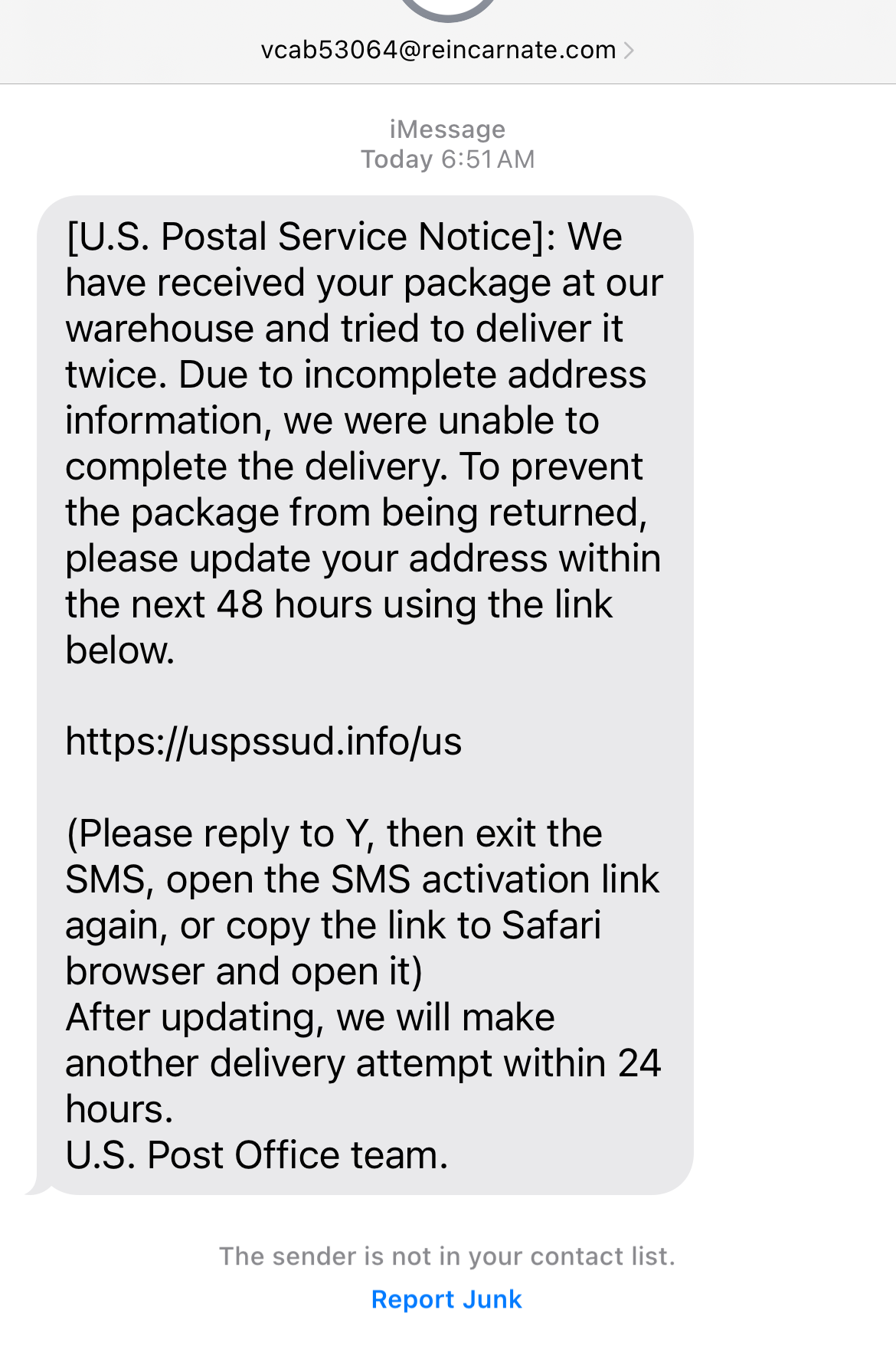
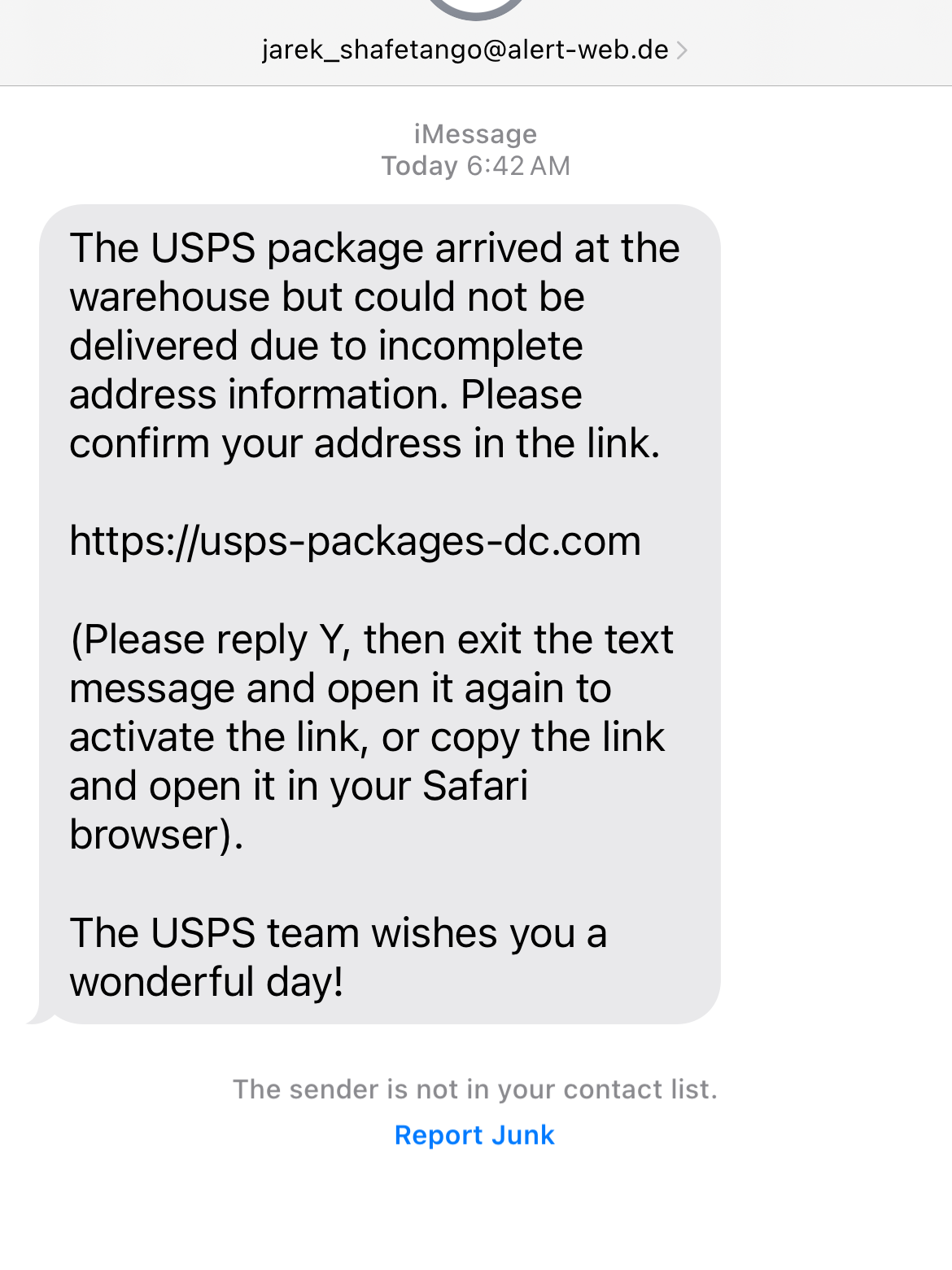
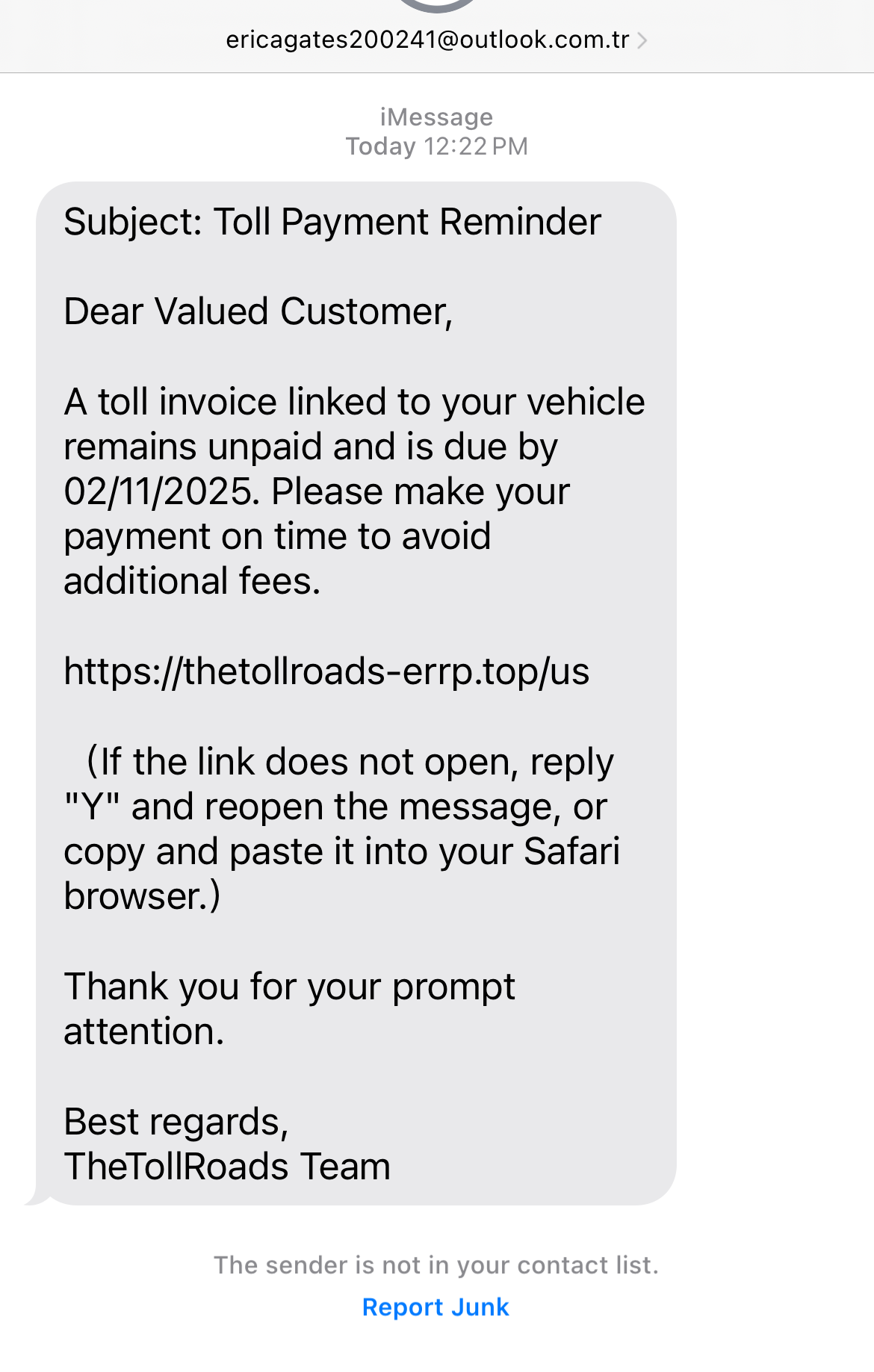
Multiple research partners supported our research into the Smishing Triad at Silent Push by sharing the targeted smishing messages they were receiving. These collaborative efforts helped us confirm many new domains and also better informed our understanding of how these messages and their delivery mechanisms have evolved over time.
A small sample of what we have analyzed is included below:
Silent Push believes all domains associated with Smishing Triad phishing campaigns represent some level of risk. This campaign is primarily a consumer-focused phishing threat, which abuses the trademarks of major brands and organizations.
Our analysts have constructed a series of Silent Push Indicators Of Future AttackTM (IOFATM) on these types of phishing efforts.
Silent Push IOFATM Feeds are available as part of an Enterprise subscription. Enterprise users can ingest IOFATM Feed data into their security stack to inform their detection protocols or use it to pivot across attacker infrastructure using the Silent Push Console and Feed Analytics screen.
Silent Push Community Edition is a free threat-hunting and cyber defense platform featuring a range of advanced offensive and defensive lookups, web content queries, and enriched data types, including Silent Push Web Scanner and Live Scan.
Click here to sign up for a free account.
Silent Push is sharing a sample Indicators Of Future AttackTM (IOFATM) list we have associated with the Smishing Triad campaign to support ongoing efforts within the community. Our enterprise users have access to an IOFATM feed currently containing significantly more indicators from this campaign.

Threat intelligence data can broadly be described as information that’s collected, processed, and analyzed to understand potential cyber threats, and helps organizations anticipate, identify, and mitigate attacks.
In this blog, we’ll compare the two main types of threat intelligence data used by security teams – Silent Push Indicators of Future Attack™ (IOFA)™, and traditional Indicators of Compromise (IOC).
We’ll highlight the differences between both, and why organizations find more value in using IOFA™ as a source of threat intelligence to identify and block adversary infrastructure before an attack is launched.
IOCs are reactive cybersecurity datapoints that indicate a system has been targeted, or compromised, in a cyberattack.
IOCs are distributed using various methods, from Open-Source Intelligence (OSINT) streams, to private collection methods, licensed intelligence platforms, public forums and Advanced Persistent Threat (APT) intelligence reports.
Indicators of Future Attack™ are proactive indicators (hostname, domain, IP etc.) that preemptively reveal where an attack will be launched from in the future, as well as where an attack has taken place.
Security teams rely on IOFA™ data to target the pre-attack Tactics, Techniques and Procedures (TTPs) that govern how a threat actor is initializing and deploying their infrastructure, prior to an attack being launched.
Silent Push is the only security vendor that uses IOFA™ to detect and stop threats.
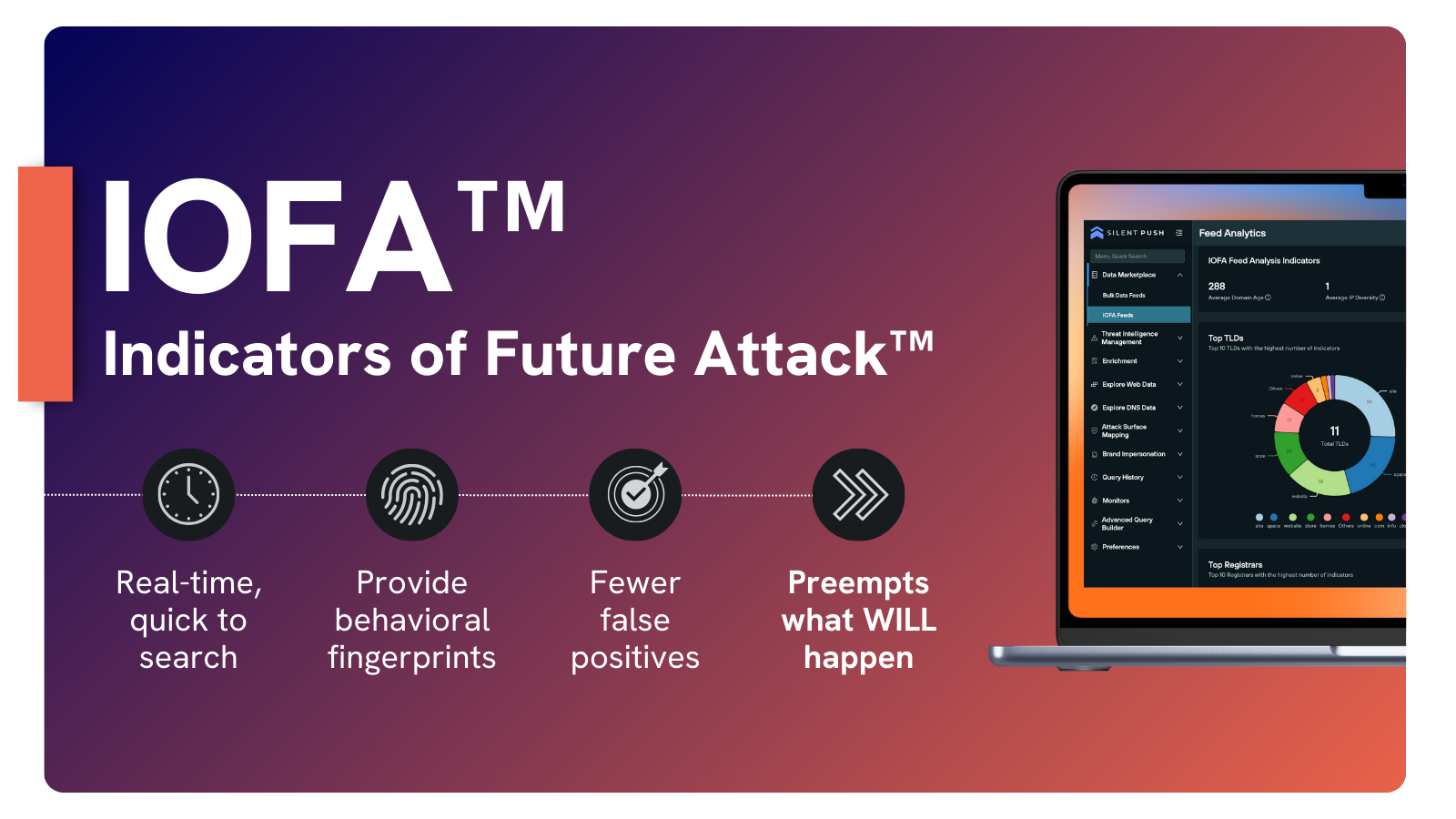
Using IOFA™ allows teams to shift from a reactive to proactive security operations.
Cyberattacks that originate from unknown infrastructure are inherently more difficult to block, and present a significantly higher risk.
An army prepares itself for battle based on where the enemy is located, and how they’re deploying their forces in an attack. Adversaries that disguise or hide their position are far trickier to defend against than an enemy that keeps launching an assault from the same position.
Cyber warfare is no different.
IOFA™ provide teams with actionable, finished threat intelligence that not only counteracts an ongoing attack, but allows teams to traverse the hidden elements of a threat campaign that are yet to be fully deployed, and track enemy movement across the global IP space.
IOCs do not allow security teams to easily establish where an adversary may strike next, and are instead limited to revealing where an attack has previously occurred.
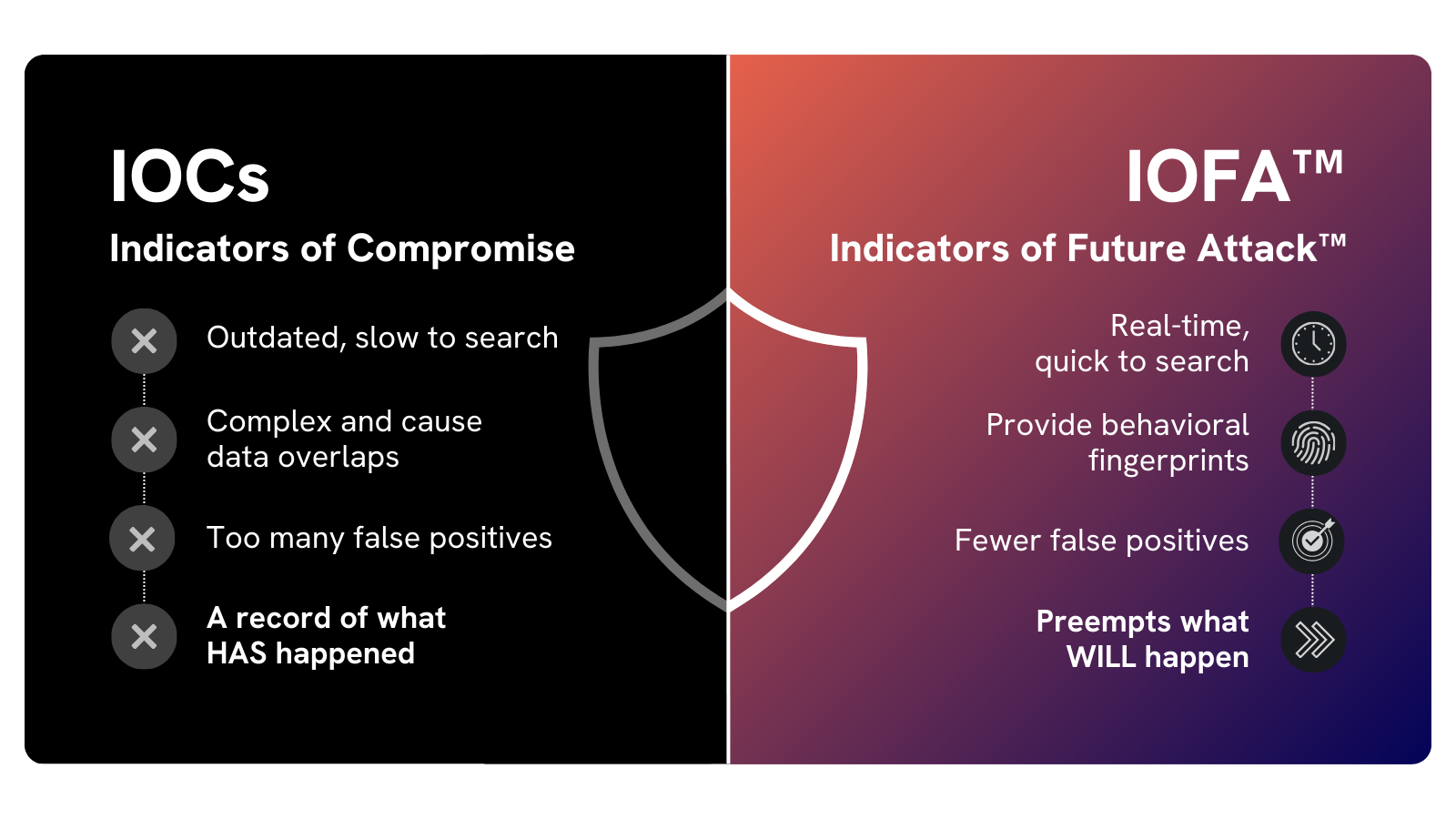
Let’s look at the key functional differences between IOFA™ and IOCs, and why IOFA™ are inherently more useful when attempting to defend against known and emerging attacks.
An IOC is an isolated piece of data that can be used to block a domain or IP which has already been involved in an attack.
When using IOCs, teams need to enact multiple additional pivots to map out associated infrastructure and de-fragment their intelligence, which increases exposure during security incidents and pulls staff away from critical duties.
IOFA™ go one step further by automatically revealing associated hosting infrastructure, linked domains and IPs, and matching web content in such a way that provides SOC and IR teams with the ability to immediately and reliably triage information, the moment it’s received.
IOCs are accumulated from multiple distinct sources. As such, they do not feature a homogenous set of searchable attributes that can be used to quickly operationalize intelligence data, and facilitate broader discovery of potential threats.
IOFA™ are sourced, aggregated and scored by Silent Push alone. This allows us to apply 150+ attributes to each individual hostname, domain or IP that can be used across the platform to conduct one-click pivots, scans and lookups to quickly and reliably establish the relationship a single indicator has with the rest of the observable Internet.
Attackers recycle through new domains and IPs at a rapid rate, in order to evade detection, obfuscate their attack vectors, and circumvent IOC-led cyber defense mechanisms that rely on isolated lists of post-breach IOCs.
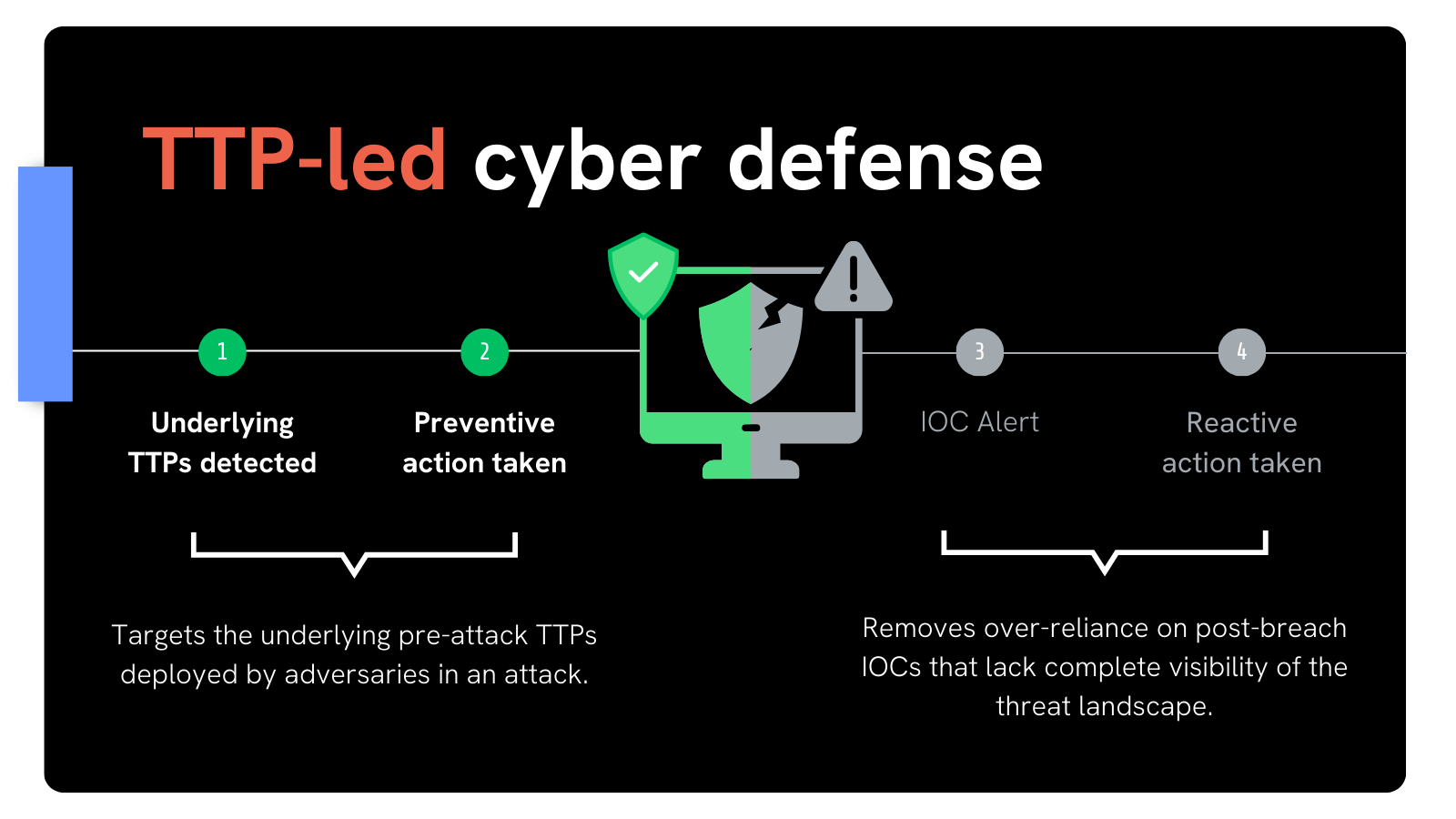
IOFA™ act as a source of finished intelligence that – by targeting attacker TTPs which act as the thick end of the wedge – continually considers the various methods adversaries use to deploy new infrastructure (e.g. fast flux techniques, hosting changes, naming conventions, and the use of subdomains), and updates teams with real-time tactical insights that are ready to be acted upon.
These insights are then used to construct behavioral fingerprints of adversary activity that allow teams to shadow an adversary’s movements across the IP space, and block any future attempts at launching an attack using a different piece of infrastructure.
Whether it’s licensed or open-sourced, an individual IOC is provided to security teams with minimal information on where a piece of intelligence has originated from, or how relevant it is to the organization using the information.
As such, IOC-based threat feeds are noisy, and contain a high percentage of false positive domains and IPs, or outdated indicators that are no longer being used in an attack. Such intelligence is at best overvalued, or at worst, useless.
Silent Push IOFA™ feeds contain attributable true positive indicators that require zero manual intervention to validate as a reliable source of intelligence.
We deliver IOFA™ data using on a proprietary aggregation and corroboration process that provides immediately actionable intelligence, lowering an organization’s MTTD and MTTR.
Silent Push is the only cybersecurity platform that uses IOFA™ to preemptively reveal pre-attack infrastructure, allowing teams to detect and block digital assaults as they emerge and before they’re launched.
If you’re interested in learning about how we can help you to protect your infrastructure from known and hidden attacks, contact us for more information.